The Red
Tree.
2 critic reviews
filed.
It is not a design hotel and it will never photograph like one. What it does better than almost anything at this price in Condesa is make a solo traveller feel like they landed somewhere with people in it. If that is not what you want from a trip, the enthusiasm around it will read as noise.
Not much of a hidden gem anymore: Global Hotel Guys and Sand In My Suitcase have both covered it, and the repeat guests found it years ago. What it keeps is obscurity of the useful kind, since it reads as a modest B&B in listings and gets scrolled past by people hunting for a design hotel.
angles.
The house had artists first
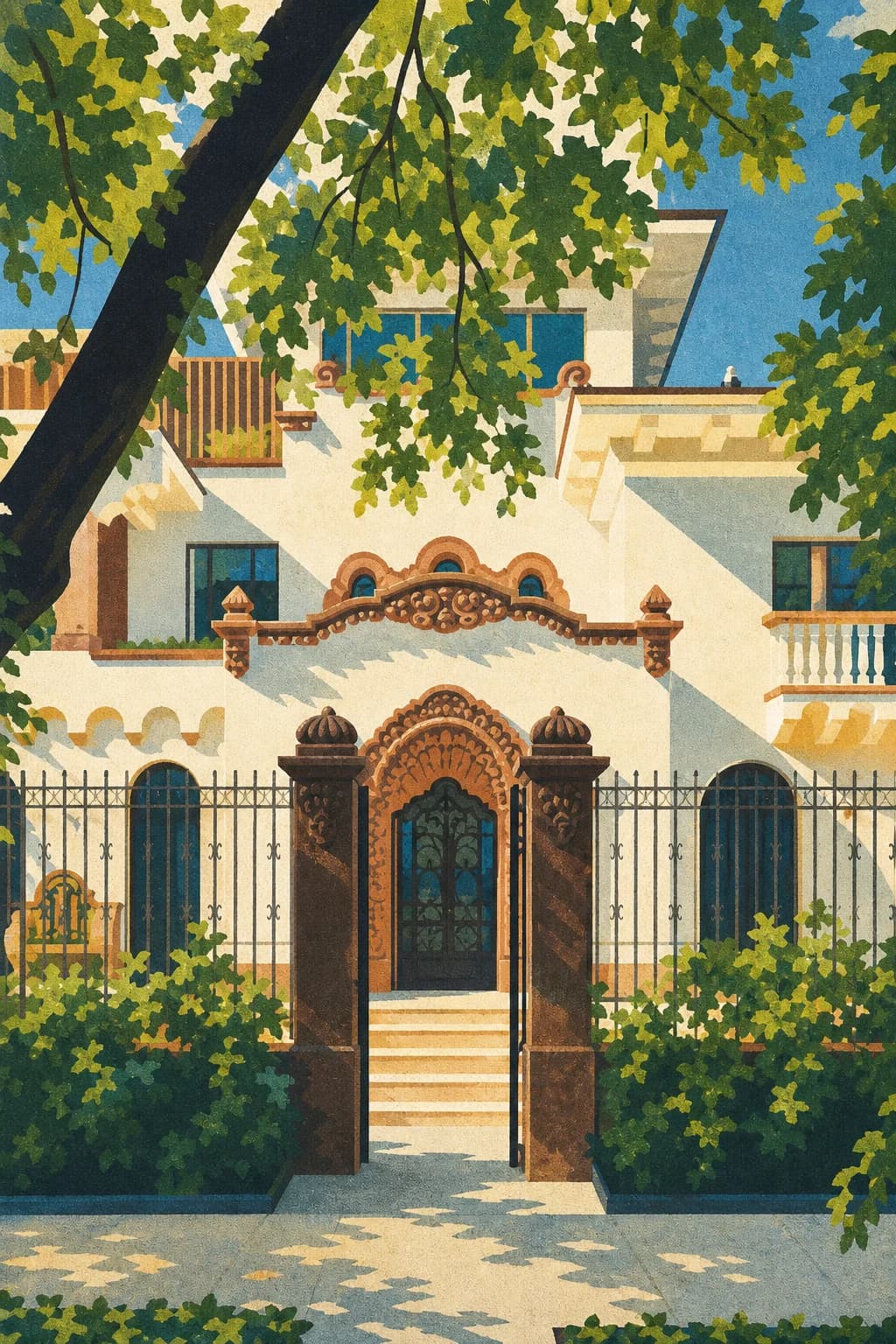
Craig and Jorge bought the place about twenty years ago, a 1930s Condesa house with a history of artistic and creative occupants. The actress Ofelia Medina lived here, and her portrait still hangs over the fireplace, which tells you how the owners treat the building's past: not as decor, but as a guest list that happens to predate yours. The art on the walls follows the same logic.
Wine hour is the amenity
Breakfast is the real one: fresh fruit, orange juice squeezed that morning, churros, yogurt, croissants, and something hot off the stove like quesadillas or an omelette, eaten under the orange trees in the courtyard. Then in the evening the wine and beer come out, complimentary, and the courtyard turns into a room full of strangers comparing notes on the day. Attendance is optional. Almost nobody skips it.
Parque México does the rest
The address is Culiacán 6, in Hipódromo, about five minutes on foot from Parque México, the art deco oval where Condesa does its running, its dog-walking and its Sunday loitering. Everything else is walkable too: the taquerías along Nuevo León, the cafés on Amsterdam, Roma Norte over Insurgentes, and the Museo Nacional de Antropología a short ride west.
talk.
mapped.
“Eventually we tear ourselves away for dinner at a nearby restaurant, happy we picked this Mexico City bed-and-breakfast for part of our stay.”
record.
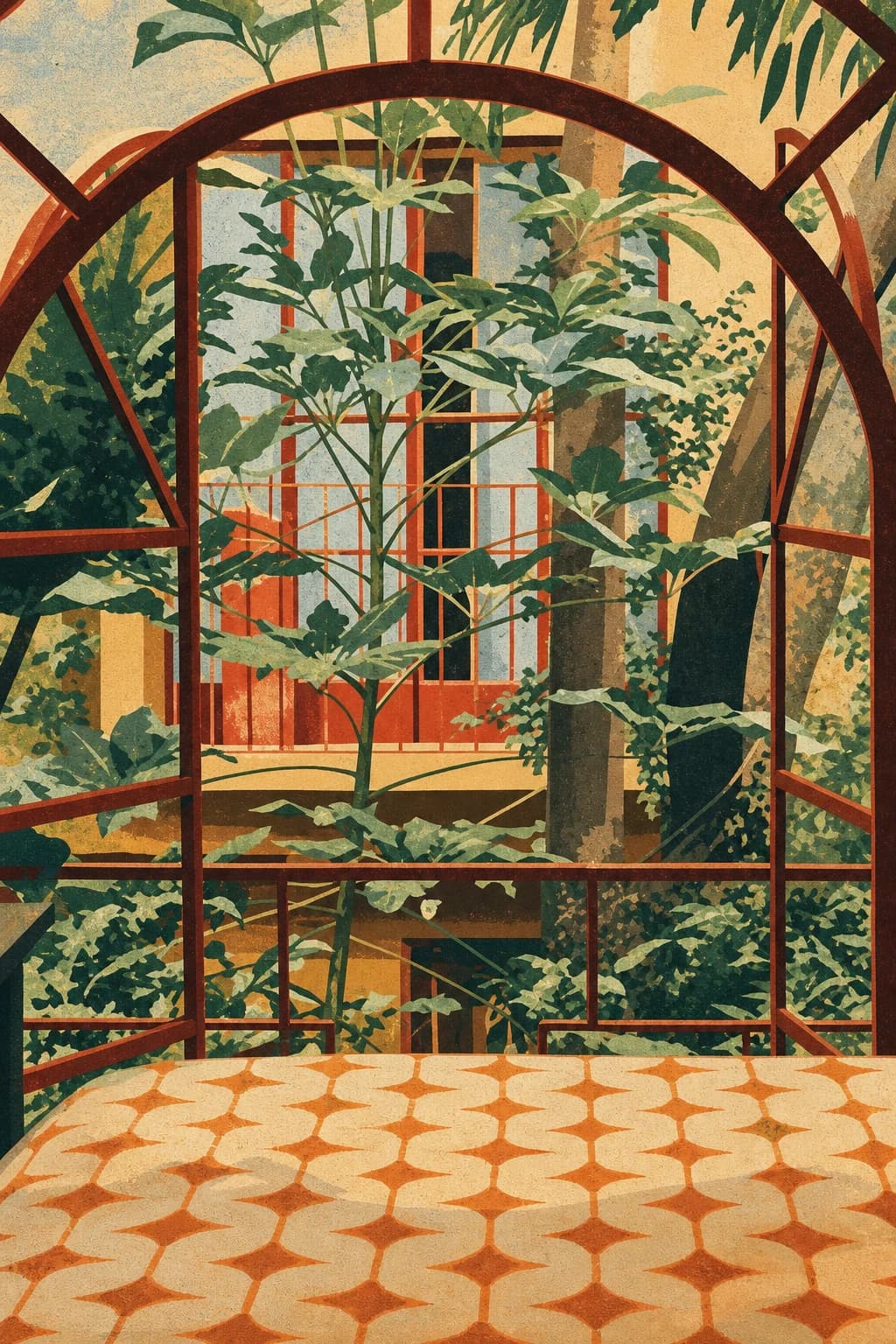
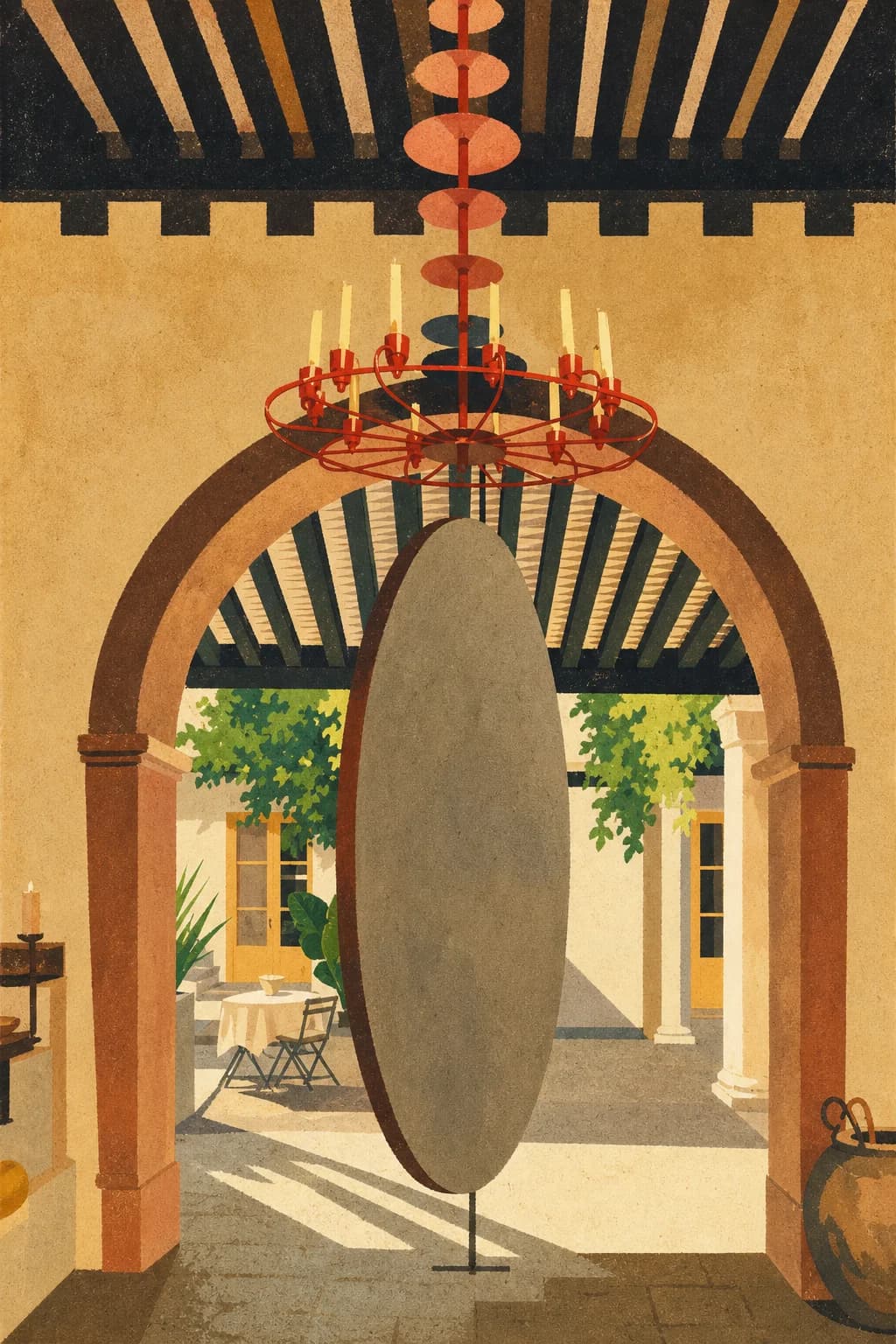
Craig and Jorge bought this Condesa house about twenty years ago, a 1930s build with a history of artistic and creative occupants, among them the actress Ofelia Medina, whose portrait still hangs over the fireplace. What they made is less hotel than household. The courtyard runs to orange trees and bird-of-paradise, wrought iron tables under the branches, a golden retriever who considers the place his.
Breakfast arrives hot. In the evening the wine comes out and the guests, who skew curious and chatty, turn into a dinner party that did not know it was one. Rooms are unfussy: wood or tile floors, queen beds, a few balconies over the street, no elevator anywhere. It is available most of the year and then suddenly it is not, because a house this small fills the moment the city gets busy.
changed.
Mexico City runs on a two-peak calendar, and understanding why the curve looks the way it does is worth more than any temperature chart. The first peak is spring, roughly March into April, the dry-season stretch when the jacarandas turn the city violet and the skies stay clear. The second is late October into November, when Day of the Dead brings the single biggest travel surge of the year. Those are the weeks the city sells to the world, and they are the weeks the small design houses fill first.
For those peaks, plan far ahead. The Roma and Polanco properties that matter, the handful in the upper tiers, can close out three months before Day of the Dead and the jacaranda weeks, and there is no overflow wing when a hotel has nine or twenty rooms. If your trip is fixed to those dates, book the room before the flights.
The genuinely undervalued window is the summer rainy season, June through August. The rain scares people off, but it arrives as short, predictable afternoon storms that clear by evening, leaving bright mornings for everything you actually came to do. Demand drops to its yearly low, the same rooms that vanish in October sit open, and rates soften across the board. Shoulder travelers who do not need the jacarandas get the best value of the year here.
The rest of the calendar fills in around the peaks. February, May, September, and December run warm with demand: September carries Independence Day on the 16th and its plaza celebrations, and December brings the Guadalupe pilgrimage and Christmas, both of which tighten the center in particular. January sits quiet after the holidays, another soft, workable window.
The one thing Mexico City never does is close. There is no dead season, no shuttered-hotel month; the city works year-round, so the only real decision is how much company you want and how early you are willing to commit. Book the peaks early, take the summer if you can be flexible.
approach.
briefing.
“Beautifully remodeled old home, fabulous artwork throughout and exquisite staff.”
stands.
demand's going.
The real Instagram following over time, plus where this hotel sits for demand in Mexico City. Pick a range, toggle the lines. Followers are reach and demand, not engagement.
assessment.
File closes at MODERATE. A month or two of lead lands it most of the year; October through the holidays gets tight. Choose it for a house with hosts; skip it if you want a lobby, an elevator, and nobody learning your name.
The numbers behind the tiers
The Red Tree · SOURCE READINGS · REDACTED- Availability density · sampled
- Monthly search volume · raw
- TikTok hashtag views · raw
- YouTube total views · raw
- TikTok following · latest sweep
- Pinterest saves · latest sweep
More from Mexico City.
Get the hotel's Unbookable Score.
Any post or reel with a hotel in it. Booking.com hotel pages work too. One free check, no account needed.