Ryo
Kan.
3 critic reviews
filed.
Mostly yes, if you know what you're booking. The design commitment is real and the rooftop onsen is genuinely special, but this is a mood piece for couples, not a full-service hotel. Treat it as an experience, not just a place to sleep.
Fairly under the radar for now. It has a solid Instagram following of around 25,000 and design-press attention, but it still reads as a word-of-mouth find rather than a headline booking. That gap is exactly where the good stays live.
angles.
Japanese calm, Mexican bones
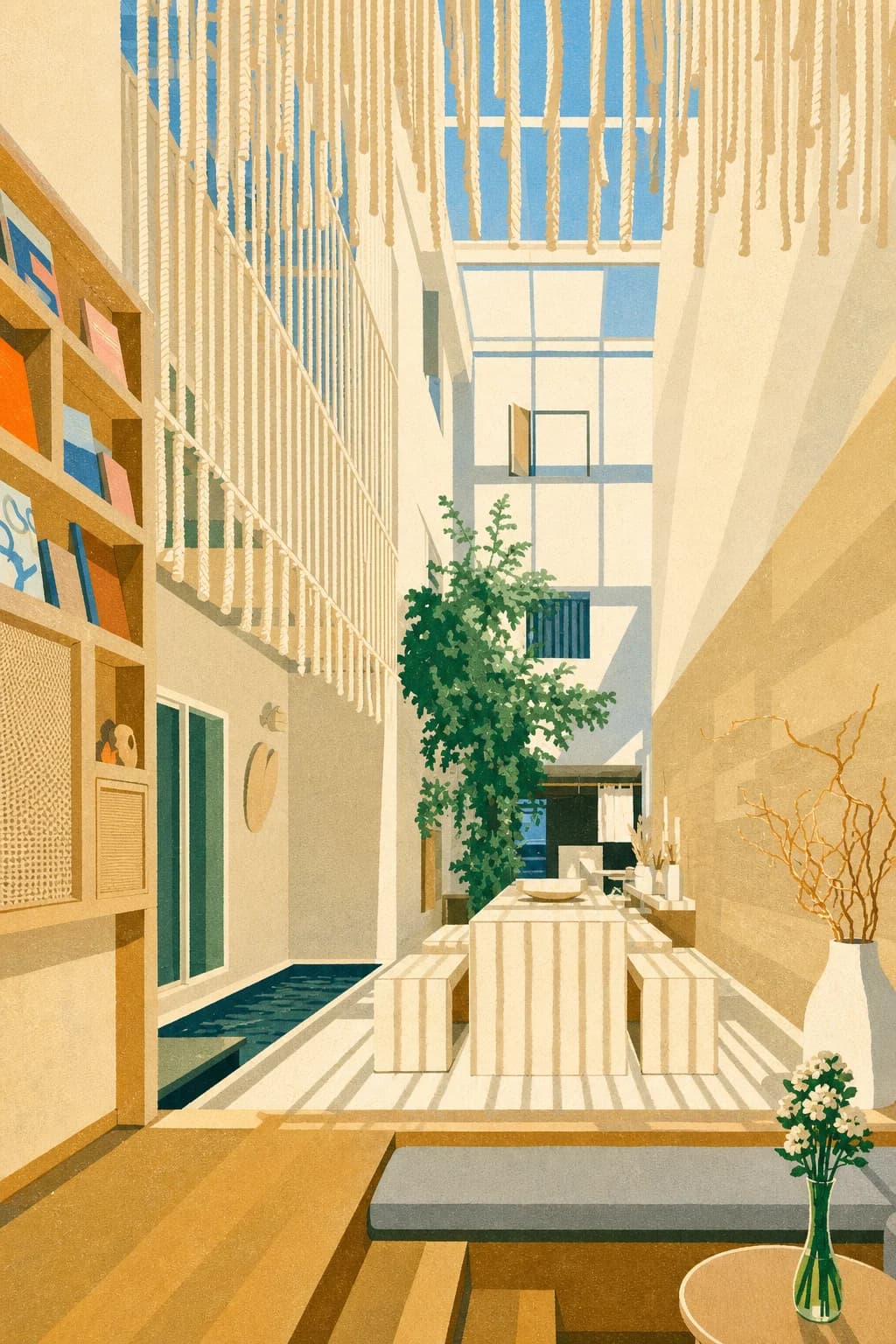
Galvanduque didn't import a ryokan, she rebuilt the idea in Mexican materials. Terrazzo floors carry the tatami, blond wood softens every edge, and sliding paper screens let ten rooms breathe without walls that box you in. Touchscreen controls run the lights and the baths, so the design stays quiet. It reads as minimalism with a reason, not minimalism for a magazine.
Four onsen baths up top
The rooftop is where the concept earns its name: four terrace onsen baths, steam rising over the Cuauhtémoc skyline, booked in private windows so it never feels like a pool deck. Downstairs there's a garden and a library for the in-between hours, plus a spa with massages guests rate highly. Breakfast is included; there's no restaurant, which suits a place built for quiet.
Little Tokyo, minutes from Reforma
The address is Rio Panuco 166 in Cuauhtémoc, on the fringe of the sushi counters and izakayas locals call Little Tokyo. Reforma, the Museo de Arte Moderno, and Chapultepec are a short walk; Roma and Condesa are a quick cab. You're central without the noise of Centro, close to Diego Rivera murals and galleries when you want the city, back to silence when you don't.
talk.
mapped.
“Welcome to Little Tokyo, one of the newsiest neighborhoods in Mexico City. The Ryo Kan property is nestled in the midst of the neighborhood; you can easily walk past it and miss it.”
record.
Architect Regina Galvanduque of GLVDK Studio, who trained at Parsons in New York, built the first ryokan concept to open in Latin America: ten rooms wrapped in blond wood, tatami mats laid over terrazzo, sliding paper walls that turn a small footprint into something calm and deliberate.
Four terrace onsen baths sit up top, a Japanese garden and a quiet library sit below, and the whole place runs on touchscreens so nothing breaks the hush. It is in Cuauhtémoc, on the edge of the pocket locals call Little Tokyo, minutes from Reforma. With ten rooms and a growing reputation, it books out at peak, so plan ahead if you want the version of the city that whispers.
changed.
Mexico City runs on a two-peak calendar, and understanding why the curve looks the way it does is worth more than any temperature chart. The first peak is spring, roughly March into April, the dry-season stretch when the jacarandas turn the city violet and the skies stay clear. The second is late October into November, when Day of the Dead brings the single biggest travel surge of the year. Those are the weeks the city sells to the world, and they are the weeks the small design houses fill first.
For those peaks, plan far ahead. The Roma and Polanco properties that matter, the handful in the upper tiers, can close out three months before Day of the Dead and the jacaranda weeks, and there is no overflow wing when a hotel has nine or twenty rooms. If your trip is fixed to those dates, book the room before the flights.
The genuinely undervalued window is the summer rainy season, June through August. The rain scares people off, but it arrives as short, predictable afternoon storms that clear by evening, leaving bright mornings for everything you actually came to do. Demand drops to its yearly low, the same rooms that vanish in October sit open, and rates soften across the board. Shoulder travelers who do not need the jacarandas get the best value of the year here.
The rest of the calendar fills in around the peaks. February, May, September, and December run warm with demand: September carries Independence Day on the 16th and its plaza celebrations, and December brings the Guadalupe pilgrimage and Christmas, both of which tighten the center in particular. January sits quiet after the holidays, another soft, workable window.
The one thing Mexico City never does is close. There is no dead season, no shuttered-hotel month; the city works year-round, so the only real decision is how much company you want and how early you are willing to commit. Book the peaks early, take the summer if you can be flexible.
approach.
briefing.
stands.
demand's going.
The real Instagram following over time, plus where this hotel sits for demand in Mexico City. Pick a range, toggle the lines. Followers are reach and demand, not engagement.
assessment.
File closes at HIGH. A real ryokan in Cuauhtémoc, ten rooms and rooftop onsen baths, first of its kind in Latin America. Book direct and plan ahead for peak. For couples chasing a design mood, book it; for a sightseeing base or a family, skip.
The numbers behind the tiers
Ryo Kan · SOURCE READINGS · REDACTED- Availability density · sampled
- Monthly search volume · raw
- TikTok hashtag views · raw
- YouTube total views · raw
- TikTok following · latest sweep
- Pinterest saves · latest sweep
More from Mexico City.




Get the hotel's Unbookable Score.
Any post or reel with a hotel in it. Booking.com hotel pages work too. One free check, no account needed.