Mi Amor
Tulum.

7 critic reviews
filed.
The cliff setting and the couples-only focus are exactly as advertised, and for the right trip it works beautifully. What the hype can oversell is the beach experience, because the hotel is not really a beach hotel, it is a pool-and-view hotel with a beach nearby, and you should book accordingly.
Colibri runs five restaurants across its Tulum properties and as a Mi Amor guest you can usually get priority seating at sister venues like La Zebra's beachfront kitchen or Mezzanine's Thai dining room, which is the easiest way to sample the north-to-south beach road without five different reservations.
angles.
A cliff instead of a beach
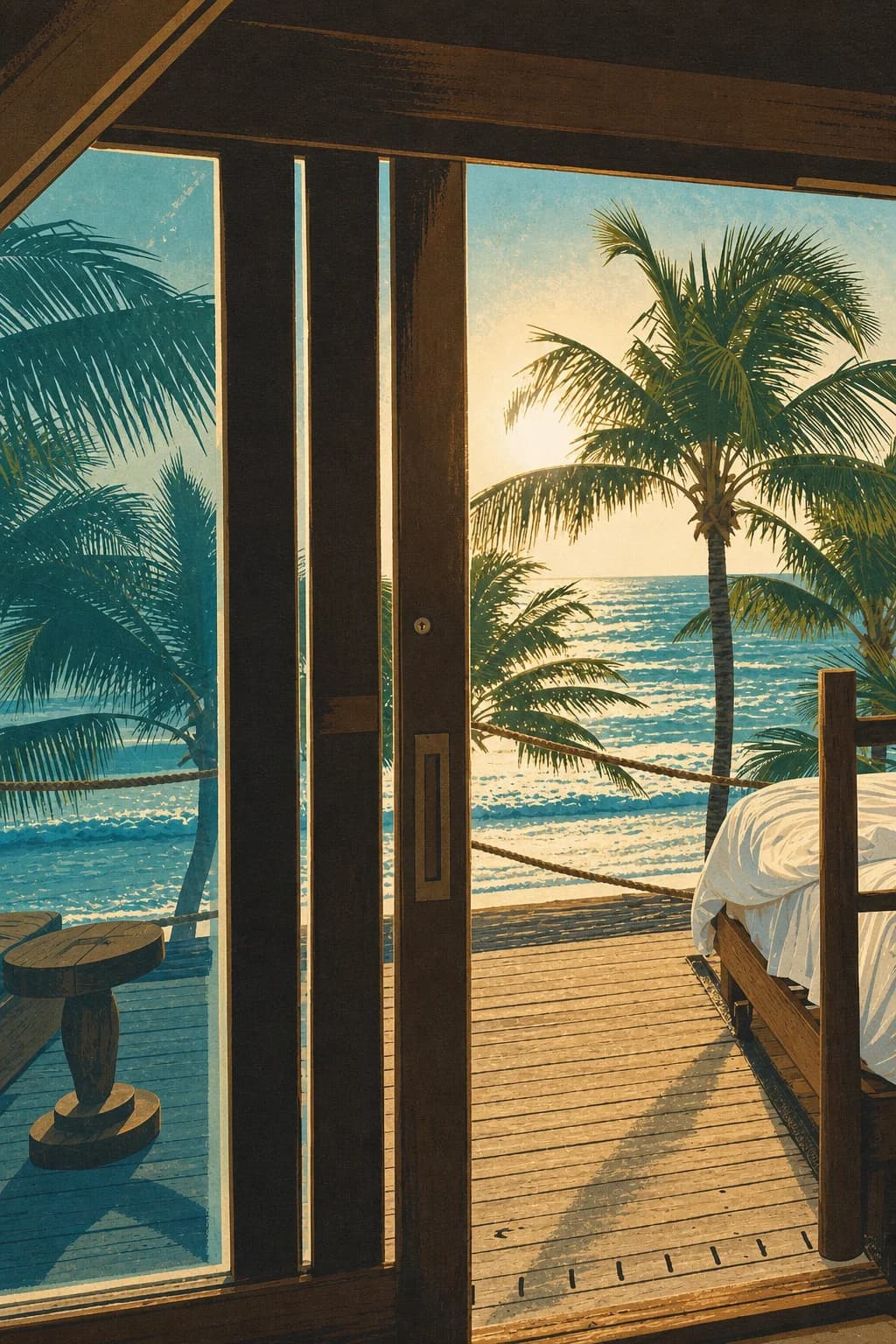
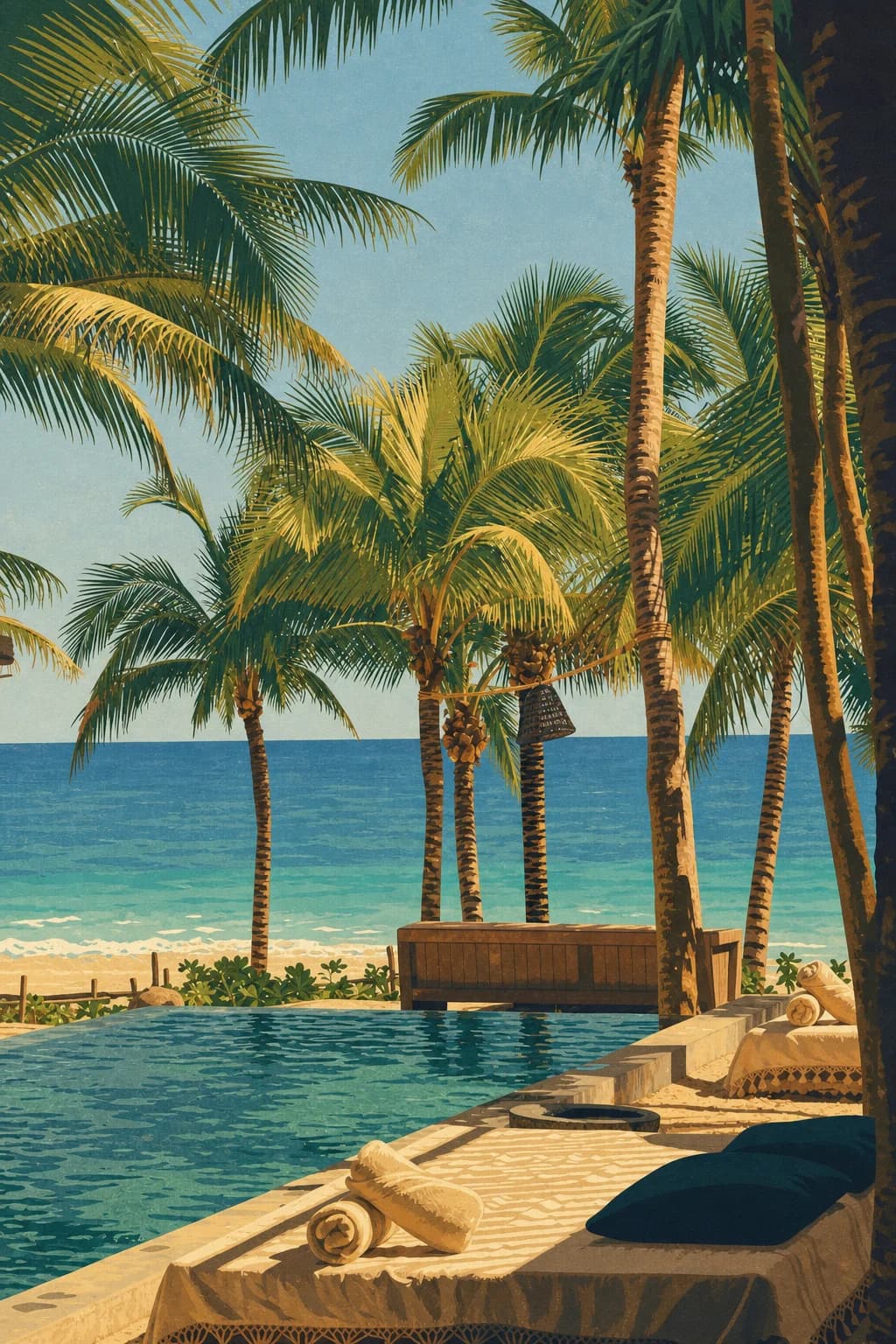
Mi Amor is one of the only Tulum Hotel Zone properties built on a rocky outcrop rather than a flat sand line. The result is a dramatic ocean view from almost every room and a private feel that most beach hotels cannot offer, because neighbours cannot simply walk past. The tradeoff is you go to the water, the water does not come to you, and the property uses its pool as the main swimming space.
The Acapulco heyday aesthetic
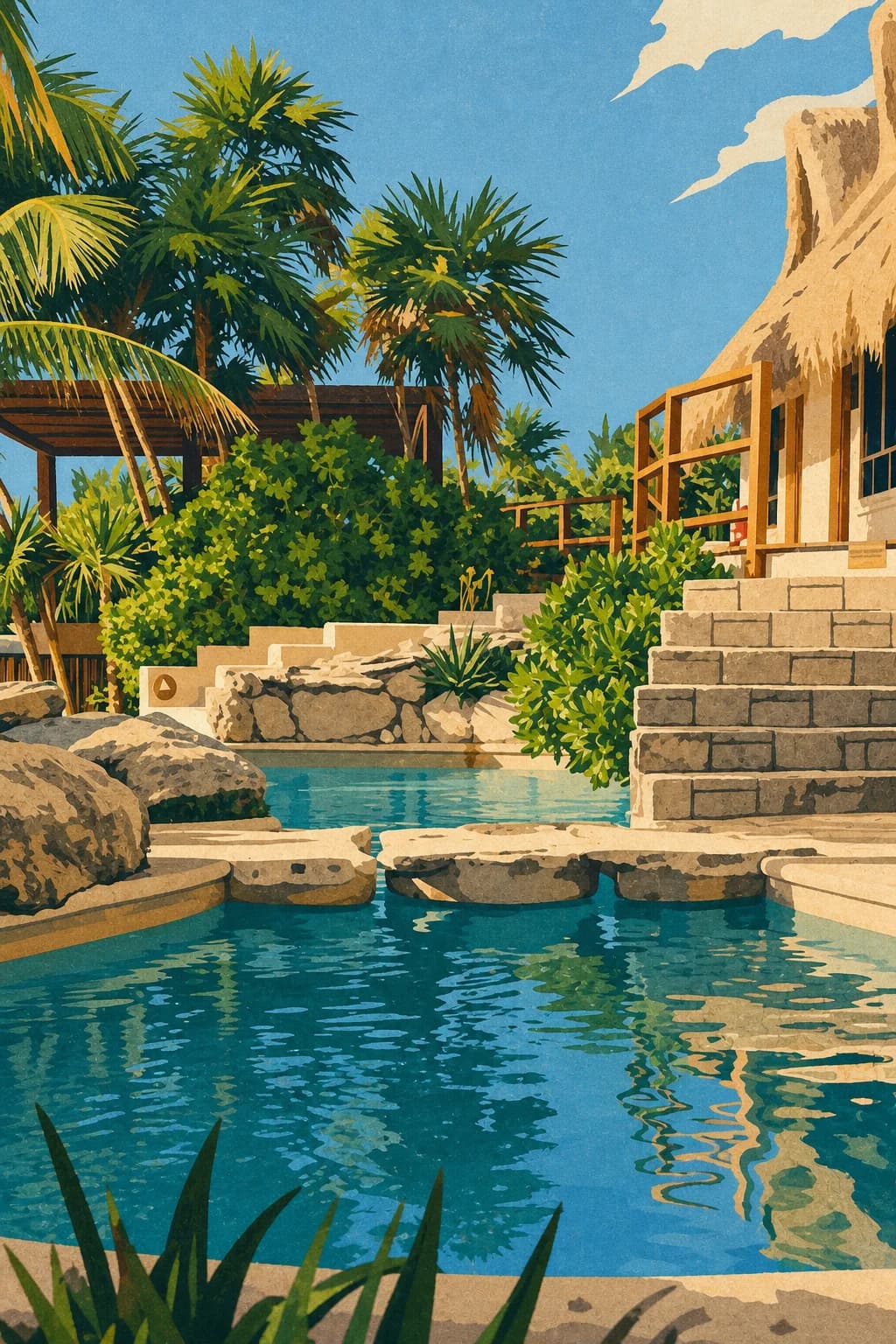
The design references the Acapulco of the 1950s, that moment when Sinatra and Hollywood were down in Mexico being photographed in linen. The Mr & Mrs Smith write-up called it a romance-kindling boutique where everything is designed for two, and the little egg chairs over the pool and private gazebos have become the rooms' signature image. It is kitsch in the best sense, confidently so.
Inside Parque del Jaguar
When Mexico turned a chunk of the Tulum beach into the Parque del Jaguar protected area, a small handful of pre-existing hotels ended up inside the park boundary. Mi Amor is one of them. Practically that means vehicle access is controlled, the surroundings are kept light on new construction, and guests arrive through a quieter, more regulated stretch of the road than the full beach crush further south.
talk.
mapped.
“An overwhelming number of guests praise Mi Amor's luxurious and romantic setting and exceptional staff. Mi Amor aims to inspire romance.”
record.
Mi Amor opened around 2005 to 2006 as part of the Australian-owned Colibri Boutique Hotels group, which also runs La Zebra, Mezzanine, and Lula, and the property leans hard into an Acapulco 1950s Art Deco fantasy. Egg-shaped chairs over the pool, cushioned daybeds in private gazebos, hammocks on private patios.
The defining view is a Caribbean horizon off a ledge rather than a walk-out beach, and the whole thing is designed as a couples retreat. SLH member, on Hilton's books, Condé Nast Traveler included it on its 40 Best Resorts in Mexico list, and the inventory is tight because the footprint never grew beyond its original small plot.
changed.
December through March peaks. November is the value window. Avoid September: sargassum and hurricane risk peak together.
Tulum runs on three overlapping forces — weather, crowd density, and sargassum seaweed — and misreading any one of them can wreck a trip. That triangulation matters more here than at almost any other Caribbean destination.
December through March is peak season, and it earns the title. Humidity drops, rain turns rare, and the Caribbean hits its clearest. December carries maximum demand on Christmas and New Year's pricing, while January through March hold steady before a March Spring Break surge fills South Beach Zone properties weeks out. For Ultra or Very High tier properties that book direct only, plan 60 to 90 days ahead — Nomade and Hotel Esencia both manage their own reservations and sell out specific room categories well before arrival.
April is the bridge. Easter and Semana Santa bring a final demand spike, driven largely by Mexican domestic travelers. Once that holiday window closes, both rates and crowds ease.
May through November is where the trade-offs live. Hurricane season officially runs June 1 through November 30, but statistical risk concentrates in September and October, with September carrying a 15 to 20% probability of tropical cyclone activity. June also opens the worst sargassum stretch: the floating brown algae, carried by Atlantic currents, piles onto Tulum's east-facing beaches from roughly May through October, peaking in July and August. Tulum's open coastline orientation means it catches more than Cancun or Playa del Carmen, and University of South Florida forecasts suggest 2026 could be among the heaviest sargassum years on record for the Mexican Caribbean.
Hotels with dedicated beach cleanup crews manage the situation daily; properties without them can have significant accumulation.
September is the genuine low point. Demand bottoms out, hurricane risk peaks, sargassum lingers, and some smaller properties cut hours or close for maintenance. October begins a slow recovery, with Day of the Dead at month's end marking the cultural pivot back toward high season. November is a legitimate value window: sargassum fades, hurricane odds drop sharply, and pricing hasn't yet climbed to December levels.
approach.
briefing.
“Mi Amor is an excellent option for couples looking for something quiet and romantic, but the intimate vibe is less suited to families.”
stands.
demand's going.
The real Instagram following over time, plus where this hotel sits for demand in Tulum. Pick a range, toggle the lines. Followers are reach and demand, not engagement.
assessment.
File closes at HIGH. Book two to three months out, or use Hilton Honors for points, status, and softer cancellation. Skip if you need scale; the smaller standards sit set back from the beach.
The numbers behind the tiers
Mi Amor Tulum · SOURCE READINGS · REDACTED- Availability density · sampled
- Monthly search volume · raw
- TikTok hashtag views · raw
- YouTube total views · raw
- TikTok following · latest sweep
- Pinterest saves · latest sweep
More from Tulum.






Get the hotel's Unbookable Score.
Any post or reel with a hotel in it. Booking.com hotel pages work too. One free check, no account needed.