Nômade
Tulum.

14 critic reviews
filed.
The hype gets the wellness programming and the food right, and those are the two things most guests actually come for. What the hype misses is how much the property's communal atmosphere depends on the other guests; on a good week it is magic, on a quieter week it can feel under-populated for its scale.
The least-photographed restaurant, Kuu Ju, is the one worth booking. The ceremonial dinner format is longer and more deliberate than the property's more Instagrammed main restaurant, and most day guests never see it because it is a reservation-only, guest-priority kitchen tucked behind the main dining area.
angles.
Three Restaurants, Three Moods
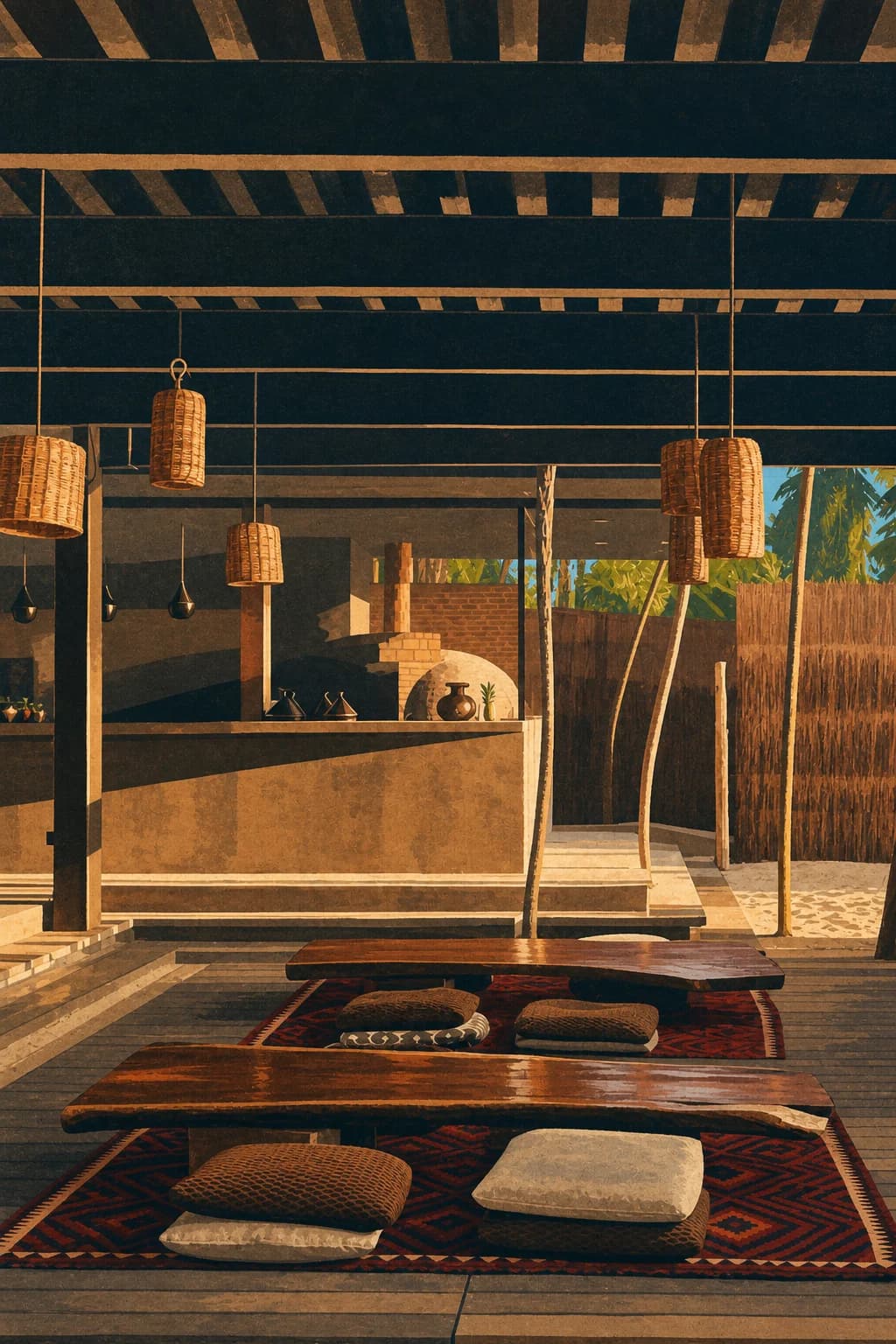
La Popular runs as the daytime beach restaurant, Macondo handles Mexican-Mediterranean fusion in the main dining area, and Kuu Ju leans into ceremonial plant-forward dinners. Most wellness-led properties treat food as an afterthought; Nômade treats it as architecture of the day. You can eat three meals without leaving the property and never repeat an atmosphere, which matters when the nearest competitive kitchen is a 15-minute car ride.
Wellness Without the Silence
Nômade's programming runs daily: yoga at sunrise, cacao ceremonies at sunset, sound baths, breathwork, full-moon gatherings. It is not a silent retreat. The energy is communal, and the property was built to gather guests around fires, on cushions, and at long tables. If that is the holiday you are looking for, there are few places executing it at this scale. If it is not, this is not the property for you.
Sebastian Sas's Second Act
Sas is the Belgian-born architect whose Sas Arquitectos studio shaped the dark, sultry look of Be Tulum and then did something completely different at Nômade: lighter, more open, tents instead of walls. Nômade is his answer to the question of what happens when the same architect is asked to build the opposite of his most famous project, and the two properties standing side-by-side on Km 10.5 make the comparison explicit.
talk.
mapped.
“Guided by a philosophy of transformation and discovery, your stay at Nomade is an invitation to look inward and to connect with those around you, as well as with your surroundings.”
record.
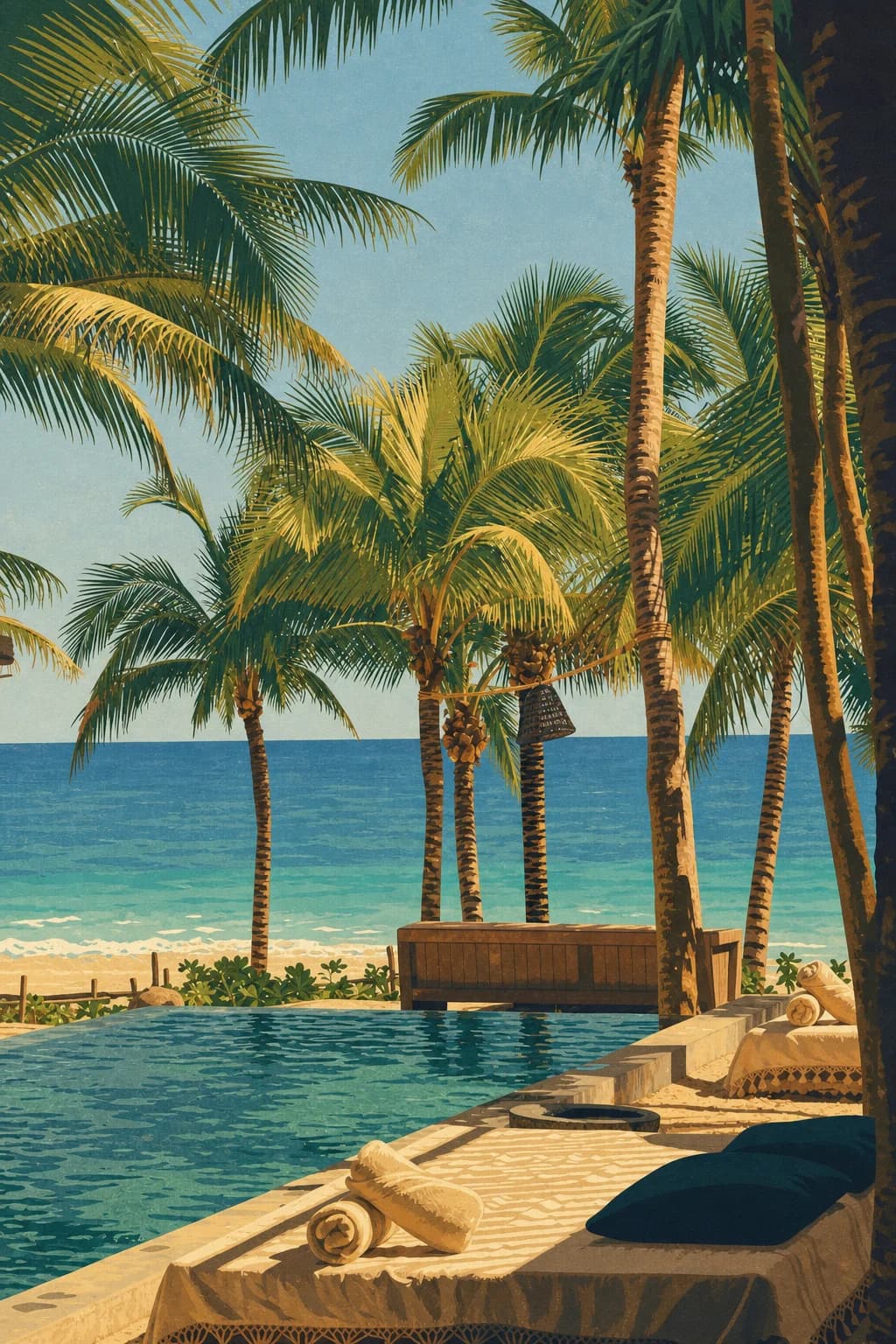
The architect relaunched the property in December 2015 with Moroccan-inspired tents, bamboo treehouses, and beachside bungalows connected by sand paths and communal lounges where guests eat breakfast reclining on cushions and low couches. Condé Nast Traveler put it on its Hot List in 2016, and MICHELIN described it as a marvel of indoor-outdoor architecture.
The programming is where Nômade separates from its sister property: daily wellness activities, sound healing, cacao ceremonies, and three restaurants (La Popular, Macondo, Kuu Ju) that each serve a different mood of the day. With 302,000 Instagram followers and 38 core rooms (98 total keys including tents and bungalows), the booking difficulty is not about scarcity of dates; it is about getting the specific room type you actually want.
changed.
December through March peaks. November is the value window. Avoid September: sargassum and hurricane risk peak together.
Tulum runs on three overlapping forces — weather, crowd density, and sargassum seaweed — and misreading any one of them can wreck a trip. That triangulation matters more here than at almost any other Caribbean destination.
December through March is peak season, and it earns the title. Humidity drops, rain turns rare, and the Caribbean hits its clearest. December carries maximum demand on Christmas and New Year's pricing, while January through March hold steady before a March Spring Break surge fills South Beach Zone properties weeks out. For Ultra or Very High tier properties that book direct only, plan 60 to 90 days ahead — Nomade and Hotel Esencia both manage their own reservations and sell out specific room categories well before arrival.
April is the bridge. Easter and Semana Santa bring a final demand spike, driven largely by Mexican domestic travelers. Once that holiday window closes, both rates and crowds ease.
May through November is where the trade-offs live. Hurricane season officially runs June 1 through November 30, but statistical risk concentrates in September and October, with September carrying a 15 to 20% probability of tropical cyclone activity. June also opens the worst sargassum stretch: the floating brown algae, carried by Atlantic currents, piles onto Tulum's east-facing beaches from roughly May through October, peaking in July and August. Tulum's open coastline orientation means it catches more than Cancun or Playa del Carmen, and University of South Florida forecasts suggest 2026 could be among the heaviest sargassum years on record for the Mexican Caribbean.
Hotels with dedicated beach cleanup crews manage the situation daily; properties without them can have significant accumulation.
September is the genuine low point. Demand bottoms out, hurricane risk peaks, sargassum lingers, and some smaller properties cut hours or close for maintenance. October begins a slow recovery, with Day of the Dead at month's end marking the cultural pivot back toward high season. November is a legitimate value window: sargassum fades, hurricane odds drop sharply, and pricing hasn't yet climbed to December levels.
approach.
briefing.
“Nômade sets itself apart as a destination where 'journey designers' focus fully on immersion and managing safety and well-being of the guests.”
stands.
demand's going.
The real Instagram following over time, plus where this hotel sits for demand in Tulum. Pick a range, toggle the lines. Followers are reach and demand, not engagement.
assessment.
File closes at VERY HIGH. Book direct three months out for high season. Skip if quiet privacy matters; tent walls carry every sound.
The numbers behind the tiers
Nômade Tulum · SOURCE READINGS · REDACTED- Availability density · sampled
- Monthly search volume · raw
- TikTok hashtag views · raw
- YouTube total views · raw
- TikTok following · latest sweep
- Pinterest saves · latest sweep
More from Tulum.








Get the hotel's Unbookable Score.
Any post or reel with a hotel in it. Booking.com hotel pages work too. One free check, no account needed.