Jnane
Rumi.
5 critic reviews
filed.
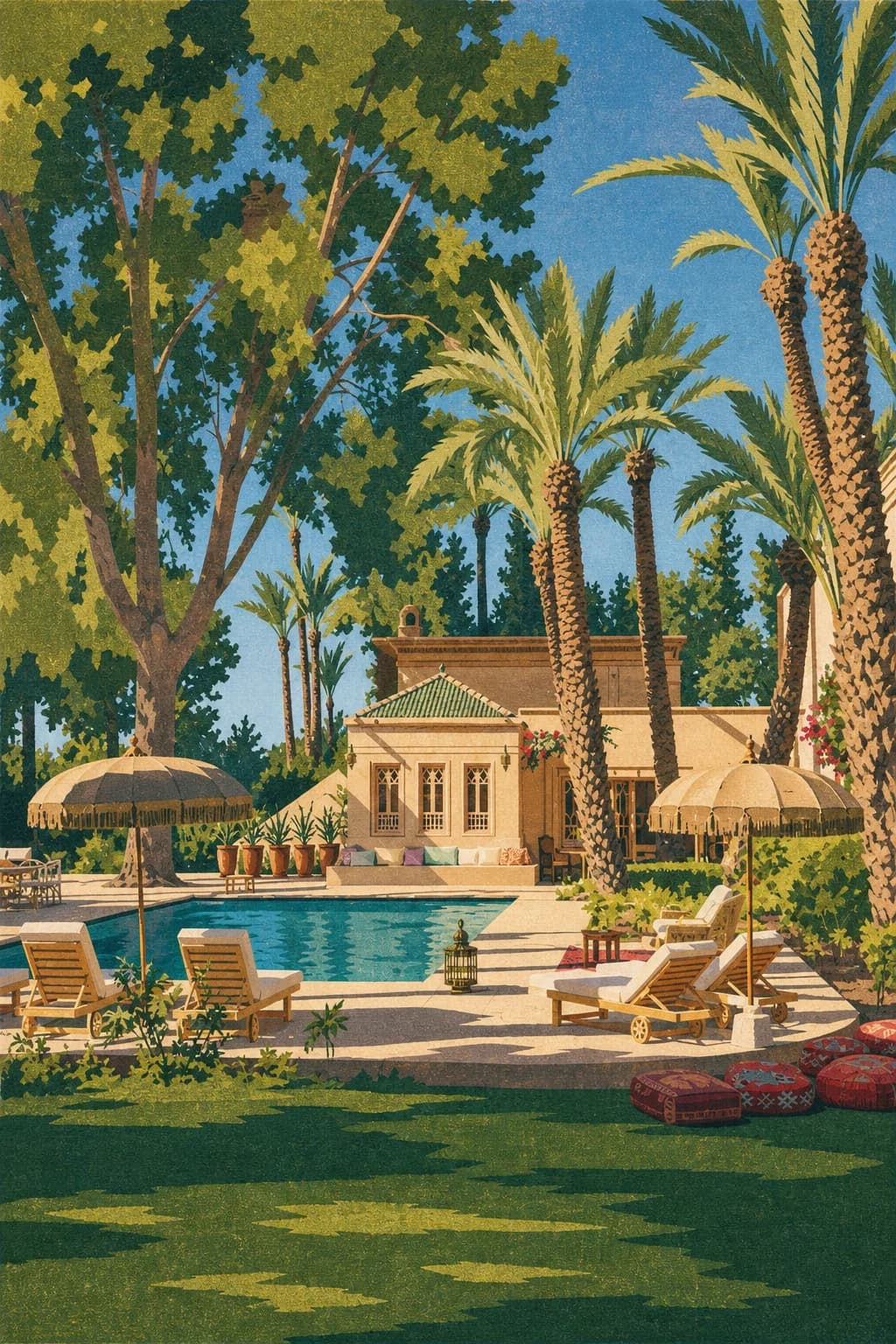
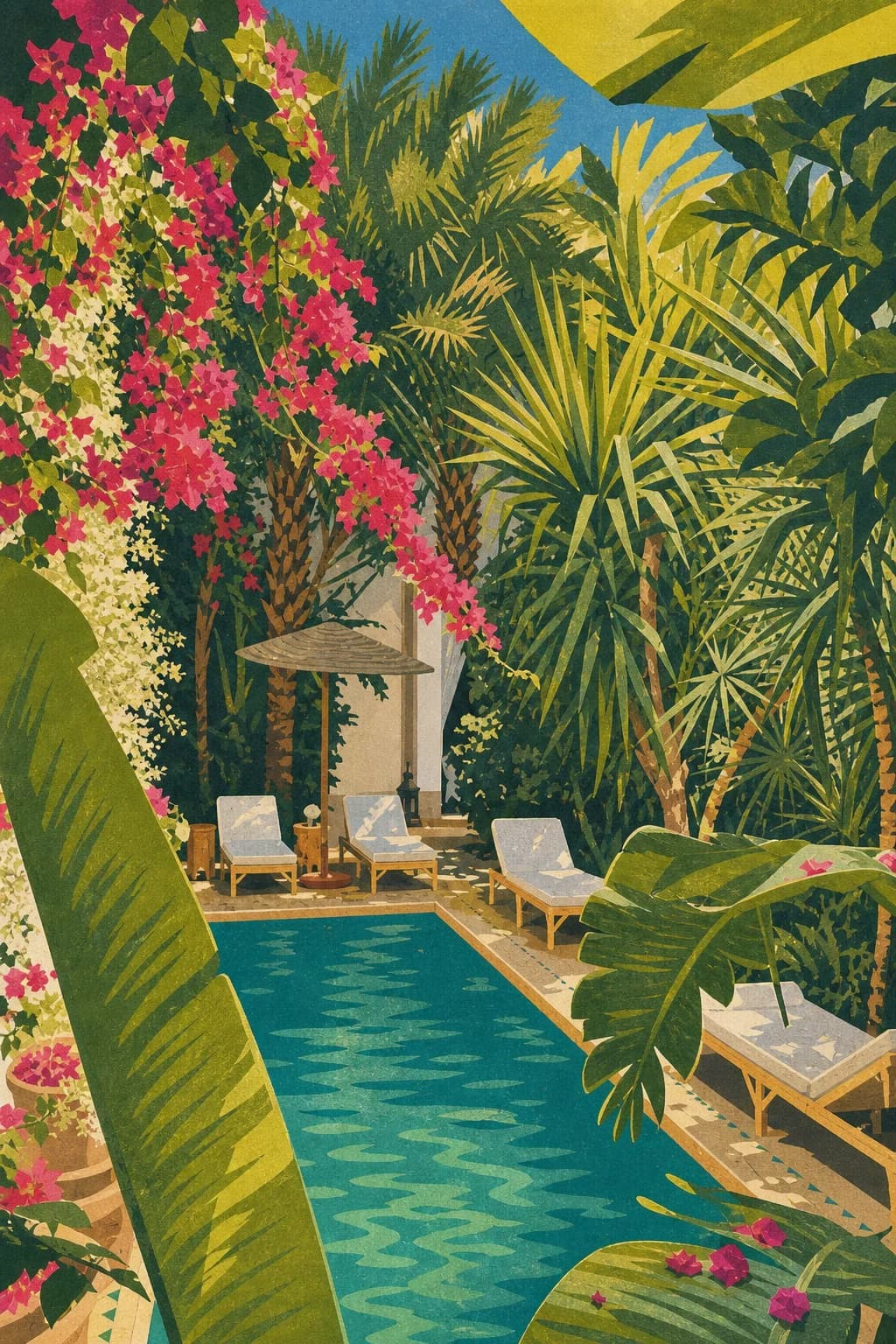
Jnane Rumi is 11 rooms in the Palmeraie with a Sufi-inspired garden concept that leans contemplative rather than party-Palmeraie. The grounds and the pool hold up. What the hype softens is the distance from the medina and the fact that the quiet atmosphere is deliberate, so guests expecting a lively resort scene will need to adjust their expectations on arrival.
The property runs occasional evening music sessions with traditional Sufi musicians in the garden, which are open to non-guests by invitation only. Ask on booking whether your dates overlap with a session and request an invitation directly; the staff will include it in your stay if there is space.
angles.
Boccara's Original Vision
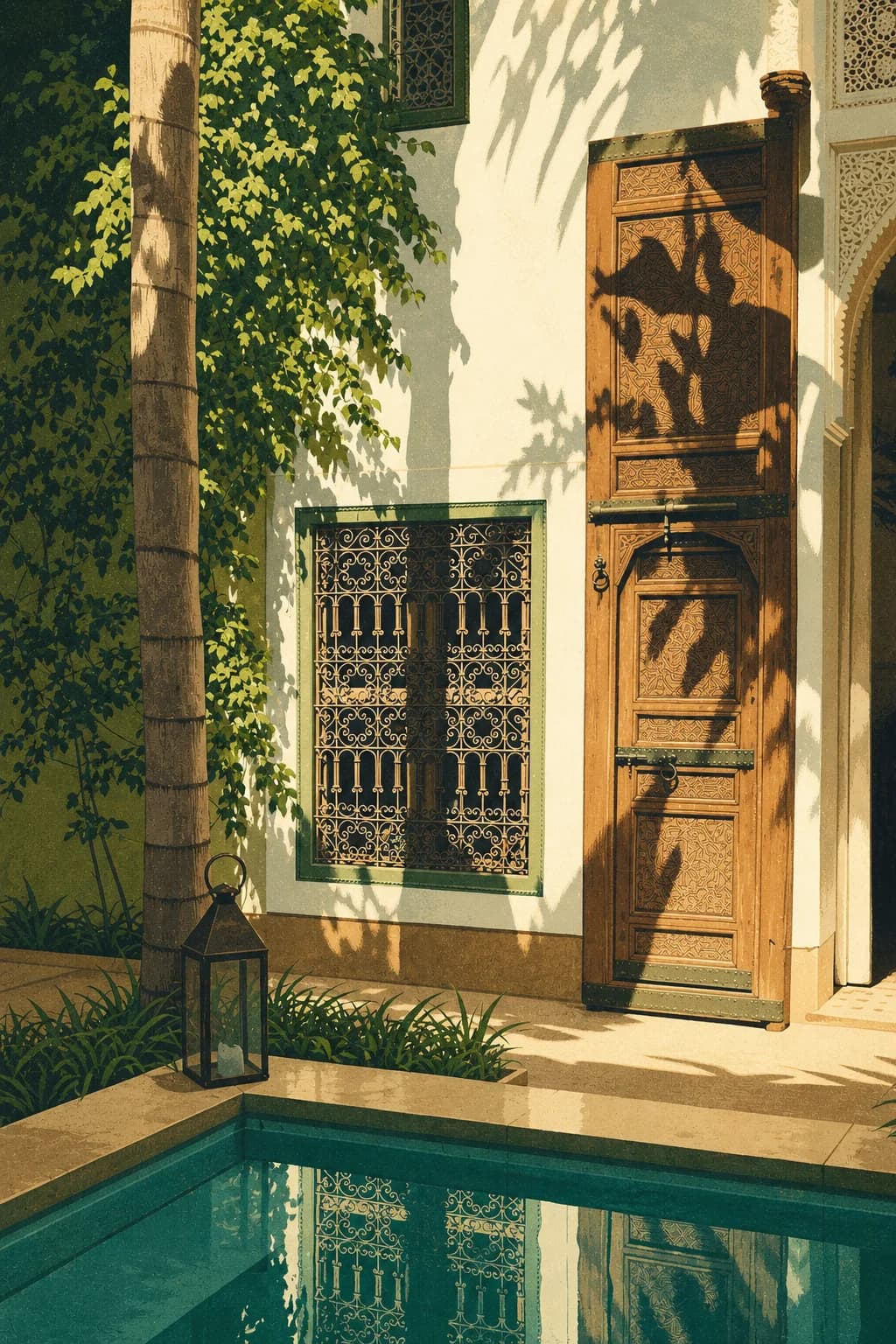
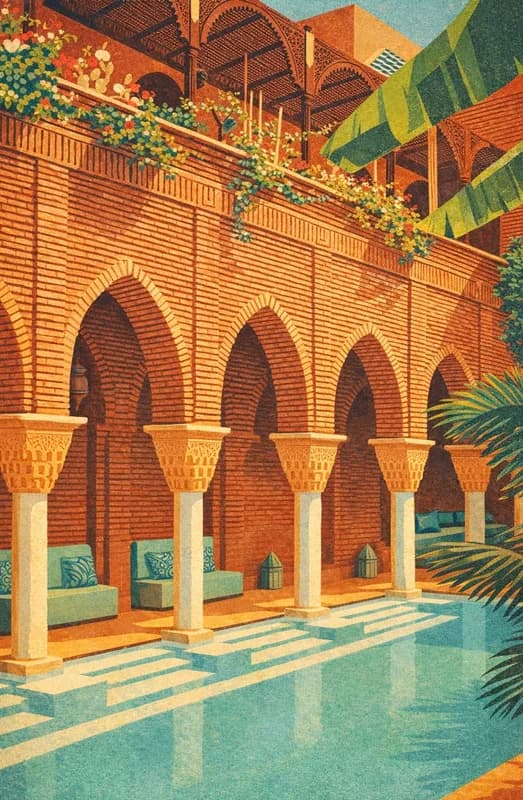
Charles Boccara is the architect who shaped modern Marrakech: the Theatre Royal, Les Deux Tours, and a generation of Palmeraie villas. Jnane Rumi was one of his residential commissions, built for sociologist Paul Pascon. The building's proportions, materials, and relationship with the garden are unmistakably Boccara. Nicolas Bodé's renovation added a second floor without contradicting the original. When you stay here, you're inside a Boccara building, which in Marrakech architecture carries real weight.
Artists Before Guests
The Dutch owner selected resident artists before accepting the first reservation. The property functions partly as an artist residency, which shapes the atmosphere. Art is in progress, not on display. The corridors are working galleries, not decorated walls. This curatorial approach is what the owner means by "manifesto." It makes Jnane Rumi feel like a cultural project that happens to rent rooms, not a hotel that decorates with art.
Kimya's Nine-Metre Ceiling
The Kimya Suite has a nine-metre vaulted ceiling over a sunken bathtub. The Shams Suite has Berber ceiling details. Valad stretches to 48 square metres with a fireplace and private terrace. Each room is named and individually designed. At eleven rooms in a Boccara building, the architecture carries more personality than most Palmeraie properties achieve with five times the room count.
talk.
mapped.
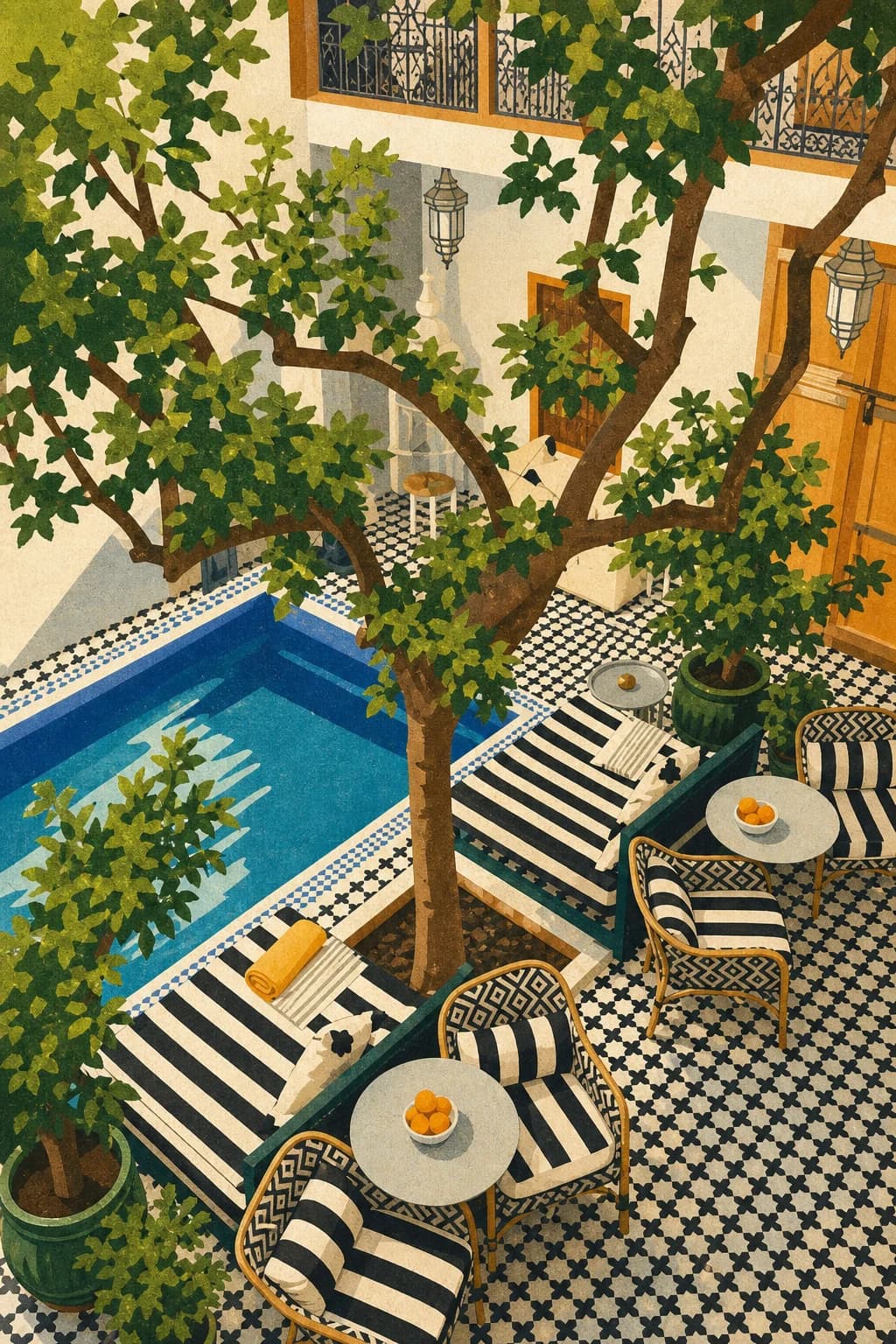
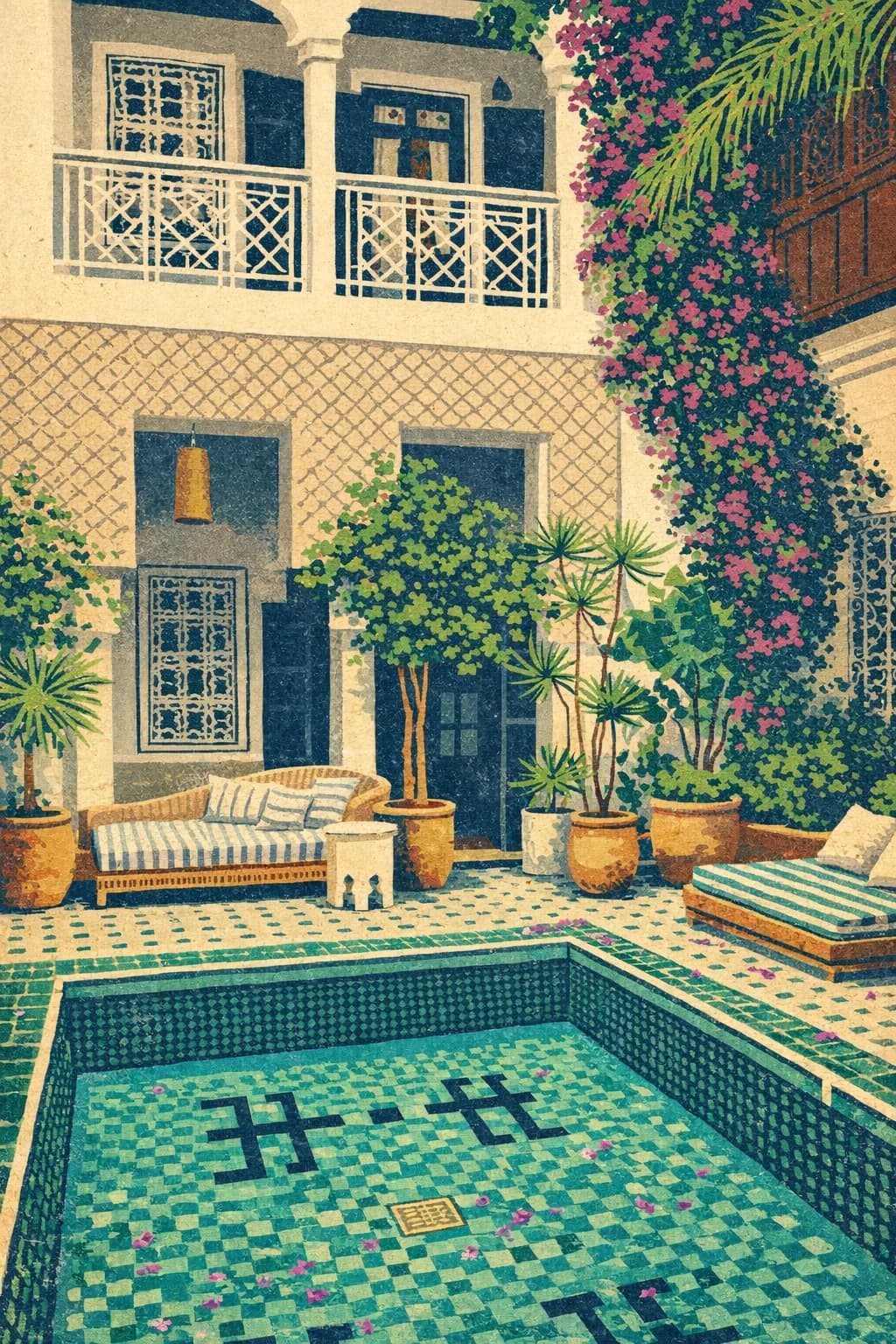
“I am still, many weeks after my visit, haunted by the hotel's signature scent, a clear oud. I have been craving the marvellous meals I had at tile tables by the pool, shaded by bougainvillea.”
record.
Dutch owner Gert-Jan van den Bergh acquired the property and commissioned Nicolas Bodé, a Boccara protégé, to add a second floor in the original architectural language.
Jacques van Nieuwerburgh contributed to the upper level design. Eleven rooms include the Kimya Suite (nine-metre vaulted ceiling over a sunken bathtub), the Shams Suite (Berber ceiling details), and the Valad room (48 square metres with fireplace terrace). The owner describes it as a "manifesto" and selected resident artists before opening reservations. Breakfast is exceptional and included. Thirty minutes from RAK airport.
changed.
Book December four to six months out. October–November is the value window. Skip summer unless heat-tolerant.
In Marrakech, demand runs inverse to the thermometer. When Europe wants winter sun and the heat breaks, the city's riads compress into windows that close months ahead — and that pattern is entirely predictable.
December is the single Peak month, and it behaves like nothing else on the calendar. New Year's Eve collides with European winter-sun demand to squeeze the top properties into a roughly two-week window that books out far in advance. Plan on four to six months of lead time for Ultra-tier riads; three months is often already too late for properties like Riad BE or Le Riad Yasmine.
October and November deliver the best value relative to experience quality. Demand indexes high — 80 in October, 85 in November — but autumn rates at many properties run 30 to 60 percent below spring equivalents because the season falls outside European school holidays. October brings the 1-54 Festival, Marrakech's contemporary art biennale, adding a cultural layer spring lacks. November is the month our data flags as flat-out underpriced: it indexes at 85 without December's premium or the school-holiday crush.
March and April are the traditional high season, driven by Easter breaks and the spring weather window. Easter week is the tightest booking window outside December, and Jardin Majorelle requires timed-ticket advance purchase throughout this period. Ramadan shifts annually across the calendar; when it overlaps with March or April, restaurants and some services run reduced hours while hotels stay fully open.
Check the Ramadan dates before you book — they reshape the dining and nightlife experience far more than the hotel experience.
Summer is the strategic play for price-sensitive travelers who can handle heat. Demand drops below 30 from June through August, and properties that validate as sold out in October often show wide-open availability through July. The medina's thick walls and internal courtyards were built for this climate, so morning and evening exploration stay comfortable — the tradeoff is that midday outdoor sightseeing is impractical. What disappears entirely is the sold-out pressure that defines the rest of the year.
September is the transition window, and it favors the early mover. Temperatures moderate and demand begins to climb, but rates have not yet caught up to autumn levels.
approach.
briefing.
“Probably one of the most beautiful places we have seen so far: Jnane Rumi is a piece of art in itself. The kitchen focuses on simple, vegetable-led dishes with Moroccan and French influences.”
stands.
demand's going.
The real Instagram following over time, plus where this hotel sits for demand in Marrakech. Pick a range, toggle the lines. Followers are reach and demand, not engagement.
assessment.
File closes at HIGH. Book direct one to two months out before Wallpaper coverage tightens stock. Skip if a settled-property feel matters; the artist residency rhythm is still finding its groove.
The numbers behind the tiers
Jnane Rumi · SOURCE READINGS · REDACTED- Availability density · sampled
- Monthly search volume · raw
- TikTok hashtag views · raw
- YouTube total views · raw
- TikTok following · latest sweep
- Pinterest saves · latest sweep
More from Marrakech.
Get the hotel's Unbookable Score.
Any post or reel with a hotel in it. Booking.com hotel pages work too. One free check, no account needed.