Riad BE
Marrakech.
10 critic reviews
filed.
Riad BE is one of the few 10-room medina riads that operates at a legitimately sold-out cadence, and the reason holds up once you are inside: the restoration is detailed, the rooftop is large, and the team actually runs a program rather than just handing you keys. The hype understates how far the riad sits from the main gates, so first arrivals always underestimate the walk.
The riad runs a weekly Moroccan dinner hosted in the courtyard with a set menu and an open seating format, which means guests meet each other rather than eating in isolation. It is open to outside bookings when there is space. Ask about the Wednesday sitting on check-in.
angles.
Oasis and Essence
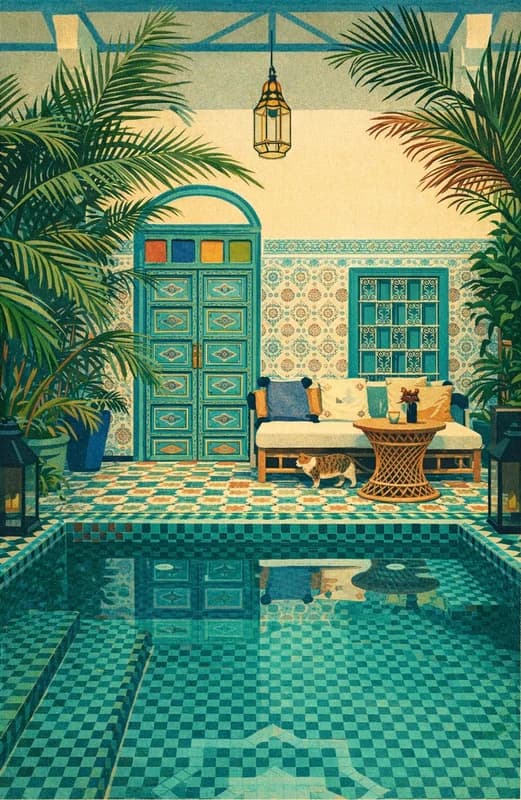
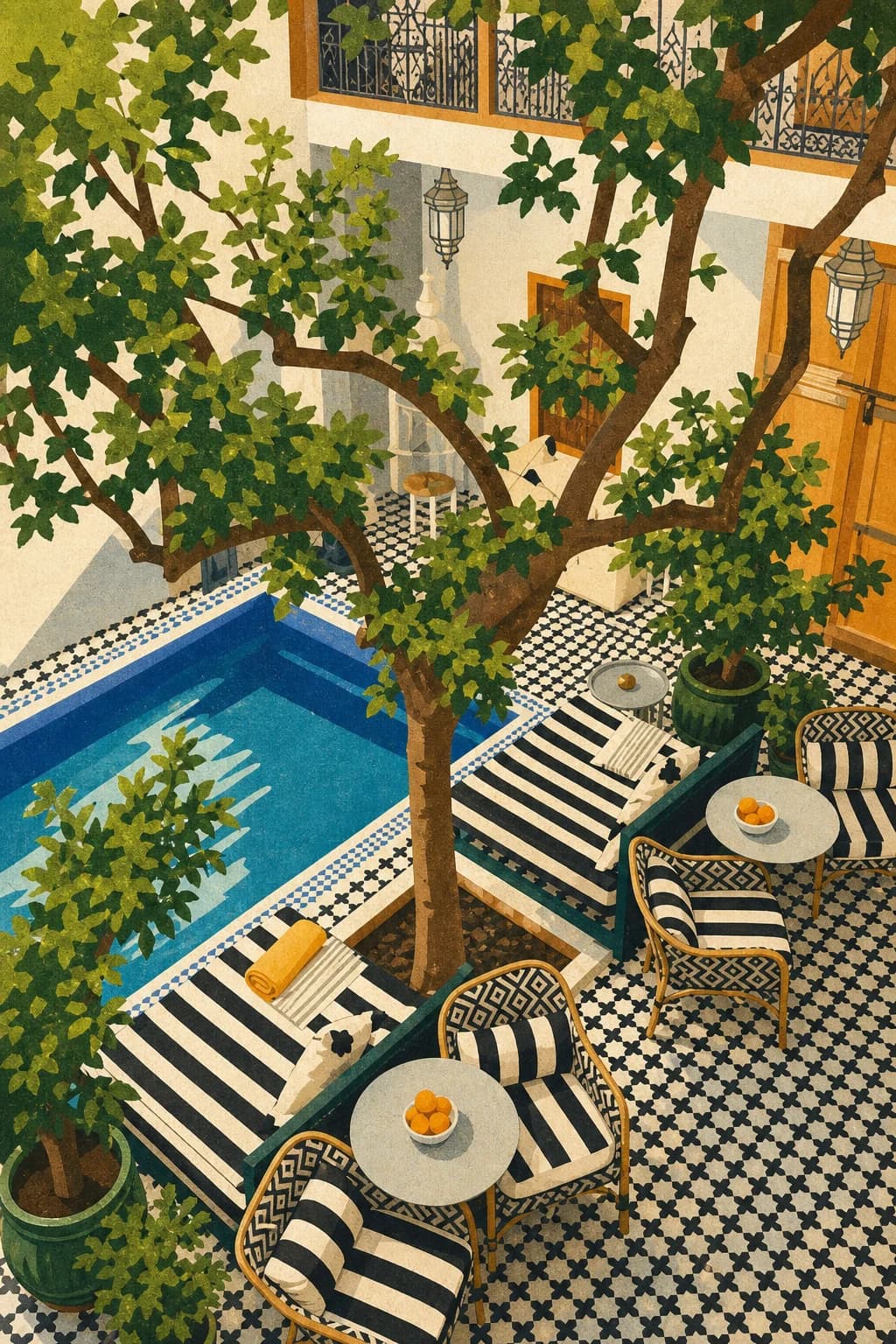
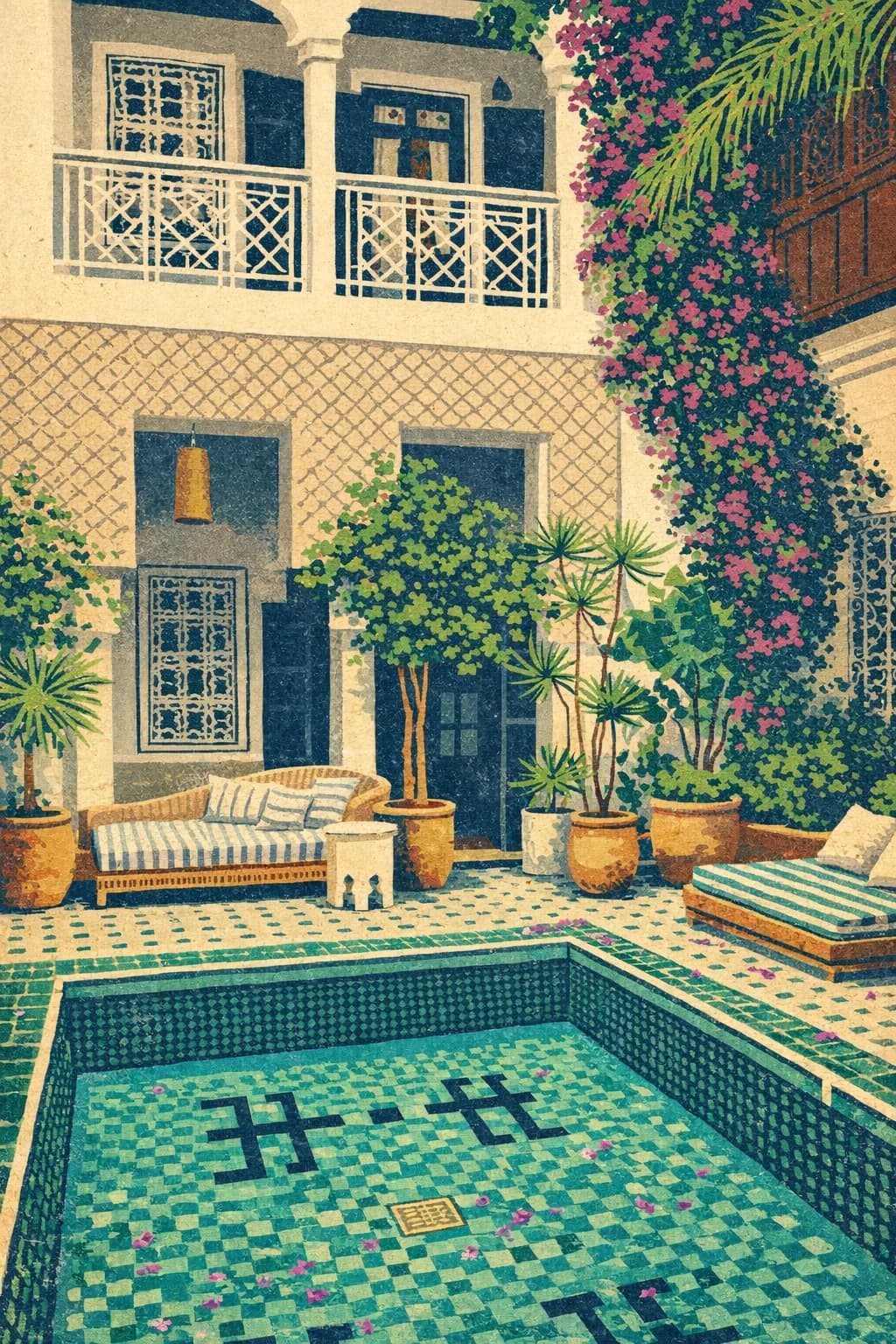
The two-riad split gives guests a genuine choice. The Oasis is maximalist Moroccan: colour, pattern, courtyard greenery. The Essence is its opposite: neutral tones, period features, quiet restraint. One couple's home divided into two aesthetic philosophies. The Essence side works as a private riad hire for groups who want the whole building. The Oasis is for guests who want the classic Marrakech courtyard atmosphere.
Nicole and Mohamed's Kitchen
Two Moroccan in-house chefs lead cookery classes that teach tagine, pastilla, and Moroccan bread techniques. The kitchen is working, not theatrical: guests learn in the same space where breakfast is prepared. Nicole's Swiss precision meets Mohamed's Moroccan heritage in the menu and the method. The classes have run long enough to develop a reputation independent of the rooms.
Bab Doukkala, Northwest Medina
Bab Doukkala is the northwest gate of the Medina, quieter than the central souk areas but walkable to everything. Lonely Planet picked BE for their neighbourhood guide. The location balances Medina atmosphere with breathing room: ten minutes to Jemaa el-Fna, five minutes to the souks, but a street that doesn't fill with tourist traffic. Nicole and Mohamed chose the neighbourhood before they chose the building.
talk.
mapped.
“The charming Riad BE Marrakech, with lots of greenery and modern mosaics — neighborhood guide pick”
record.
The Oasis side is colour and pattern: rooms named Narjiss, Kamar, and Ard, with bold Moroccan textiles and green courtyard views. The Essence side is neutral tones and period features, functioning almost as a private riad hire with its own kitchen and rooftop terrace. Ten rooms across the two halves.
Lonely Planet named it a "charming riad with lots of greenery and modern mosaics" in their neighbourhood guide. Hotel Guru called it "bijou, brimming with colour and creativity." Two Moroccan chefs lead cookery classes in the kitchen. Rooftop yoga studio. Connected spa. Near Bab Doukkala in the northwest Medina, a ten-minute walk to Jemaa el-Fna and five to the souks. Rates sit at the value end of the boutique Medina including breakfast. Pet friendly. Family suites available.
changed.
Book December four to six months out. October–November is the value window. Skip summer unless heat-tolerant.
In Marrakech, demand runs inverse to the thermometer. When Europe wants winter sun and the heat breaks, the city's riads compress into windows that close months ahead — and that pattern is entirely predictable.
December is the single Peak month, and it behaves like nothing else on the calendar. New Year's Eve collides with European winter-sun demand to squeeze the top properties into a roughly two-week window that books out far in advance. Plan on four to six months of lead time for Ultra-tier riads; three months is often already too late for properties like Riad BE or Le Riad Yasmine.
October and November deliver the best value relative to experience quality. Demand indexes high — 80 in October, 85 in November — but autumn rates at many properties run 30 to 60 percent below spring equivalents because the season falls outside European school holidays. October brings the 1-54 Festival, Marrakech's contemporary art biennale, adding a cultural layer spring lacks. November is the month our data flags as flat-out underpriced: it indexes at 85 without December's premium or the school-holiday crush.
March and April are the traditional high season, driven by Easter breaks and the spring weather window. Easter week is the tightest booking window outside December, and Jardin Majorelle requires timed-ticket advance purchase throughout this period. Ramadan shifts annually across the calendar; when it overlaps with March or April, restaurants and some services run reduced hours while hotels stay fully open.
Check the Ramadan dates before you book — they reshape the dining and nightlife experience far more than the hotel experience.
Summer is the strategic play for price-sensitive travelers who can handle heat. Demand drops below 30 from June through August, and properties that validate as sold out in October often show wide-open availability through July. The medina's thick walls and internal courtyards were built for this climate, so morning and evening exploration stay comfortable — the tradeoff is that midday outdoor sightseeing is impractical. What disappears entirely is the sold-out pressure that defines the rest of the year.
September is the transition window, and it favors the early mover. Temperatures moderate and demand begins to climb, but rates have not yet caught up to autumn levels.
approach.
briefing.
“Both a bijou five-bedroom guesthouse brimming with colour and creativity and a clever concept”
stands.
demand's going.
The real Instagram following over time, plus where this hotel sits for demand in Marrakech. Pick a range, toggle the lines. Followers are reach and demand, not engagement.
assessment.
File closes at ULTRA. Book direct one to two months out and ask Nicole for restaurant picks. Skip if a quiet anonymous riad matters; this one runs cookery classes and rooftop yoga on a schedule.
The numbers behind the tiers
Riad BE Marrakech · SOURCE READINGS · REDACTED- Availability density · sampled
- Monthly search volume · raw
- TikTok hashtag views · raw
- YouTube total views · raw
- TikTok following · latest sweep
- Pinterest saves · latest sweep
More from Marrakech.


Get the hotel's Unbookable Score.
Any post or reel with a hotel in it. Booking.com hotel pages work too. One free check, no account needed.