Aman
Kyoto.

5 critic reviews
filed.
The setting delivers exactly what the photos promise: real forest, real moss, real silence, twenty minutes from the temples. What you're paying for is space and quiet rather than a marquee downtown address. The value depends entirely on whether seclusion is what you came to Kyoto for.
Not a hidden gem in any honest sense. It carries one of the most recognised names in luxury travel and a following well past a million, so the secret is the location, not the hotel. What does stay under the radar is how genuinely remote and quiet it feels once you're inside the gate.
angles.
Built Around an Existing Garden
Kerry Hill Architects designed the resort as a contemporary ryokan and let the 1970s garden lead. The pavilions sit low in stained timber and Tamo Japanese ash, under raised-seam metal roofs, with timber screens filtering the light. The work earned People's Choice at the Australian Institute of Architects' 2020 International Chapter Architecture Awards, and Wallpaper* and Elle Decoration have both written it up.
Omakase in Charred Cedar
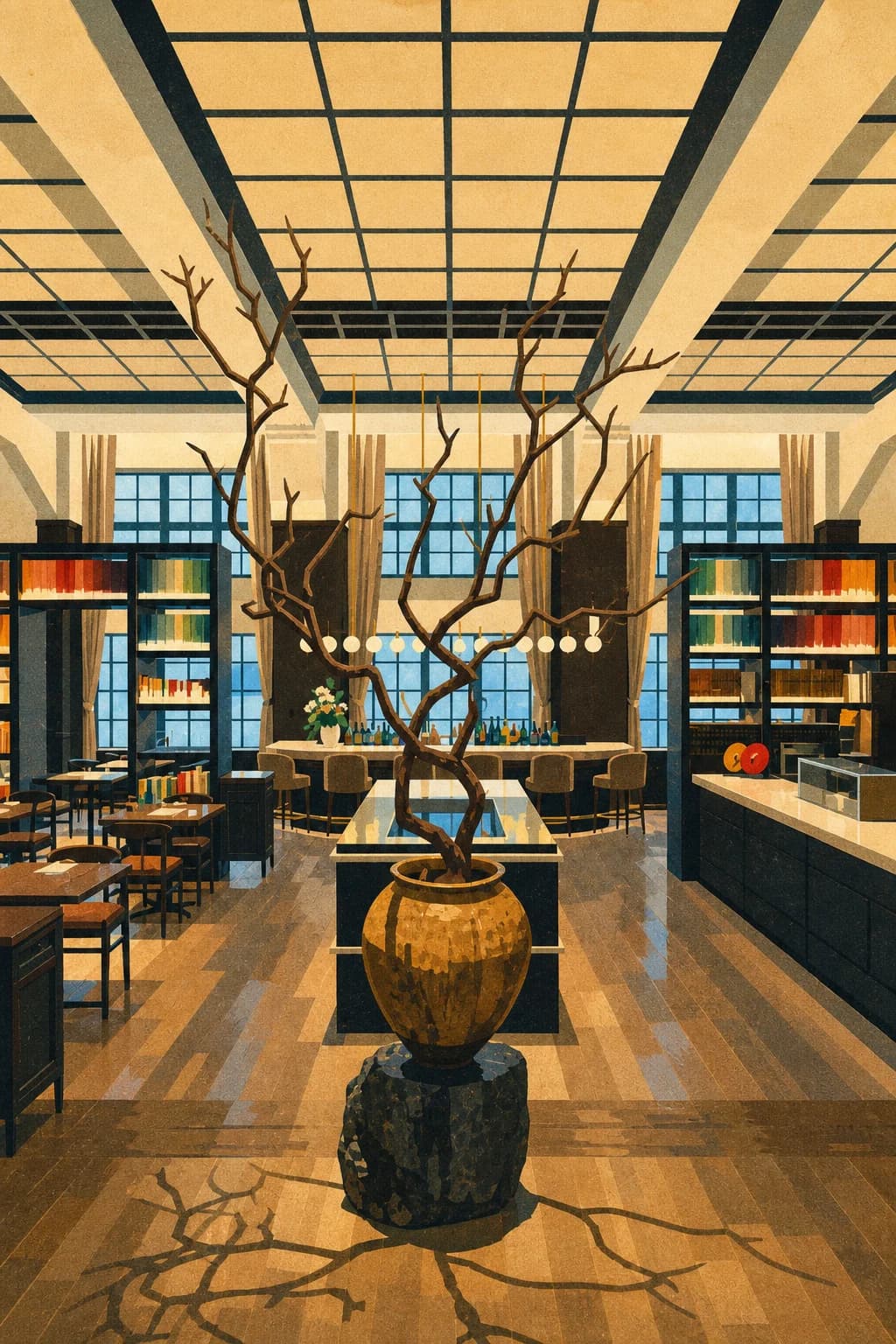
Taka-An sits in its own charred-cedar building outside the stone gate, built around a ten-metre counter cut from a single African cherry tree. Dinner is omakase, no fixed menu, rebuilt each night from what Kyoto's season is doing: Hirai beef, mountain vegetables, whatever the day brought in. You watch it plated in front of you. A private room looks onto the moss garden.
The Quiet Side of Kyoto
The resort hides in Takagamine, the wooded northern hills, at the foot of Hidari Daimonji. It feels far from everything, yet the temples of the northwest, Kinkaku-ji and the Kitano shrine, are short drives away, and central Kyoto is roughly twenty minutes by car. You trade walkable-city convenience for silence, moss, and a forest that turns hard with the seasons.
talk.
mapped.
“In the heart of a 79-acre forest outside of Kyoto—within walking distance of the UNESCO World Heritage Site Kinkaku-ji Temple—sits a hidden-away…”
record.
The land came first: an eight-acre garden laid out in the 1970s for a textile museum that never opened, left to grow over with moss and maple until architect Kerry Hill walked it in 1995 and brought it to Aman. His firm completed the resort in 2019.
What they built is a modern reading of the ryokan: low pavilions in stained timber and Tamo ash, raised metal roofs, screens that turn every window into a framed slice of forest. Stone-and-moss paths link the rooms to the onsen, fed by spring water that surfaces on the property. You hear water and birdsong, not the city, though central Kyoto sits twenty minutes down the hill. Twenty rooms across eight forested acres explains the rest.
changed.
Kyoto's demand curve is one of the most legible in Japan because it is almost entirely botanical. Two events set the peaks: cherry blossom in late March and April, and maple color in November. In those windows the city runs at capacity.
The two blossom peaks are a lead-time contest, not a booking exercise. Small houses in Gion and Higashiyama get spoken for six to nine months out, and the marquee rooms go further still. If your heart is set on blossom or foliage at a specific address, treat lead time as the whole game and book the moment dates open.
The shoulder months either side reward flexibility. February and December stay busy without hitting the peak — plum blossom and year-end temple illuminations, respectively. January is genuinely quiet: cold, clear, with the occasional dusting of snow on temple roofs that photographers wait years for. These are the months to chase the houses that vanish in spring.
Summer is the real value story, and the least understood. June through September reads as low demand despite holding one of Japan's great festivals, Gion Matsuri, which fills July with float processions, plus the Daimonji bonfires on August 16. The suppressant is simple: heat and humidity climb well into the thirties, and many travelers stay away.
If you can tolerate the weather, summer is when the hardest rooms open up at the softest rates.
The practical read is a split. Peak seasons are about discipline and early commitment; shoulder and low seasons are about opportunism. Because the curve tracks leaves rather than school holidays or weather comfort, the undervalued months are the counterintuitive ones — the hot ones. Nothing in Kyoto closes across the year, so the only real constraint is the two blossom peaks and how far ahead you are willing to plan.
approach.
briefing.
“The Living Pavilion by Aman serves as the hotel's restaurant, serving Italian-style cuisine impeccably sourced from local purveyors.”
stands.
demand's going.
The real Instagram following over time, plus where this hotel sits for demand in Kyoto. Pick a range, toggle the lines. Followers are reach and demand, not engagement.
assessment.
File closes at HIGH. A globally famous name and a following past a million keep demand steady; twenty rooms keep supply thin. Book direct and plan well ahead for autumn. Come for forest and silence; skip it if you want to walk to dinner.
The numbers behind the tiers
Aman Kyoto · SOURCE READINGS · REDACTED- Availability density · sampled
- Monthly search volume · raw
- TikTok hashtag views · raw
- YouTube total views · raw
- TikTok following · latest sweep
- Pinterest saves · latest sweep
More from Kyoto.



Get the hotel's Unbookable Score.
Any post or reel with a hotel in it. Booking.com hotel pages work too. One free check, no account needed.