Mantaray
Tulum.

There is not much hype yet. The property opened in mid-2024 with very limited press coverage and no Tier-A reviews, so what exists is word-of-mouth from the Soliman Bay villa network. What that network gets right is the restaurant. What it undersells is how quickly seven rooms fill when it gets discovered, which is starting now.
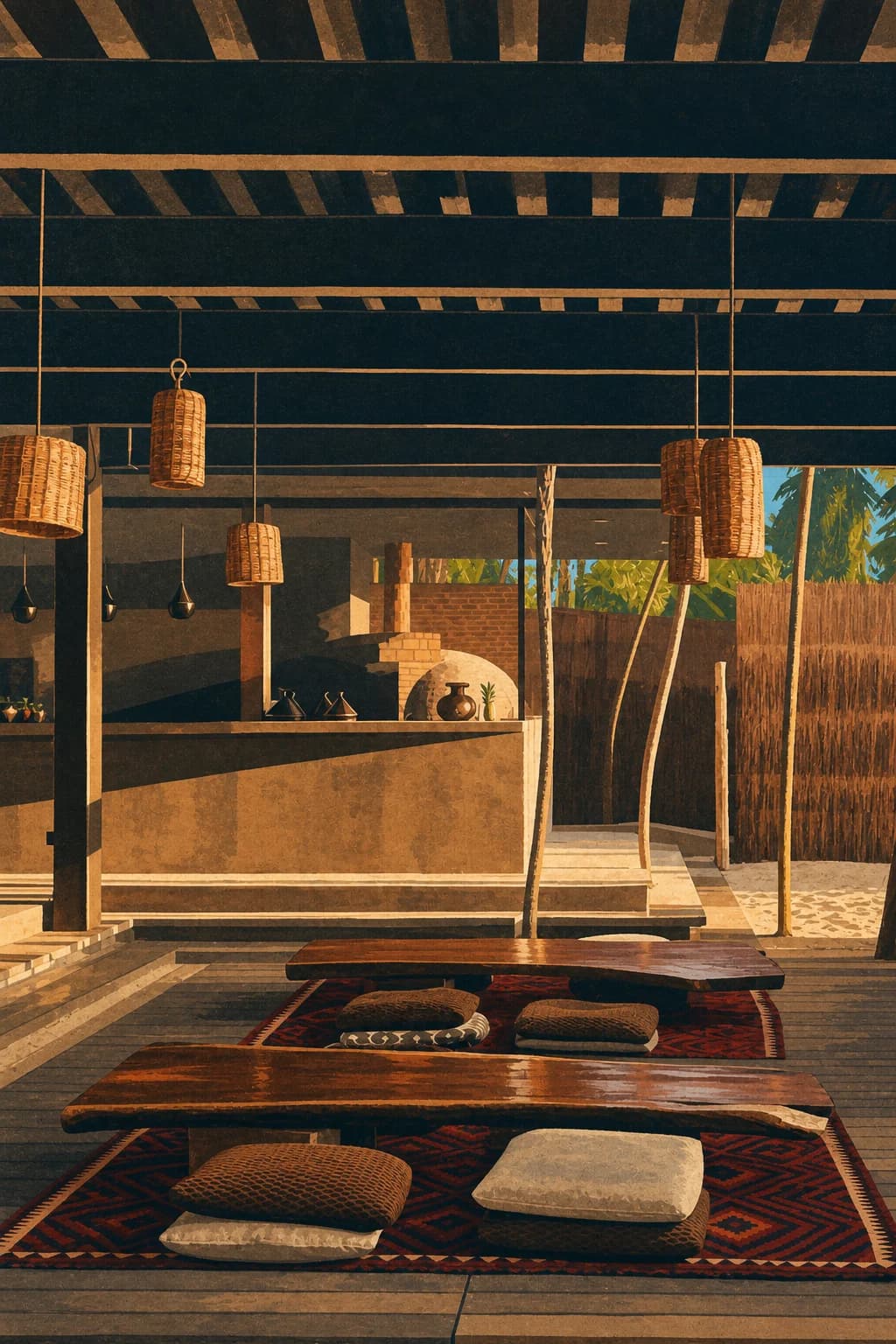
The on-site restaurant, which operates under the name Mantaray Kitchen on Instagram, is open to outside diners on most nights and has quietly become a destination meal for people staying in private villas elsewhere on Soliman and Tankah. If you can't get a room, book a dinner and ask about day-use beach club access.
angles.
Calm Water the Hotel Zone Lacks
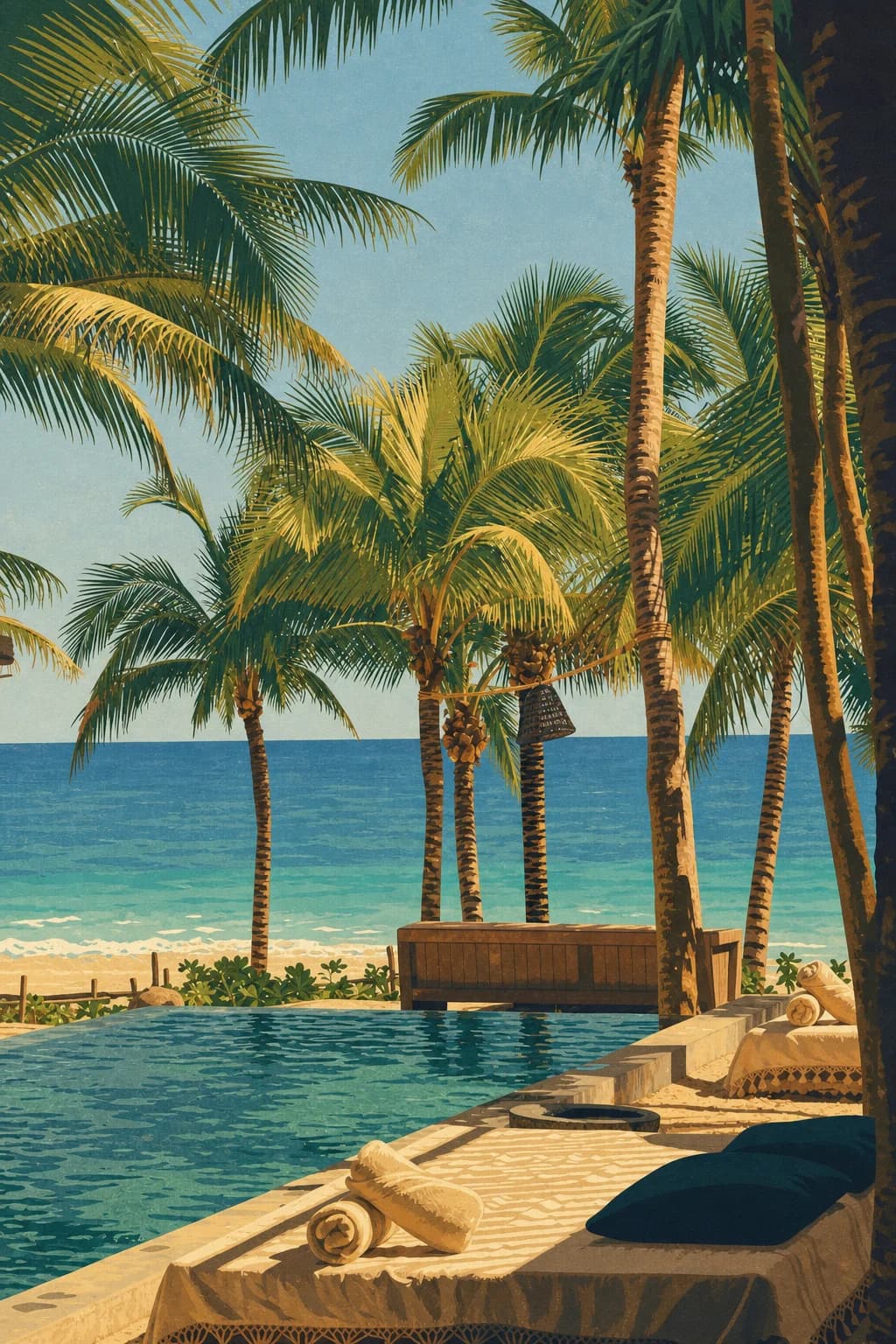
Soliman Bay has a protective reef that breaks the open-Caribbean swell, which means the water directly in front of Mantaray is almost swimming-pool calm on most days. This matters in Tulum, because the beach road's reef geometry leaves most Hotel Zone properties with rougher water, and swimmable flat water is genuinely rare on the coast this close to town.
Villas Not Rooms
Every one of the seven units is a villa rather than a room, which means you get a full kitchen in the beachfront category, plunge pools in most units, and real living space. For families or two couples travelling together, the three-bedroom villa across two levels with a game room sleeps up to eight without the splitting-across-rooms logistics that beach-road hotels force on groups.
New in a Slow-Build Area
Soliman Bay is a residential gated community first and a hotel area almost never. The permitting reality means that Mantaray is the only genuinely new hotel inventory added to the bay in years, and with seven rooms total, it can be fully booked by a single small wedding party. Booking-difficulty risk is structural rather than hype-driven here.
talk.
mapped.
record.
Mantaray changed that in mid-2024 as the first ground-up boutique hotel on the bay in a very long stretch of time. Seven villas total, split between four beachfront units with full kitchens, two garden villas with plunge pools, and a single three-bedroom villa for groups.
Two of the beachfront villas have their own plunge pools, and the property runs a private beach club with the kind of soft-sand calm water that the main Tulum Hotel Zone south of here simply cannot offer because of the reef geometry. Rates place it in the upper-boutique bracket. The on-site restaurant makes wood-fired pizza and margaritas that locals have started driving up the coast for.
changed.
December through March peaks. November is the value window. Avoid September: sargassum and hurricane risk peak together.
Tulum runs on three overlapping forces — weather, crowd density, and sargassum seaweed — and misreading any one of them can wreck a trip. That triangulation matters more here than at almost any other Caribbean destination.
December through March is peak season, and it earns the title. Humidity drops, rain turns rare, and the Caribbean hits its clearest. December carries maximum demand on Christmas and New Year's pricing, while January through March hold steady before a March Spring Break surge fills South Beach Zone properties weeks out. For Ultra or Very High tier properties that book direct only, plan 60 to 90 days ahead — Nomade and Hotel Esencia both manage their own reservations and sell out specific room categories well before arrival.
April is the bridge. Easter and Semana Santa bring a final demand spike, driven largely by Mexican domestic travelers. Once that holiday window closes, both rates and crowds ease.
May through November is where the trade-offs live. Hurricane season officially runs June 1 through November 30, but statistical risk concentrates in September and October, with September carrying a 15 to 20% probability of tropical cyclone activity. June also opens the worst sargassum stretch: the floating brown algae, carried by Atlantic currents, piles onto Tulum's east-facing beaches from roughly May through October, peaking in July and August. Tulum's open coastline orientation means it catches more than Cancun or Playa del Carmen, and University of South Florida forecasts suggest 2026 could be among the heaviest sargassum years on record for the Mexican Caribbean.
Hotels with dedicated beach cleanup crews manage the situation daily; properties without them can have significant accumulation.
September is the genuine low point. Demand bottoms out, hurricane risk peaks, sargassum lingers, and some smaller properties cut hours or close for maintenance. October begins a slow recovery, with Day of the Dead at month's end marking the cultural pivot back toward high season. November is a legitimate value window: sargassum fades, hurricane odds drop sharply, and pricing hasn't yet climbed to December levels.
approach.
briefing.
stands.
demand's going.
The real Instagram following over time, plus where this hotel sits for demand in Tulum. Pick a range, toggle the lines. Followers are reach and demand, not engagement.
assessment.
File closes at HIGH. Book direct four to six weeks out, longer for the three-bedroom villa. Skip weekends if possible; weekday inventory through winter is significantly easier here.
The numbers behind the tiers
Mantaray Tulum · SOURCE READINGS · REDACTED- Availability density · sampled
- Monthly search volume · raw
- TikTok hashtag views · raw
- YouTube total views · raw
- TikTok following · latest sweep
- Pinterest saves · latest sweep
More from Tulum.








Get the hotel's Unbookable Score.
Any post or reel with a hotel in it. Booking.com hotel pages work too. One free check, no account needed.