Urban Cowboy
Brooklyn.
5 critic reviews
filed.
The design genuinely delivers on the Instagram grid, which is rare. What is oversold is the idea that it is a luxury experience. It is a beautifully designed B&B with real tradeoffs around service and amenities, and understanding that before you arrive is the difference between loving it and writing a bad review.
Most reviews miss that Urban Cowboy quietly hosts occasional dinners, live music nights, and founder meetups in the parlor room, invite-only and announced mostly through the mailing list. If you time a stay around one, you get a dimension of the property that the usual guests never see.
angles.
A House, Not a Hotel
The footprint is tiny, five bedrooms across a townhouse and a two-room satellite called the Tree House, but that is the whole point. Guests share a communal kitchen and living room, pour their own coffee, and end up drinking with strangers around the backyard fire pit. Porter calls it arrive-as-strangers-leave-as-friends, which sounds like marketing until you actually stay and realize the property genuinely operates that way.
Design Built from Salvage
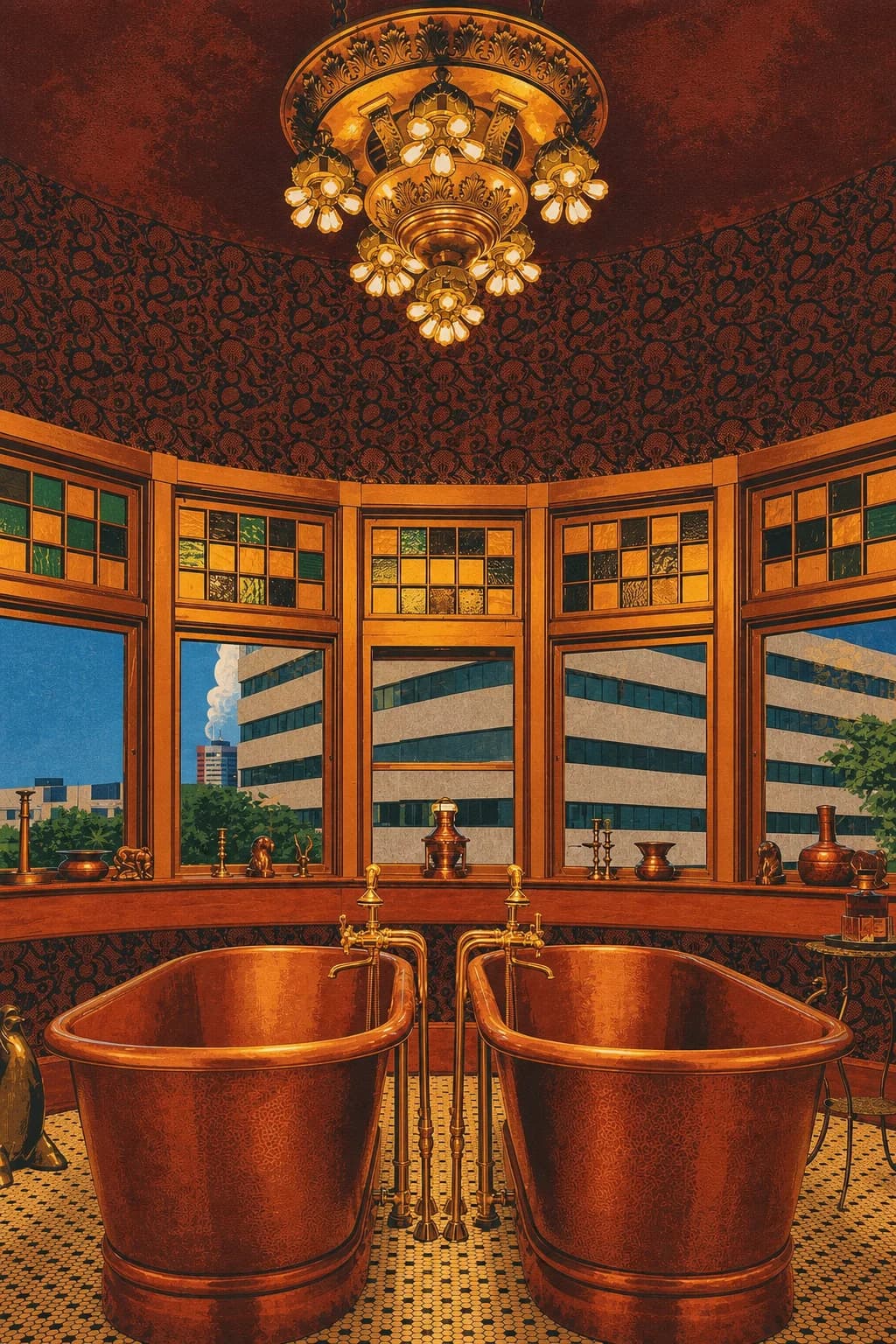
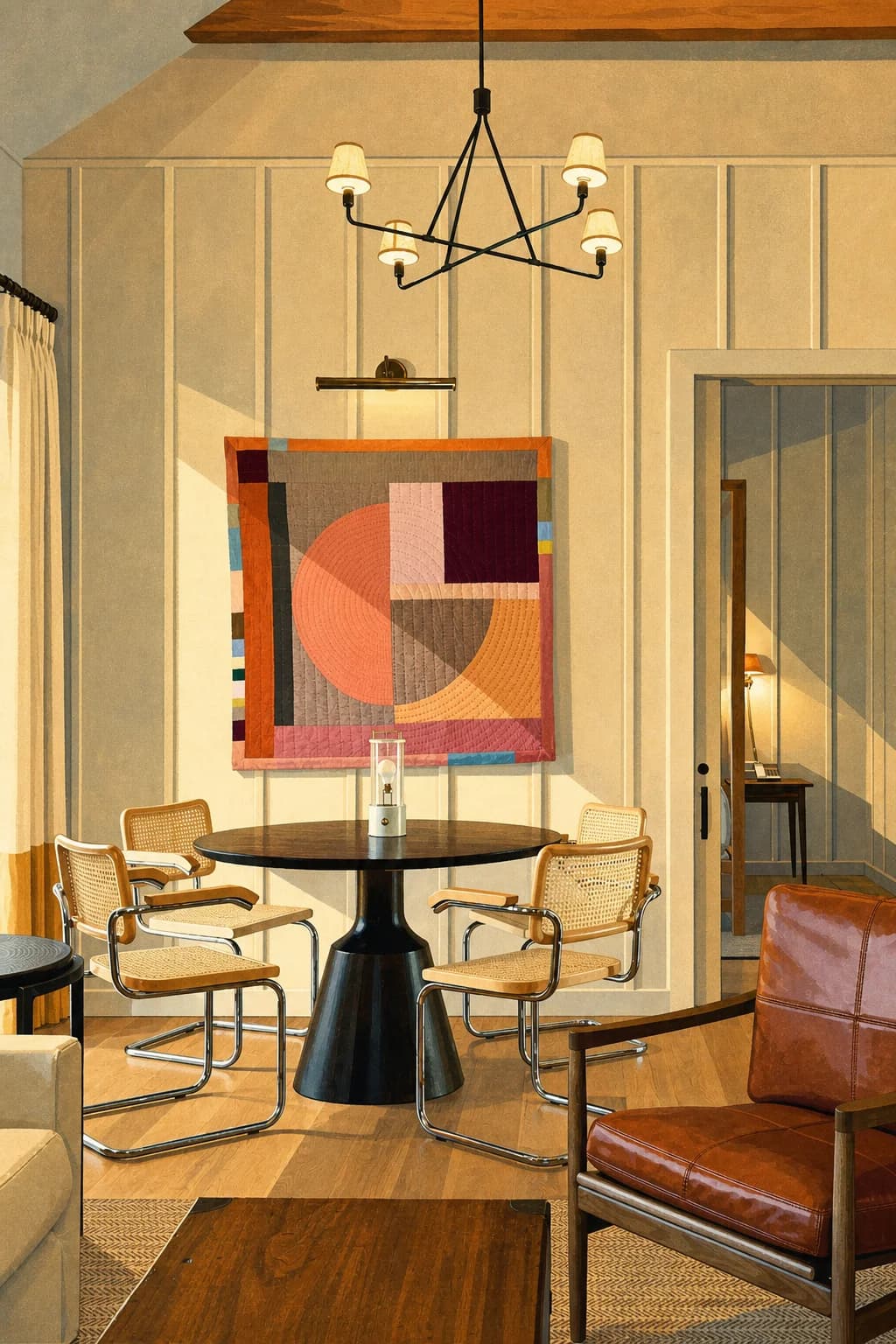
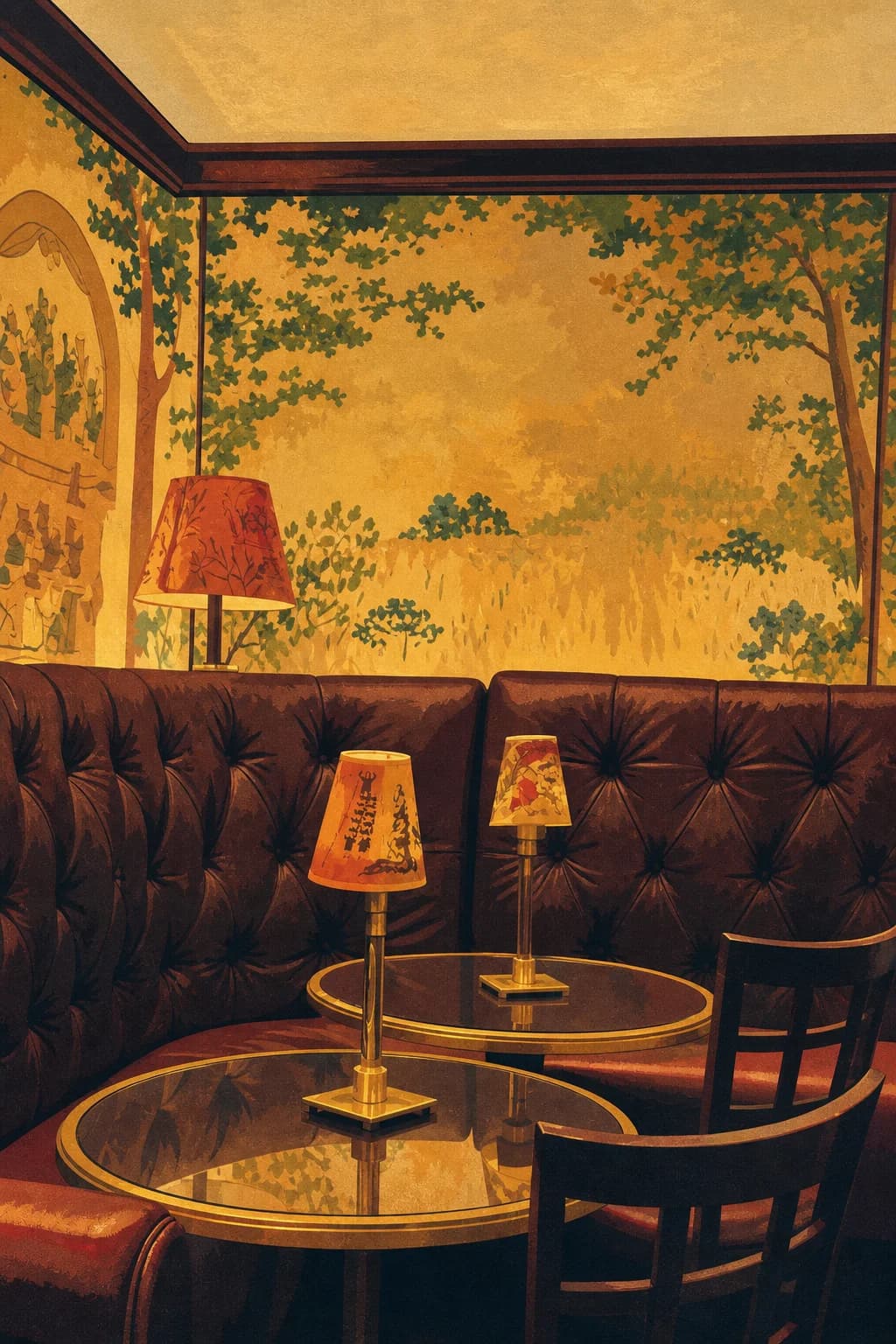
Porter worked with designer Renee Mee on interiors sourced almost entirely from flea markets, estate sales, and scavenged industrial leftovers. Wide pine floors, brick walls, leather, taxidermy, and claw-foot tubs sit alongside neon signs and Western ephemera. Remodelista called it industrial Williamsburg crossed with Adirondack cabin, and Design Hotels inducted it into their collective for exactly that reason: the aesthetic is specific, committed, and non-repeatable.
Williamsburg Without the Hotel Vibe
The location is Powers Street, a quiet residential block a ten-minute walk from the Bedford Avenue L stop and steps from the coffee shops, galleries, and natural wine bars that define north Brooklyn. You are in the middle of Williamsburg without being on the main strip, which means you wake up to neighborhood sounds instead of tour buses. Manhattan is one subway stop away.
talk.
mapped.
“the Cowboy motto, whose original (and often waitlisted) Williamsburg bed-and-breakfast opened in 2014”
record.
Urban Cowboy opened in 2014 when Lyon Porter and his partner Jersey Banks took a century-old Brooklyn townhouse on Powers Street and turned it into something closer to a clubhouse than a hotel. Interior designer Renee Mee layered the rooms with scavenged pot-bellied stoves, exposed joists, wide-plank rough-hewn pine, and a whiskey-soaked Adirondack-meets-rodeo sensibility that nothing else in New York has managed to copy.
The parlor floor has operable garage doors at both ends that roll open onto a backyard with a hot tub and fire pit, the kind of space that disappears into wedding bookings whenever summer arrives. There is no front desk, no concierge, and no room service, just a house that happens to rent rooms and a founder who treats every guest like they showed up for a dinner party.
changed.
Late April–early May beats Met Gala. First two weeks of September beat UNGA. Anything Sep–Dec needs 60–90 days of lead time.
September is the single hardest month to book in New York City, and nothing else comes close. Fashion Week and the United Nations General Assembly collide in the same two-week window, pulling designers, buyers, diplomats, journalists, and their combined entourages into a city already running near capacity. Rates during UNGA week routinely blow past the rest of the year by wide margins.
October runs a close second, and for entirely different reasons. Hudson Valley foliage trips drain weekend supply, while NY Comic Con and a dense events calendar keep midweek pressure high. If September is out of reach, expect October to feel almost identical at the top of the market.
The holiday corridor from November through December is the other sustained peak. NYC Marathon weekend in early November compresses supply across all five boroughs before Thanksgiving arrives with the Macy's parade and family travel. December then stacks Rockefeller Center, holiday markets, Broadway's busiest stretch, and New Year's Eve on top of one another.
Booking lead times for November and December should extend to 60 to 90 days minimum at High and Very High tier properties.
May and June bring sharp, event-driven spikes rather than a broad surge. Met Gala week in early May and Frieze New York concentrate pressure in Midtown and downtown Manhattan respectively. June adds NYC Pride, the Tribeca Festival, and the Tony Awards, keeping demand high but with more day-to-day variability than the fall corridor.
The value window runs January through February. NYC Restaurant Week in January and February's Fashion Week supply the cultural programming, but overall demand hits its yearly floor, with rates falling 40 to 50 percent below peak and normally rigid properties running promotions during NYC Hotel Week. August is the other soft spot: residents flee for the summer, and while the US Open opens late in the month, the first three weeks sit well below their neighbors.
The practical read: chase the shoulders. Target late April, early May before the Met Gala, or the first two weeks of September before UNGA arrives, and you'll get peak-season energy with meaningfully better availability. July is warm and less programmed but also cheaper, a fair trade if theater and outdoor dining are the priority.
approach.
briefing.
“this cabin situated in the middle of Williamsburg manages to do it. You get all the perks of the cowboy life, like a rustic interior”
stands.
demand's going.
The real Instagram following over time, plus where this hotel sits for demand in New York City. Pick a range, toggle the lines. Followers are reach and demand, not engagement.
assessment.
File closes at HIGH. Book direct two months out for fall and holiday weekends. Skip if shared kitchens bother you; the main townhouse runs five keys with communal space.
The numbers behind the tiers
Urban Cowboy Brooklyn · SOURCE READINGS · REDACTED- Availability density · sampled
- Monthly search volume · raw
- TikTok hashtag views · raw
- YouTube total views · raw
- TikTok following · latest sweep
- Pinterest saves · latest sweep
More from New York City.


Get the hotel's Unbookable Score.
Any post or reel with a hotel in it. Booking.com hotel pages work too. One free check, no account needed.