The Mellah
Hotel.
2 critic reviews
filed.
The Mellah Hotel is 10 rooms in the old Jewish quarter at a genuinely accessible rate, and the neighbourhood is the selling point: less tourist foot traffic, more working medina, and walking distance to the Bahia Palace and the spice market. The honest trade is that service runs lean, the finishes are modest, and guests expecting the full riad experience should recalibrate to a small neighbourhood hotel.
The Mellah spice market is a short walk away and opens early, with prices set for locals. Go at 9am with a shopping list from the hotel kitchen team, then hand everything over to them for lunch the same day. You eat your own haul for the cost of the labour.
angles.
Azzouz's Dark Palette
Simo Azzouz chose the opposite of the typical white-and-terracotta Marrakech riad. Dark walls, deep tadelakt, copper and brass that catch the light. The aesthetic is moody and specific. The Telegraph's "twinkling copper tubs" line captures it: the metal reflects candlelight in rooms designed for shadow and warmth. Five of the ten rooms have freestanding copper or brass tubs, each sandblasted by local artisans.
The Mellah Quarter
The Mellah is Marrakech's historic Jewish Quarter, adjacent to Bahia Palace and the Kasbah. The neighbourhood has its own gold souk, the Lazama Synagogue, and a character distinct from the touristier parts of the Medina. Staying here puts you in a part of the old city with genuine historical texture. The quarter is quieter than Mouassine but richer in stories.
The Zellige Pool
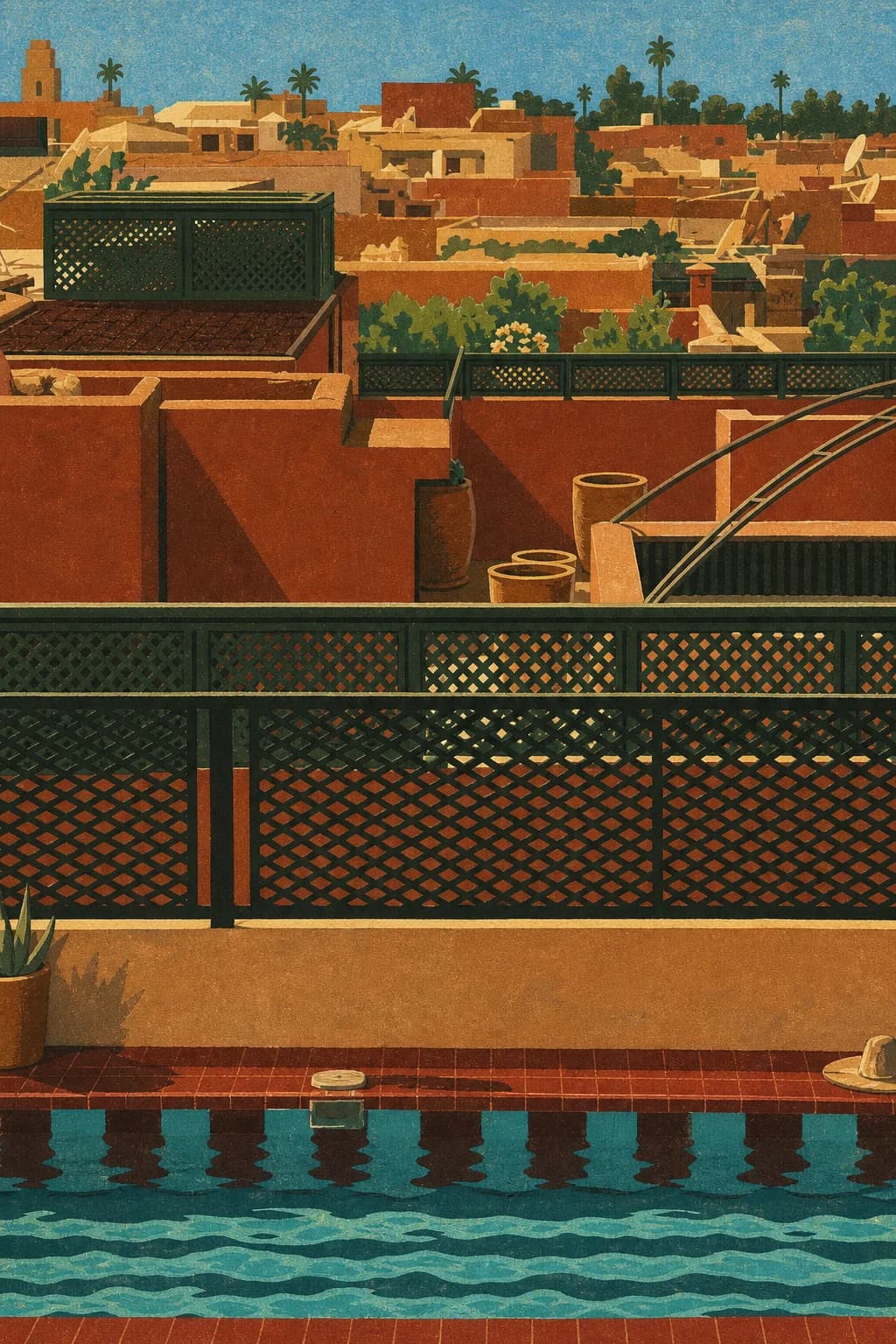
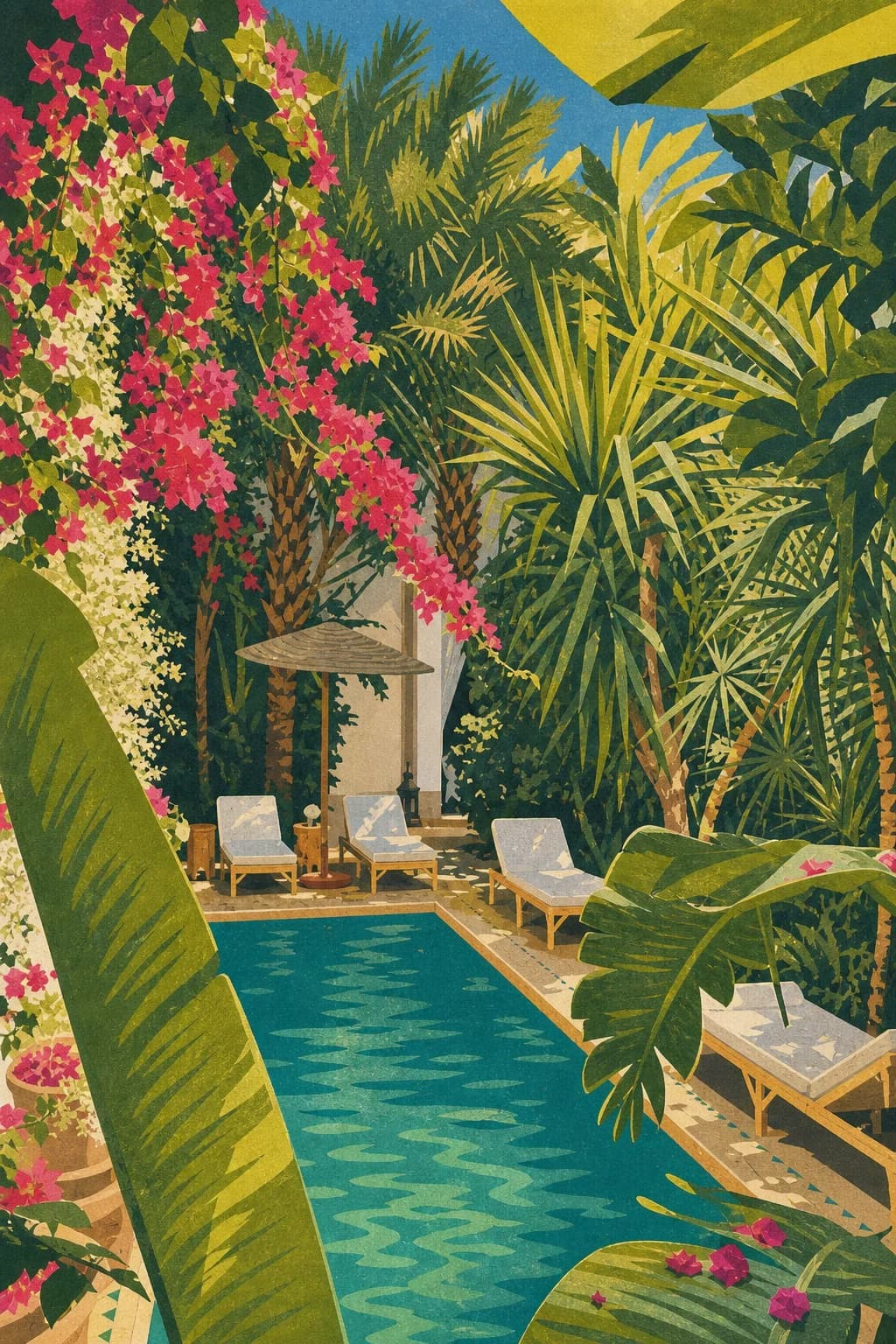
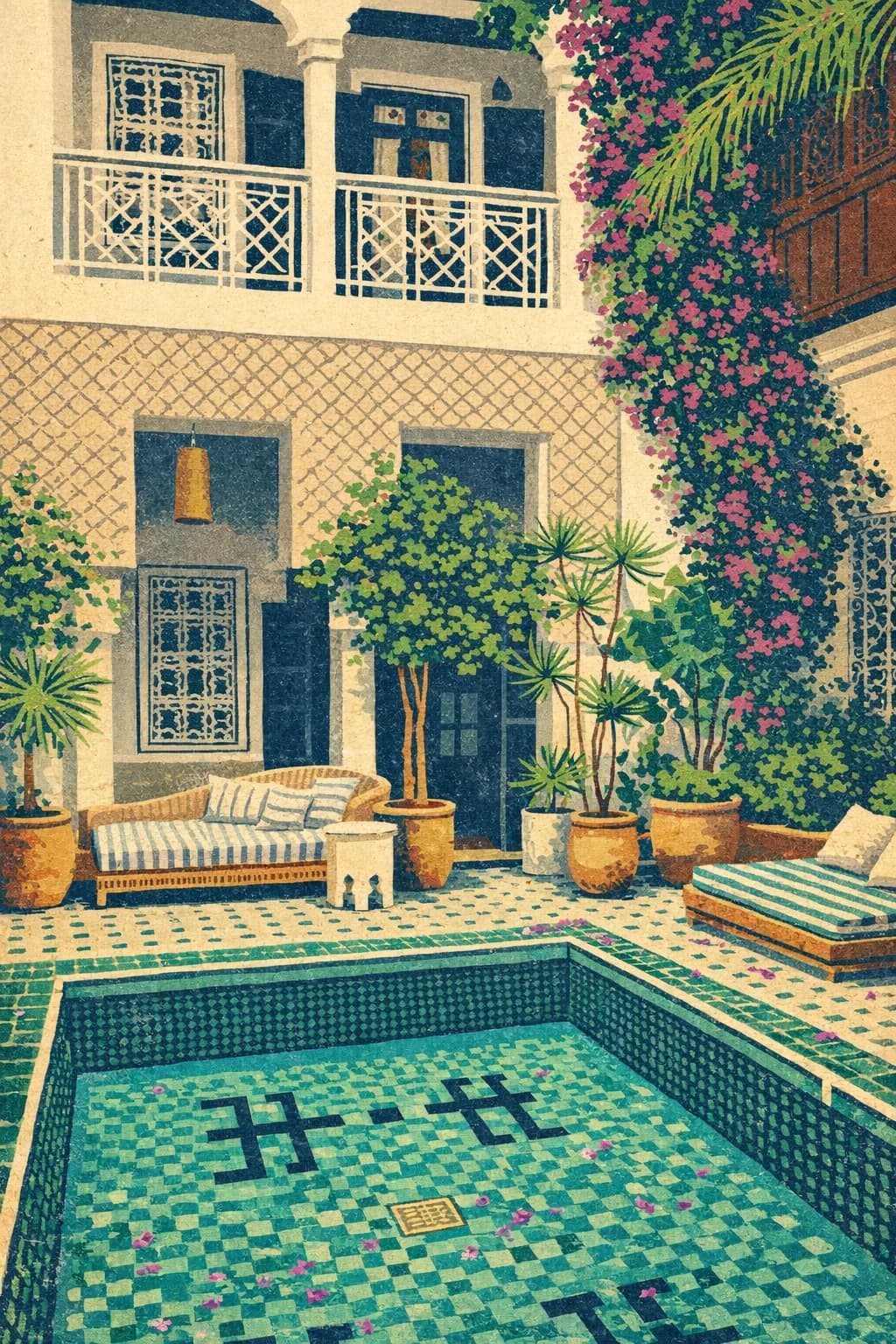
A 10-metre pool lined in zellige tile sits on the courtyard terrace, surrounded by Medina rooftop views. For a ten-room riad, a pool this size is generous. The zellige lining connects it to the same Fez-tile tradition that drives demand at Le Riad Yasmine across town. The pool is the centrepiece; the terrace around it is where most guests spend their afternoons.
talk.
mapped.
“A colourful new addition to the medina scene... bold dark rooms with twinkling copper tubs.”
record.
The Telegraph described it as "bold dark rooms with twinkling copper tubs." Mr & Mrs Smith said "every detail evokes the warmth and poetry of this mystical Moroccan city." The Mellah Hotel opened in 2024 in the Mellah, Marrakech's historic Jewish Quarter, near Bahia Palace. French-Moroccan entrepreneur Simo Azzouz restored the riad as a personal project and serves as creative director.
Ten rooms, each with its own personality: king beds, cylindrical tiled showers, and Moroccan brass lighting. Five rooms have freestanding copper or brass bathtubs, sandblasted locally. The Founder's Suite has zellige tiles, camel-leather floors, saffron tadelakt walls, twin sinks, and an Eames lounger. A 10-metre zellige-lined pool sits on the courtyard terrace with Medina rooftop views. Breakfast exceptional and included.
changed.
Book December four to six months out. October–November is the value window. Skip summer unless heat-tolerant.
In Marrakech, demand runs inverse to the thermometer. When Europe wants winter sun and the heat breaks, the city's riads compress into windows that close months ahead — and that pattern is entirely predictable.
December is the single Peak month, and it behaves like nothing else on the calendar. New Year's Eve collides with European winter-sun demand to squeeze the top properties into a roughly two-week window that books out far in advance. Plan on four to six months of lead time for Ultra-tier riads; three months is often already too late for properties like Riad BE or Le Riad Yasmine.
October and November deliver the best value relative to experience quality. Demand indexes high — 80 in October, 85 in November — but autumn rates at many properties run 30 to 60 percent below spring equivalents because the season falls outside European school holidays. October brings the 1-54 Festival, Marrakech's contemporary art biennale, adding a cultural layer spring lacks. November is the month our data flags as flat-out underpriced: it indexes at 85 without December's premium or the school-holiday crush.
March and April are the traditional high season, driven by Easter breaks and the spring weather window. Easter week is the tightest booking window outside December, and Jardin Majorelle requires timed-ticket advance purchase throughout this period. Ramadan shifts annually across the calendar; when it overlaps with March or April, restaurants and some services run reduced hours while hotels stay fully open.
Check the Ramadan dates before you book — they reshape the dining and nightlife experience far more than the hotel experience.
Summer is the strategic play for price-sensitive travelers who can handle heat. Demand drops below 30 from June through August, and properties that validate as sold out in October often show wide-open availability through July. The medina's thick walls and internal courtyards were built for this climate, so morning and evening exploration stay comfortable — the tradeoff is that midday outdoor sightseeing is impractical. What disappears entirely is the sold-out pressure that defines the rest of the year.
September is the transition window, and it favors the early mover. Temperatures moderate and demand begins to climb, but rates have not yet caught up to autumn levels.
approach.
briefing.
“Every detail evokes the warmth and poetry of this mystical Moroccan city.”
stands.
demand's going.
The real Instagram following over time, plus where this hotel sits for demand in Marrakech. Pick a range, toggle the lines. Followers are reach and demand, not engagement.
assessment.
File closes at HIGH. Book direct two weeks out; the 2024 opening means current availability beats what is coming as press accumulates. Skip if you want polished history; this is a young house still building texture.
The numbers behind the tiers
The Mellah Hotel · SOURCE READINGS · REDACTED- Availability density · sampled
- Monthly search volume · raw
- TikTok hashtag views · raw
- YouTube total views · raw
- TikTok following · latest sweep
- Pinterest saves · latest sweep
More from Marrakech.
Get the hotel's Unbookable Score.
Any post or reel with a hotel in it. Booking.com hotel pages work too. One free check, no account needed.