Park Hyatt
Marrakech.
3 critic reviews
filed.
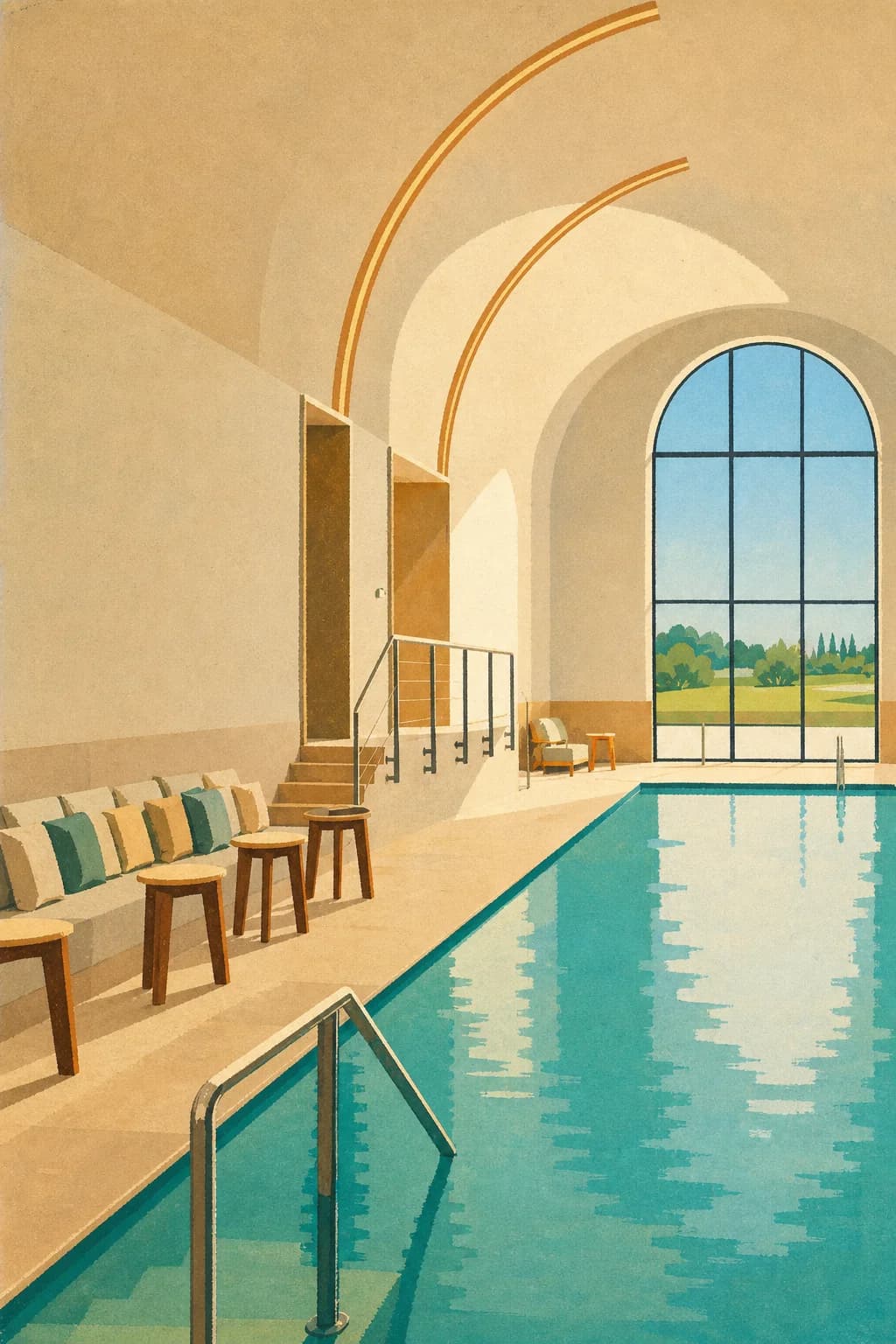
Park Hyatt is 130 rooms in Al Maaden with a golf course, multiple pools, and the operational polish the brand ships globally. For families and business travellers who want predictable five-star and do not care about being inside the medina, it works. The hype softens how disconnected the location feels from the city, which you fix with taxis or you do not fix at all.
Al Maaden has a contemporary art museum that almost no visitor to Marrakech reaches, despite holding one of the better collections of Moroccan modern art in the country. The hotel can arrange the short transfer, and a weekday morning visit runs under an hour with effectively no other visitors in the galleries.
angles.
700 Artworks by Ifitry
Ifitry Artists' Residence curated over 700 artworks placed throughout the hotel. This isn't lobby art. It's a full programme, spread across corridors, rooms, restaurants, and public spaces. The scale of the collection turns the property into a gallery you happen to sleep in. For a corporate brand launch, the art commitment is unusually serious.
TFAYA and Chef Rhachi
Executive Chef Issam Rhachi runs TFAYA, an arabesque brasserie where French technique meets Moroccan ingredients. The lobster mechoui in black garlic and smoked paprika is the signature dish. Le Pavillon offers terrace dining from morning to night. The Living Room is the cocktail bar. For a 130-room property in its first year, the dining programme is already well defined.
Rahmouni Again
Imaad Rahmouni designed both Palais Namaskar in the Palmeraie and Park Hyatt Marrakech at Al Maaden. The designer's signature is water, geometry, and Moorish-contemporary fusion. At Park Hyatt, he worked with the Al Maaden golf course landscape to create an arrival experience that unfolds gradually. The architecture is confident without being loud, which is harder than it sounds for a 130-room property.
talk.
mapped.
“Set on 17 acres against the backdrop of the Atlas Mountains and surrounded by the Al Maaden Golf Course, the oasis-like Park Hyatt Marrakech might easily be mistaken for a mirage.”
record.
Imaad Rahmouni, the same designer behind Palais Namaskar, shaped the architecture. Ifitry Artists' Residence curated over 700 artworks placed throughout the property. One hundred and thirty rooms, sixty-nine of which are suites, including a 414-square-metre signature suite with a 72-square-metre terrace and private pool.
TFAYA, the arabesque brasserie, is led by Executive Chef Issam Rhachi, whose menu includes lobster mechoui in black garlic, saffron, and smoked paprika. Le Pavillon handles all-day terrace dining. The Living Room serves cocktails. Kids' club, pet friendly, electric car transfers, Nectarome organic spa products. World of Hyatt Category 7 (30,000 points for a standard night).
changed.
Book December four to six months out. October–November is the value window. Skip summer unless heat-tolerant.
In Marrakech, demand runs inverse to the thermometer. When Europe wants winter sun and the heat breaks, the city's riads compress into windows that close months ahead — and that pattern is entirely predictable.
December is the single Peak month, and it behaves like nothing else on the calendar. New Year's Eve collides with European winter-sun demand to squeeze the top properties into a roughly two-week window that books out far in advance. Plan on four to six months of lead time for Ultra-tier riads; three months is often already too late for properties like Riad BE or Le Riad Yasmine.
October and November deliver the best value relative to experience quality. Demand indexes high — 80 in October, 85 in November — but autumn rates at many properties run 30 to 60 percent below spring equivalents because the season falls outside European school holidays. October brings the 1-54 Festival, Marrakech's contemporary art biennale, adding a cultural layer spring lacks. November is the month our data flags as flat-out underpriced: it indexes at 85 without December's premium or the school-holiday crush.
March and April are the traditional high season, driven by Easter breaks and the spring weather window. Easter week is the tightest booking window outside December, and Jardin Majorelle requires timed-ticket advance purchase throughout this period. Ramadan shifts annually across the calendar; when it overlaps with March or April, restaurants and some services run reduced hours while hotels stay fully open.
Check the Ramadan dates before you book — they reshape the dining and nightlife experience far more than the hotel experience.
Summer is the strategic play for price-sensitive travelers who can handle heat. Demand drops below 30 from June through August, and properties that validate as sold out in October often show wide-open availability through July. The medina's thick walls and internal courtyards were built for this climate, so morning and evening exploration stay comfortable — the tradeoff is that midday outdoor sightseeing is impractical. What disappears entirely is the sold-out pressure that defines the rest of the year.
September is the transition window, and it favors the early mover. Temperatures moderate and demand begins to climb, but rates have not yet caught up to autumn levels.
approach.
briefing.
“A short drive outside the city's historic heart, the resort is peaceful and palatial, but not bubble-wrapped from the local culture. High-ceilinged hallways carved from Moroccan marble.”
stands.
demand's going.
The real Instagram following over time, plus where this hotel sits for demand in Marrakech. Pick a range, toggle the lines. Followers are reach and demand, not engagement.
assessment.
File closes at MODERATE. Book through World of Hyatt a month out; new opening means availability beats most established Marrakech luxury. Skip if you want intimate scale; this is a 130-room resort by intent.
The numbers behind the tiers
Park Hyatt Marrakech · SOURCE READINGS · REDACTED- Availability density · sampled
- Monthly search volume · raw
- TikTok hashtag views · raw
- YouTube total views · raw
- TikTok following · latest sweep
- Pinterest saves · latest sweep
More from Marrakech.
Get the hotel's Unbookable Score.
Any post or reel with a hotel in it. Booking.com hotel pages work too. One free check, no account needed.