Dar
Ahlam.
8 critic reviews
filed.
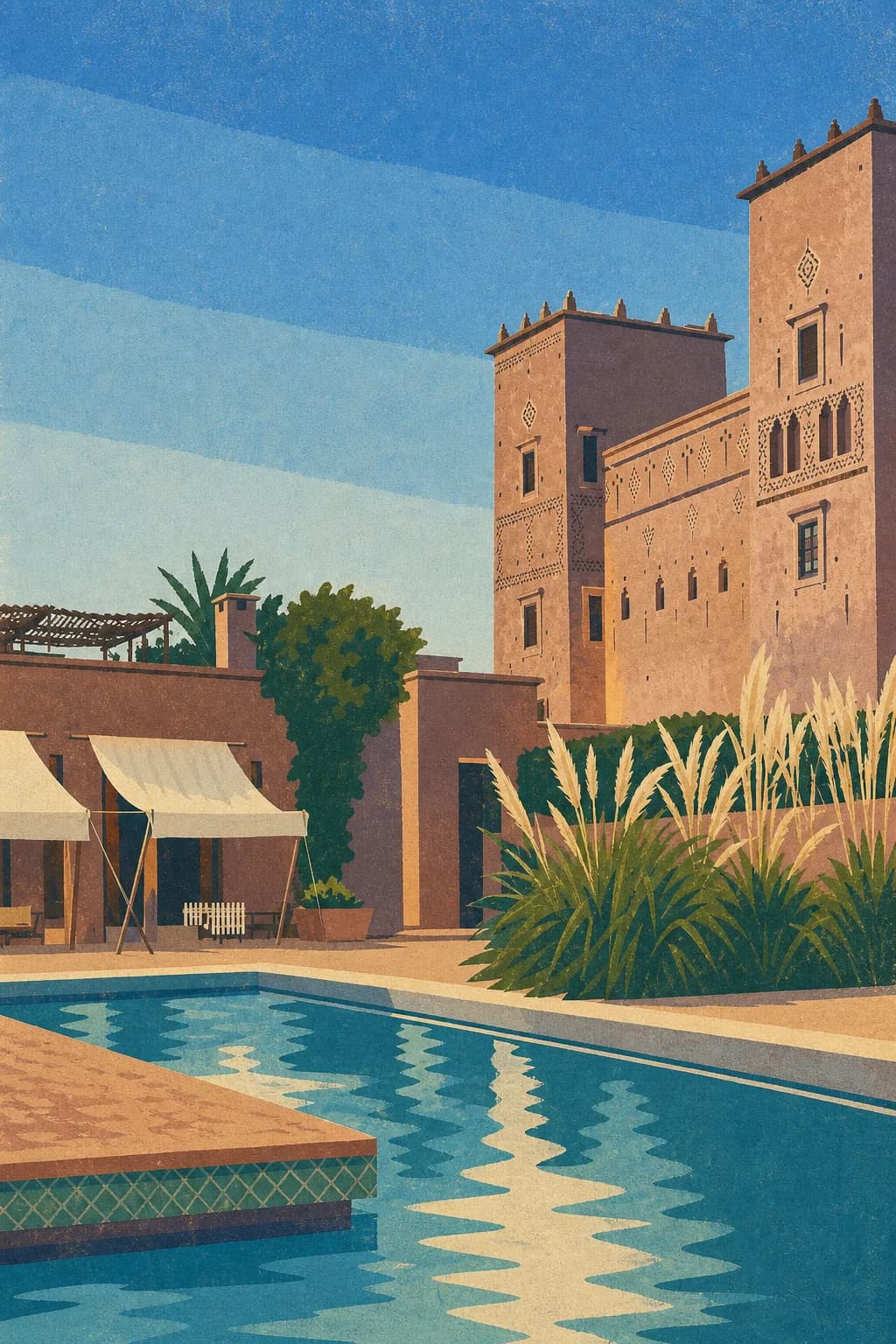
Dar Ahlam is the Skoura oasis property with 14 rooms and a no-menu dining approach where meals appear in unexpected places around the grounds. The immersive design is genuine. What the hype softens is the drive: Skoura is a full day from Marrakech on the far side of the Atlas, so this is not a side trip, it is a separate leg of a bigger itinerary.
The Skoura palm grove surrounding the hotel is one of the oldest oases in Morocco and Dar Ahlam's team can arrange a walking route through the working kasbahs that still operate nearby. Ask about the two-hour morning walk with a local guide, which includes stops at working mills the tourist route never sees.
angles.
Teyssier's Theatre
Thierry Teyssier ran a French theatre company before becoming a hotelier. At Dar Ahlam, every meal is a set change: staff prepare a different location in the gardens, rooftop, or kasbah interior before each service, then reveal it to guests. The theatrical instinct isn't metaphorical. It's operational. Louis Benech, one of France's most celebrated landscape designers, shaped the gardens as settings for this rotating stage.
The Skoura Palm Grove
Skoura is a vast oasis of date palms, almond trees, and olive groves on the northern edge of the Sahara, about 30 kilometres from Ouarzazate. Ancient kasbahs dot the landscape. The area is remote, quiet, and visually dramatic. Dar Ahlam's four-hour drive from Marrakech is part of the experience: across the High Atlas via Tizi n'Tichka, through the Valley of the Roses, into the desert fringe.
Organic Farm, Solar, Micro-Credit
Solar panels power the property. An organic farm and kitchen garden supply the meals. Water is treated and recycled on-site. Glass is recycled locally. Teyssier established micro-credit programmes for local livestock breeders and a heritage initiative called Memory Road. The sustainability here isn't a programme. It's the infrastructure of a kasbah operating in a place where conventional hotel supply chains don't reach.
talk.
mapped.
“Rebellious by nature, visionary hotelier Thierry Teyssier has thrown the traditional hospitality rule book out the window by adopting a bespoke approach to each and every guest at Dar Ahlam.”
record.
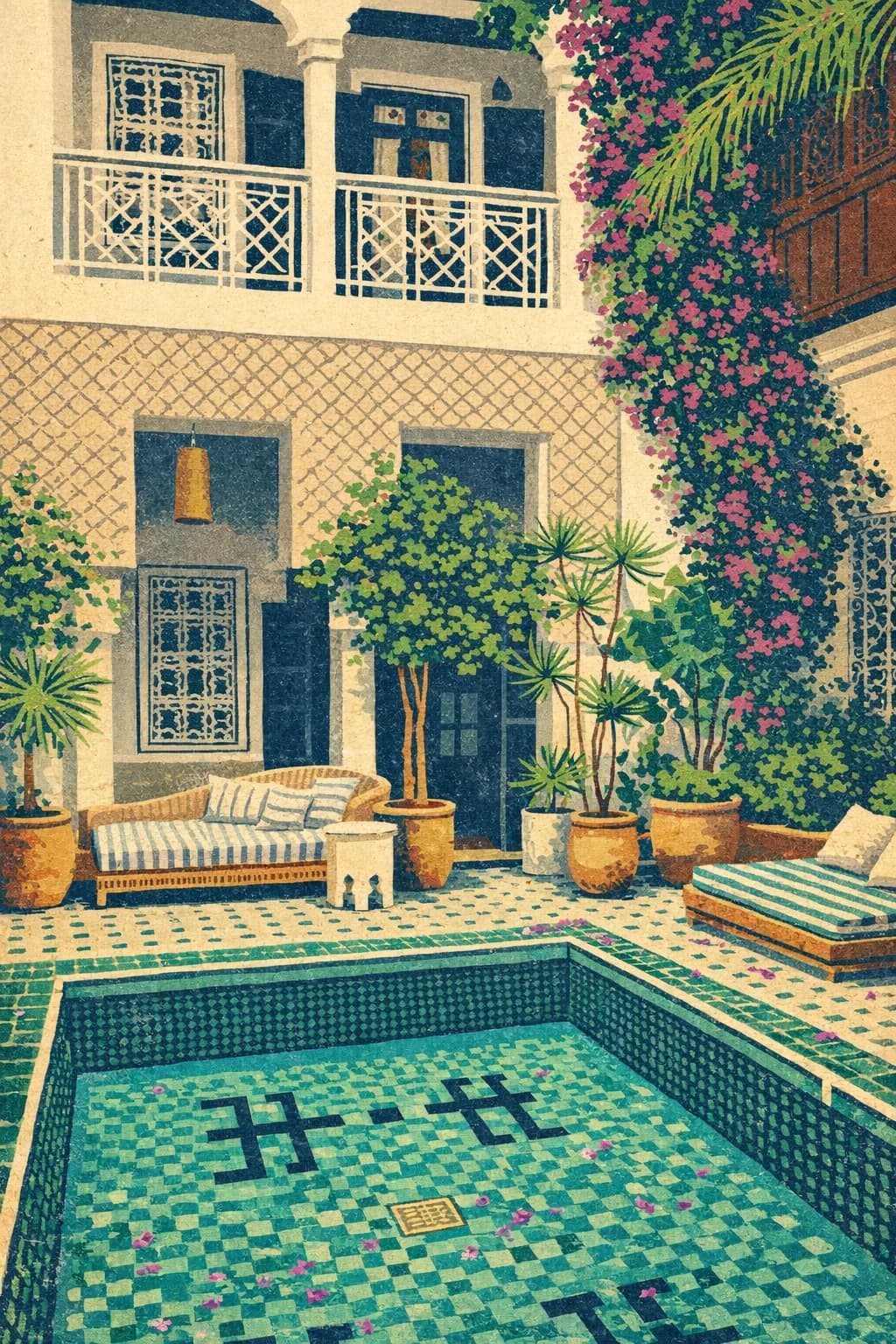
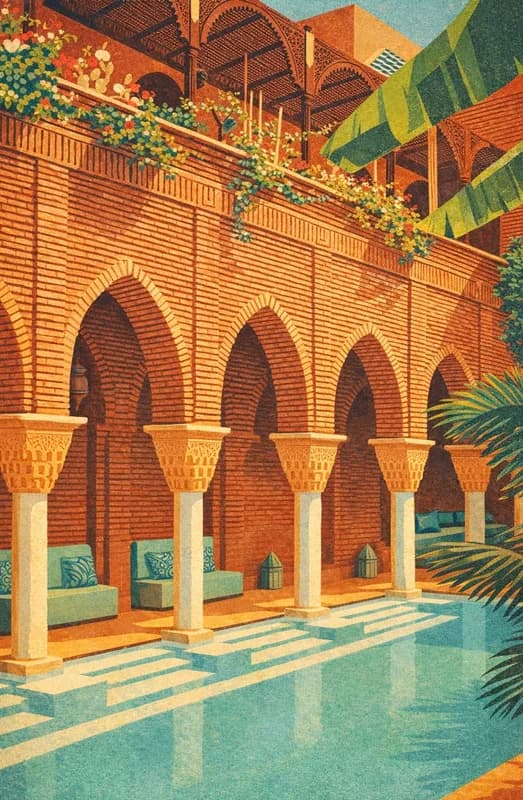
Dar Ahlam sits inside a 200-year-old rammed-earth kasbah in the Skoura palm grove, roughly four hours from Marrakech on the northern edge of the Sahara. Thierry Teyssier, a former French theatre director, grew frustrated with rigid hotel conventions and opened it in 2002. There is no restaurant. Instead, there are forty to fifty locations scattered across the kasbah and gardens where meals are served.
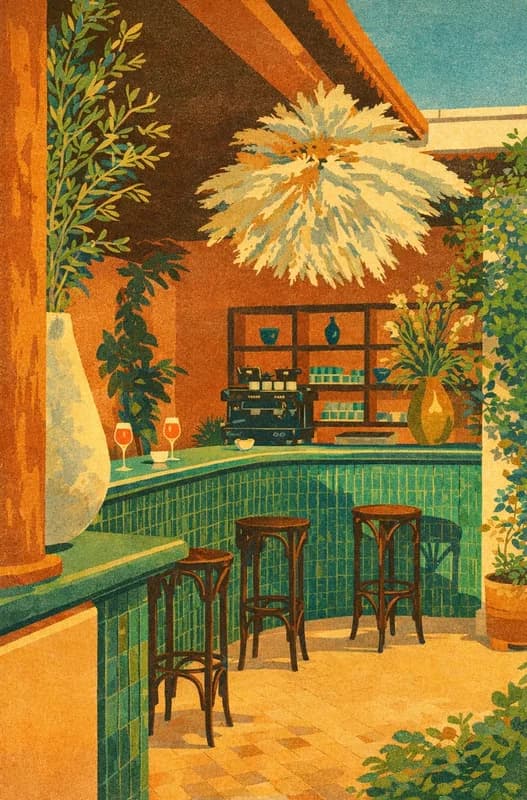
You never eat in the same place twice. There is no menu. The kitchen sources from local souks and the property's own organic farm, and decides what to cook. Fourteen suites carry names like Chabnam (Morning Dew), Saraoui (Saharan tent), and Samsara (Indian-inspired). Landscape designer Louis Benech shaped the gardens. All-inclusive at a rate that buys a used car per weet, covering meals, excursions, and private transport. Dar Ahlam doesn't sell single nights. It prefers guests who stay.
changed.
Book December four to six months out. October–November is the value window. Skip summer unless heat-tolerant.
In Marrakech, demand runs inverse to the thermometer. When Europe wants winter sun and the heat breaks, the city's riads compress into windows that close months ahead — and that pattern is entirely predictable.
December is the single Peak month, and it behaves like nothing else on the calendar. New Year's Eve collides with European winter-sun demand to squeeze the top properties into a roughly two-week window that books out far in advance. Plan on four to six months of lead time for Ultra-tier riads; three months is often already too late for properties like Riad BE or Le Riad Yasmine.
October and November deliver the best value relative to experience quality. Demand indexes high — 80 in October, 85 in November — but autumn rates at many properties run 30 to 60 percent below spring equivalents because the season falls outside European school holidays. October brings the 1-54 Festival, Marrakech's contemporary art biennale, adding a cultural layer spring lacks. November is the month our data flags as flat-out underpriced: it indexes at 85 without December's premium or the school-holiday crush.
March and April are the traditional high season, driven by Easter breaks and the spring weather window. Easter week is the tightest booking window outside December, and Jardin Majorelle requires timed-ticket advance purchase throughout this period. Ramadan shifts annually across the calendar; when it overlaps with March or April, restaurants and some services run reduced hours while hotels stay fully open.
Check the Ramadan dates before you book — they reshape the dining and nightlife experience far more than the hotel experience.
Summer is the strategic play for price-sensitive travelers who can handle heat. Demand drops below 30 from June through August, and properties that validate as sold out in October often show wide-open availability through July. The medina's thick walls and internal courtyards were built for this climate, so morning and evening exploration stay comfortable — the tradeoff is that midday outdoor sightseeing is impractical. What disappears entirely is the sold-out pressure that defines the rest of the year.
September is the transition window, and it favors the early mover. Temperatures moderate and demand begins to climb, but rates have not yet caught up to autumn levels.
approach.
briefing.
“A restored 19th-century kasbah, Dar Ahlam, the House of Dreams, is one of Morocco's most exclusive hideaways with its epic desert setting, impeccable service, and intimate feel.”
stands.
demand's going.
The real Instagram following over time, plus where this hotel sits for demand in Marrakech. Pick a range, toggle the lines. Followers are reach and demand, not engagement.
assessment.
File closes at HIGH. Book direct three months out; the all-inclusive covers meals, excursions, and the long transfer in. Skip if you want city access; Marrakech is four hours by road.
The numbers behind the tiers
Dar Ahlam · SOURCE READINGS · REDACTED- Availability density · sampled
- Monthly search volume · raw
- TikTok hashtag views · raw
- YouTube total views · raw
- TikTok following · latest sweep
- Pinterest saves · latest sweep
More from Marrakech.
Get the hotel's Unbookable Score.
Any post or reel with a hotel in it. Booking.com hotel pages work too. One free check, no account needed.