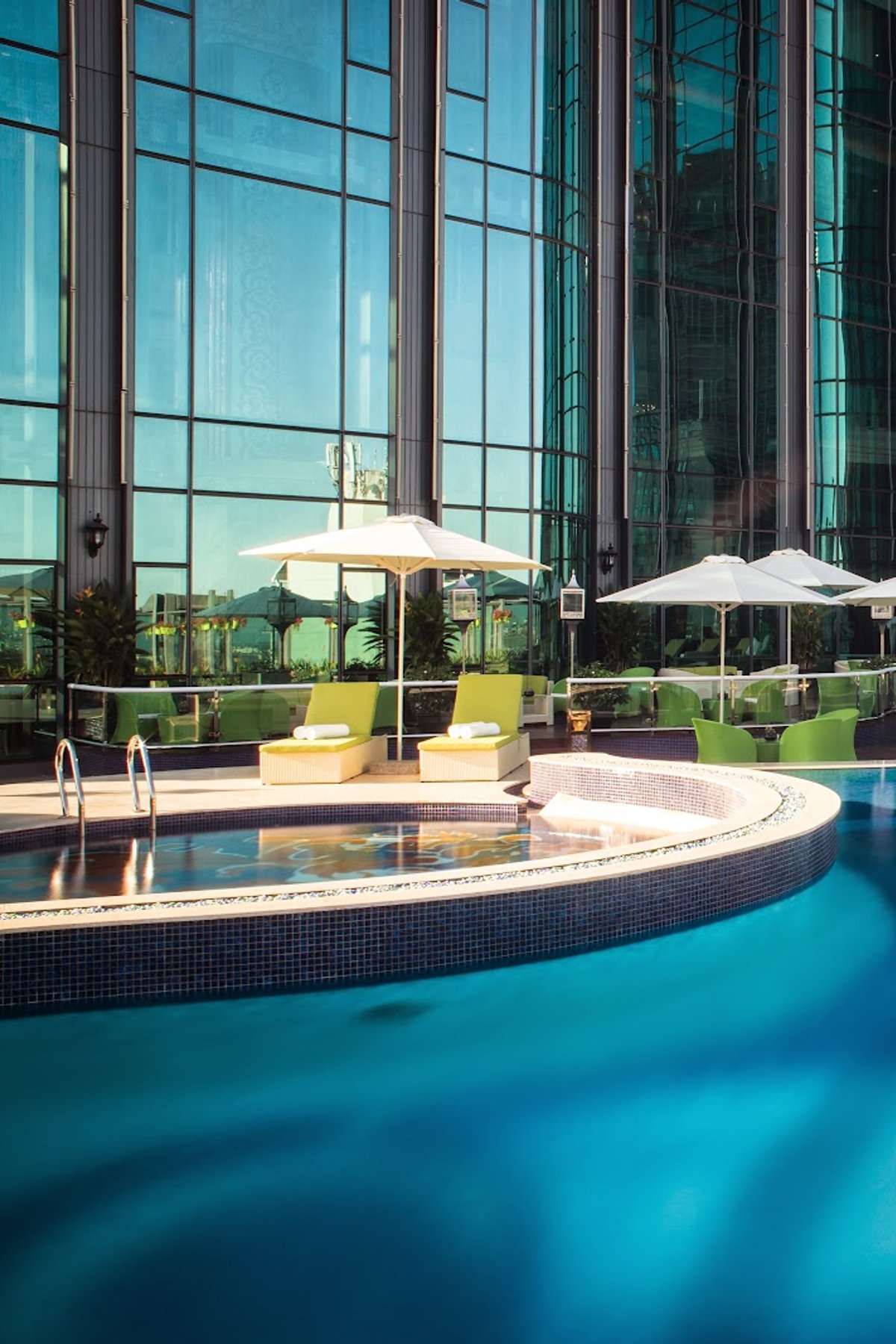
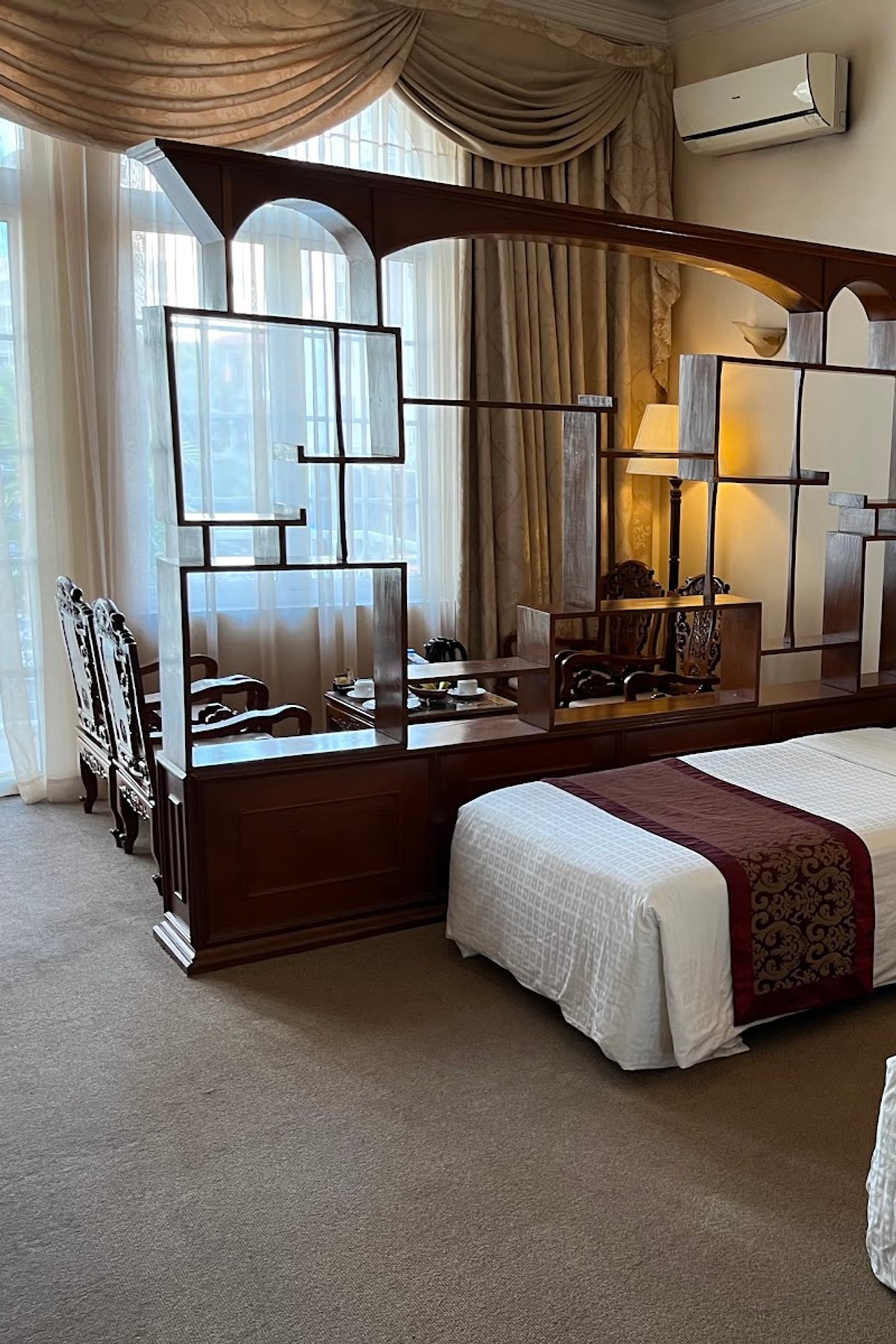
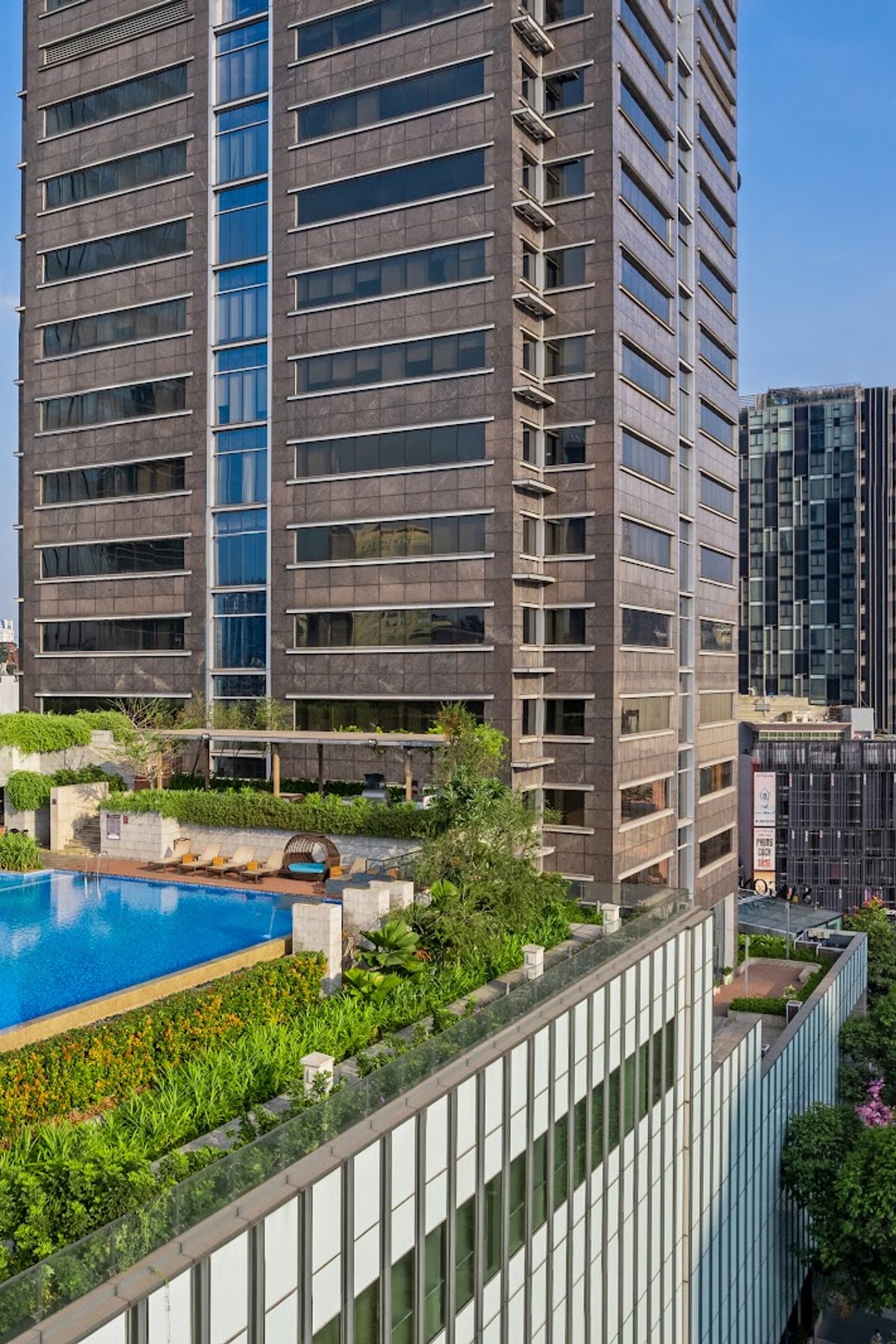
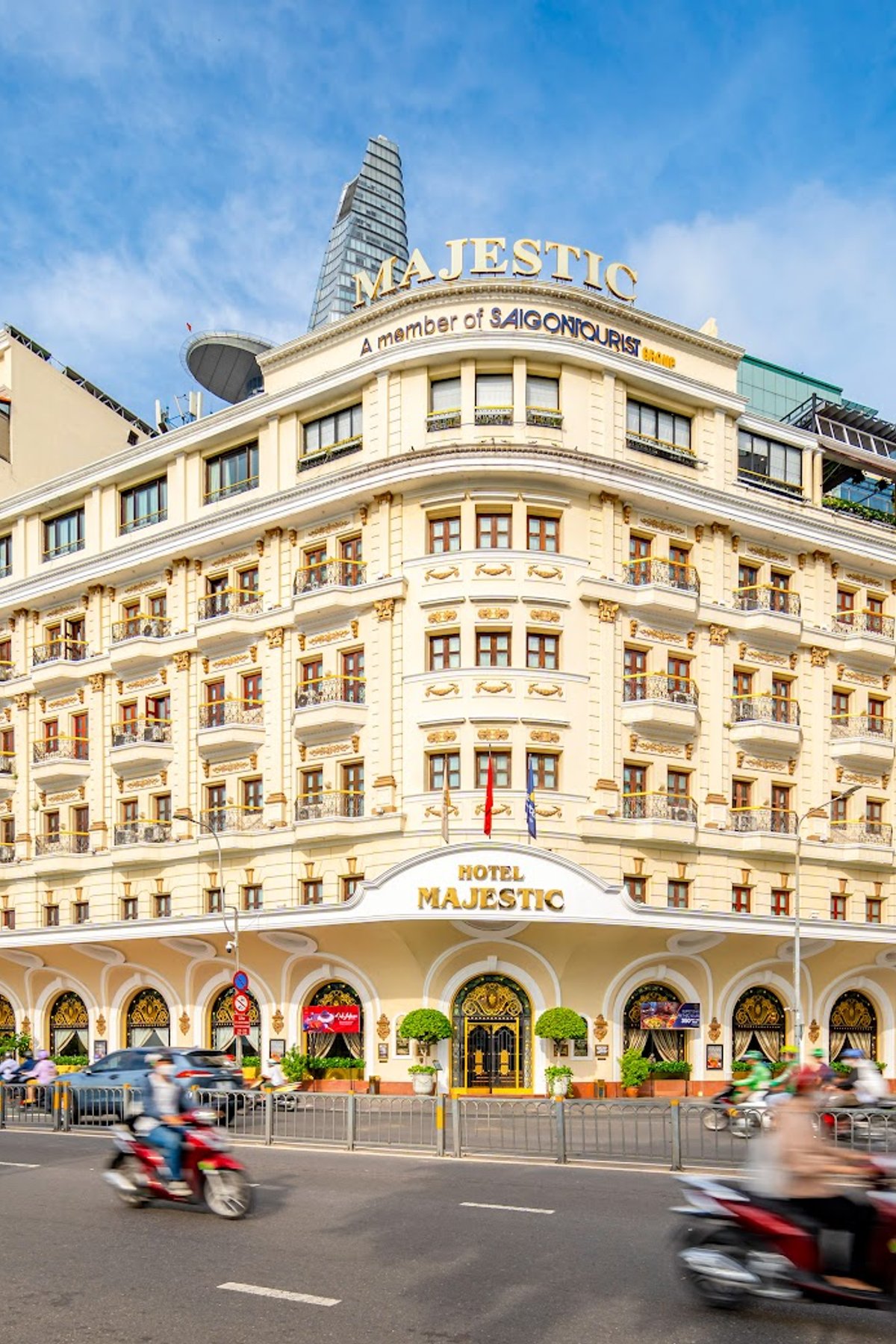
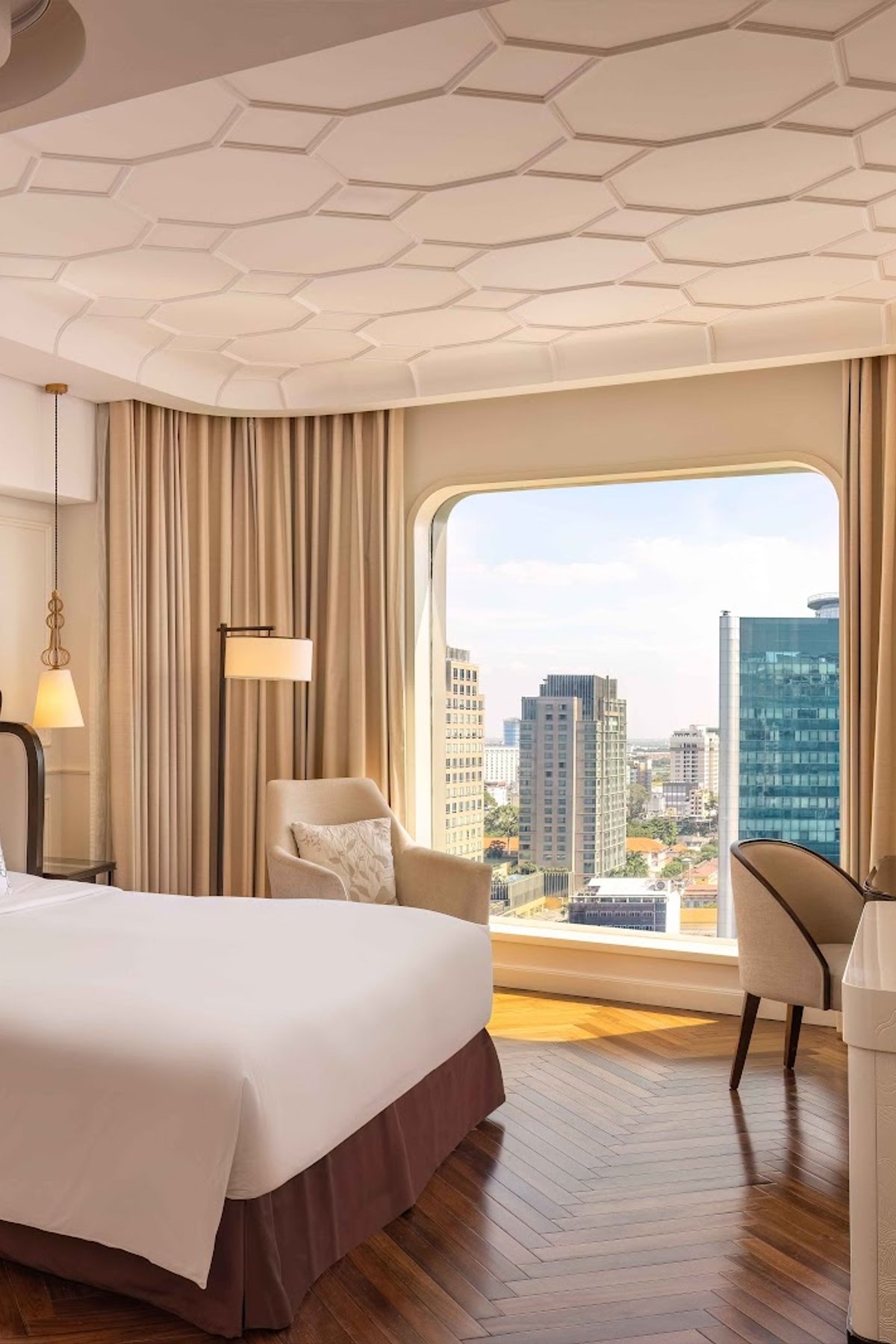
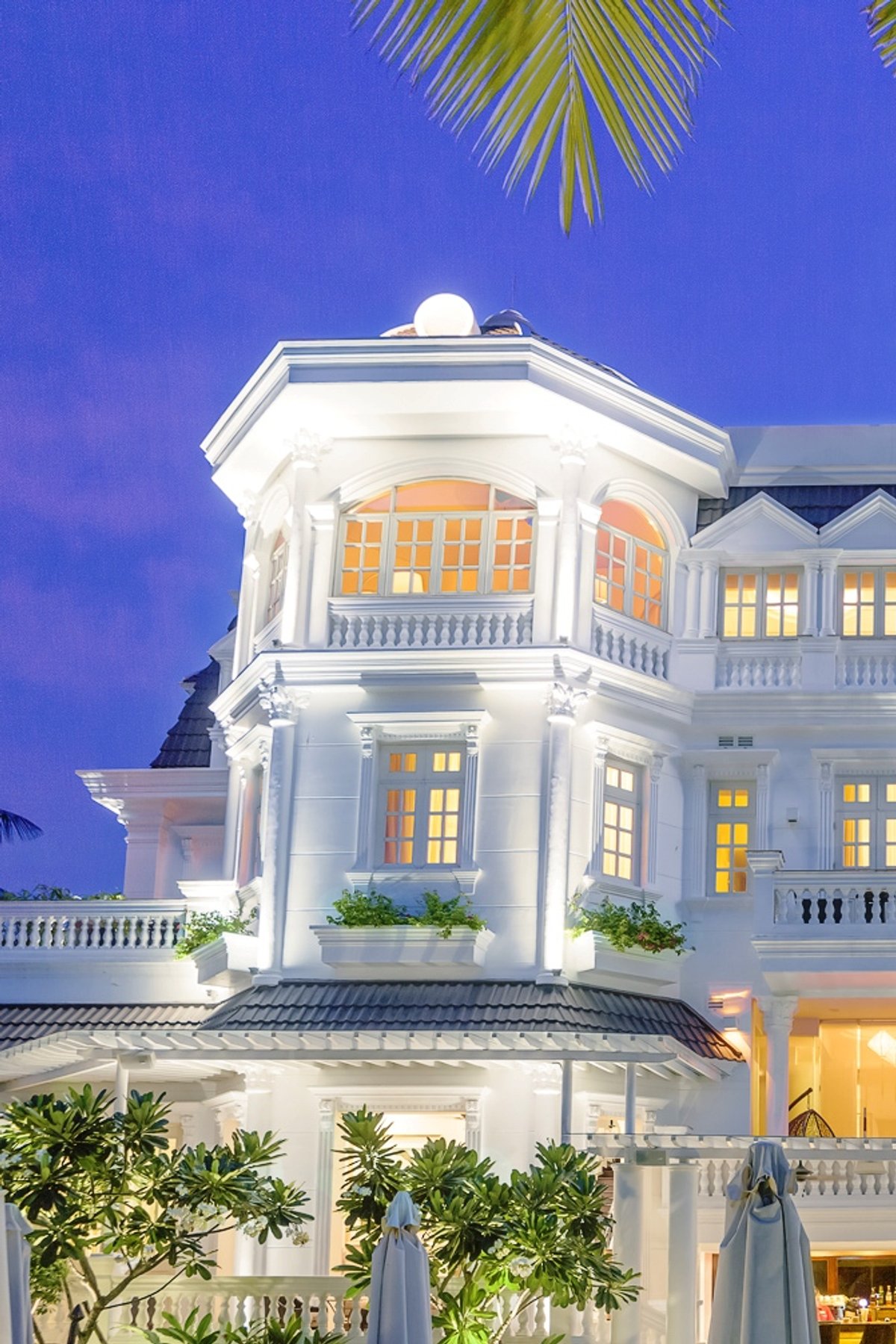
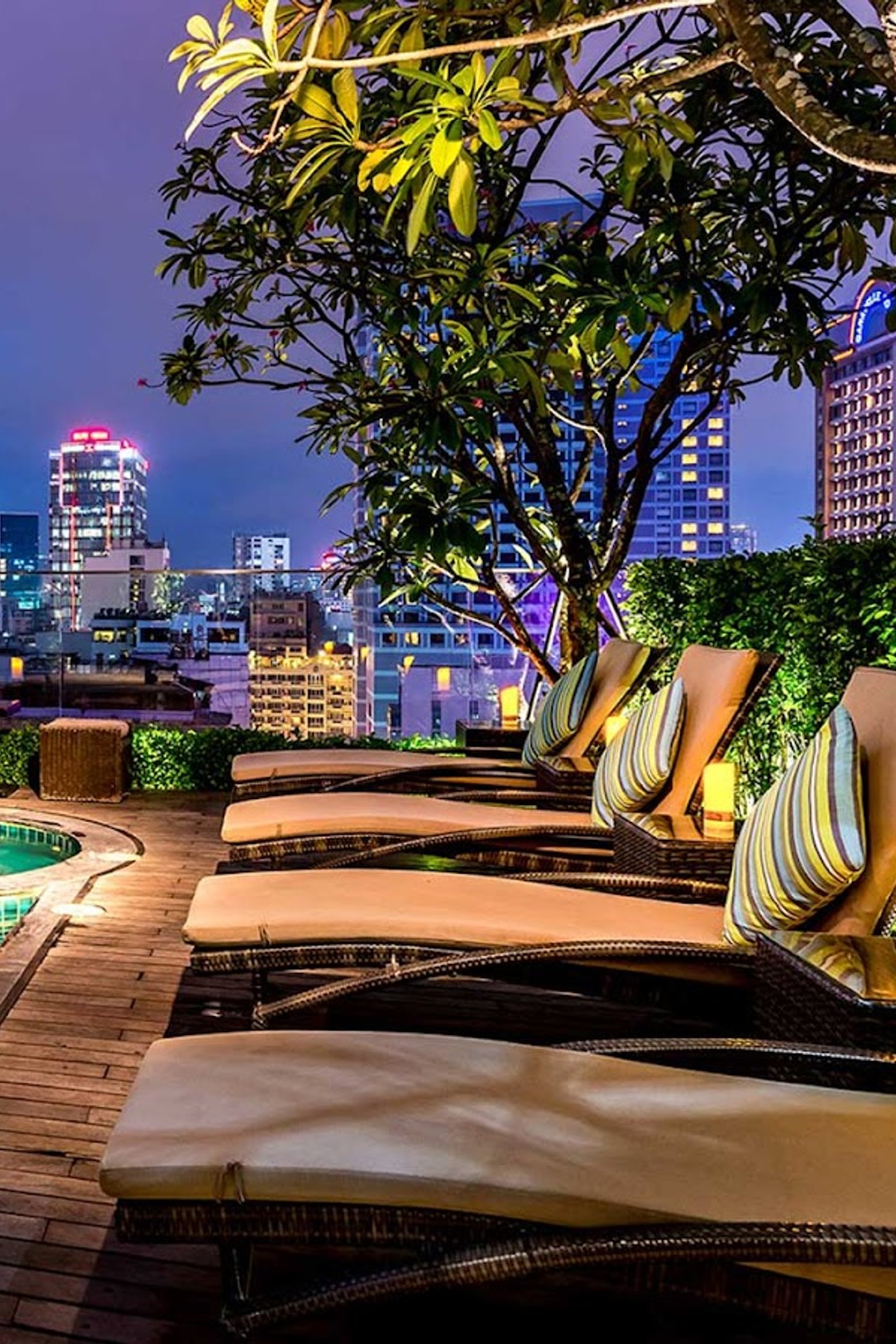
The rooftop bar lives up to its reputation, and the location is genuinely hard to beat for a first-timer who wants to walk everywhere. The rooms are comfortable rather than remarkable, so calibrate your expectations to the address and the view, not the interior design. On those terms, it delivers.
Not exactly a secret. The rooftop bar pulls a steady crowd of visitors and locals, and the hotel is a known quantity for anyone who has spent time in central Saigon. The modest social following is less about obscurity and more about a place that lets its address do the talking.
Saigon Saigon Bar is the whole argument. Ninth floor, checkered brick floors, thick wooden interiors, and balconies built for staring at the skyline while a Cuban band works through the set. The drink list runs long, from signature cocktails to fine spirits and cold local beer, with bar food that takes the classics somewhere slightly odder. Come at dusk and stay through the light change.
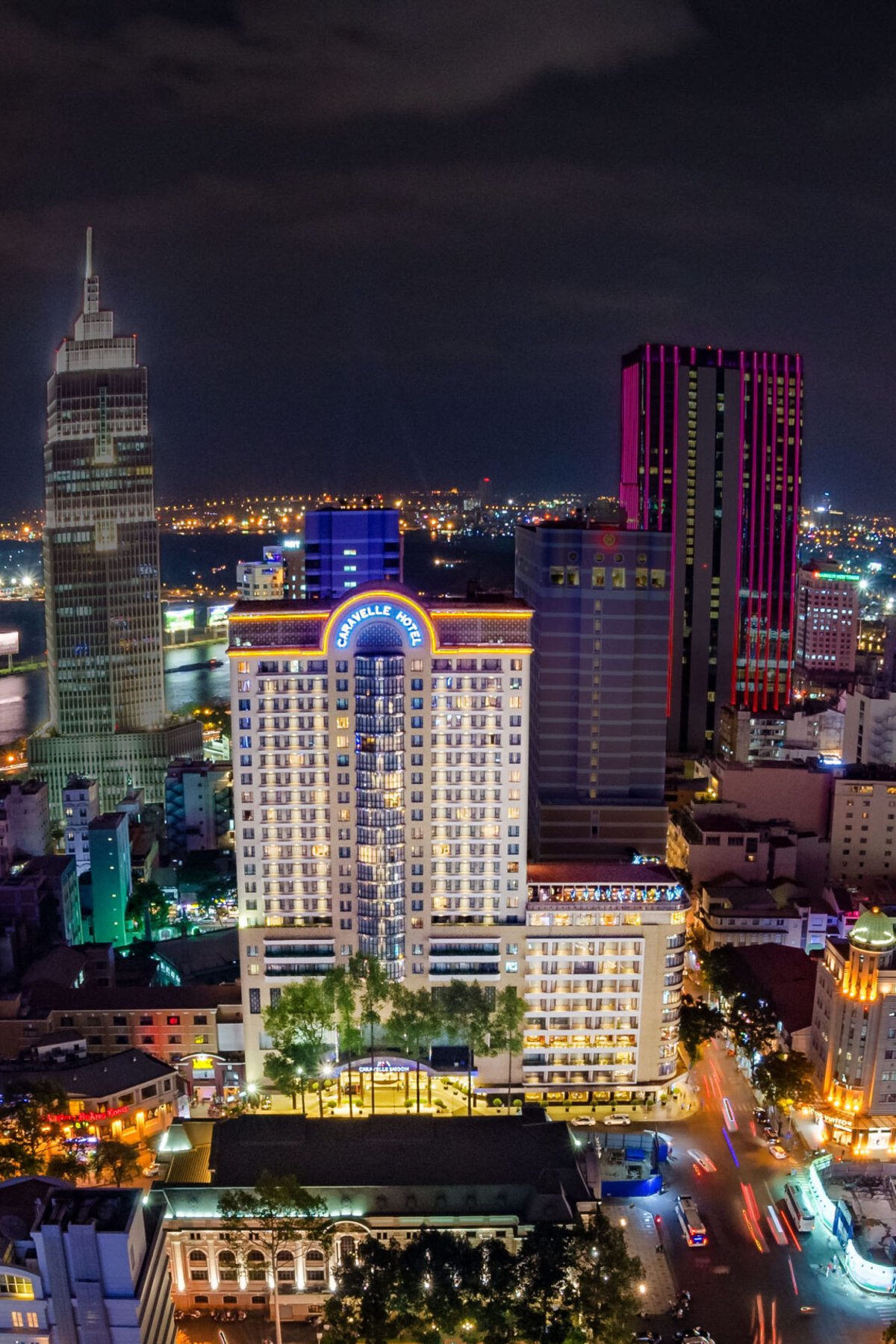
You are on Lam Son Square in District 1, which means most of what you flew in for is on foot. The Opera House sits across the way, Notre Dame Cathedral and the old Central Post Office are a short walk north, and Nguyen Hue Walking Street and Ben Thanh Market are both close enough to skip a taxi. Cafés and street food spill out in every direction.
Downstairs, Restaurant Nineteen is known for a big, wide-ranging international buffet, the kind you graze for two hours and still miss a corner. Café de l'Opera handles pastries and slow coffee, and Reflections leans into contemporary plates. None of it reinvents dinner, but after a day pushing through the District 1 heat, an air-conditioned buffet and a cold drink land exactly right.
This is a large tower hotel, so service runs efficient rather than intimate and the lobby can feel busy at check-in.
Best for first-time visitors who want to walk to the sights, not travellers chasing a boutique design experience.
Room quality and noise swing a lot by floor and orientation, so the exact room matters more than the room category.
District 1 is thick with hotels at this price, so the rooftop and the address are what set it apart, not the rooms.
The reason to walk in isn't the room, it's the elevator ride to the ninth floor. Saigon Saigon Bar sits up top with black-and-white checkered brick underfoot, heavy wooden chairs, and small balconies that hang out over the collision of Dong Khoi, Nguyen Hue and Le Loi. A live Cuban band or a DJ plays most nights while the Opera House glows below.
The hotel itself is a tall tower on Lam Son Square in District 1, with the Saigon Municipal Theatre practically at the front door and Notre Dame Cathedral a few blocks up. Downstairs, Restaurant Nineteen runs a sprawling international buffet and Café de l'Opera does long, unhurried breakfasts. Rooms are comfortable and quiet enough, service is genuinely warm. As for getting in, this is one of the easy ones: a modest following, a central address, and plenty of ways through the front door.
The demand curve here is blunt and worth reading before you book. Four months, December through March, sit at the top, and they sit there for a reason: the dry season is the only stretch when Saigon's heat comes without the daily monsoon, and it overlaps with Tet, the Lunar New Year that pulls the entire country into motion at once. If you want the central design hotels or a small Thao Dien boutique in this window, treat four to eight weeks of lead time as the floor, and book the good room categories first because they close first. Tet itself deserves a note. Falling in late January or February, it is the single busiest booking moment of the year, but it is also strange on the ground: many family-run restaurants and shops shut for several days as locals return to their hometowns, and the normally relentless traffic thins to something almost calm. It is a fascinating time to be here if you plan around the closures, and a frustrating one if you do not. The shoulders are where the value hides. April and November carry high but not peak demand, and they buy you dry-season conditions without the Tet surcharge, the sweet spot most repeat visitors aim for. The long wet season, May through October, drops demand by roughly half, and with it both rates and booking friction. The rain is real but rarely a washout; it arrives as heavy afternoon downpours that clear within an hour or two, leaving mornings and evenings open. September and October in particular are genuinely undervalued: warm, green, quiet, and the easiest months of the year to walk into the room you actually wanted. There is no closed season in Saigon and no month the city stops working. What changes is the math of getting a bed. Plan the peak months like a competition and the shoulder months like a gift, and let the wet season carry the trips where flexibility matters more than sunshine.
One reading captured so far. The trajectory draws in here as nightly readings stack up.
File closes at ACCESSIBLE. Nothing about getting a room here will test you, which is rather the point. Book it if you want to walk to everything and drink above the Opera House; skip it if you came to Vietnam for a design hotel or a silent night's sleep.