Hotel Majestic
Saigon.
4 critic reviews
filed.
Worth it if you value location and living history over pristine modern rooms. The address on Dong Khoi and the river, plus the two rooftop bars, are genuinely hard to beat, and the colonial fabric is the real thing. Just go in knowing a century-old building behaves like one.
Hardly a secret to locals, but its small social-media footprint means plenty of travelers overlook it for flashier glass towers. In that sense it is a bit of a hidden gem: a genuine heritage landmark hiding in plain sight on the busiest corner in town.
angles.
Two architects, four decades apart
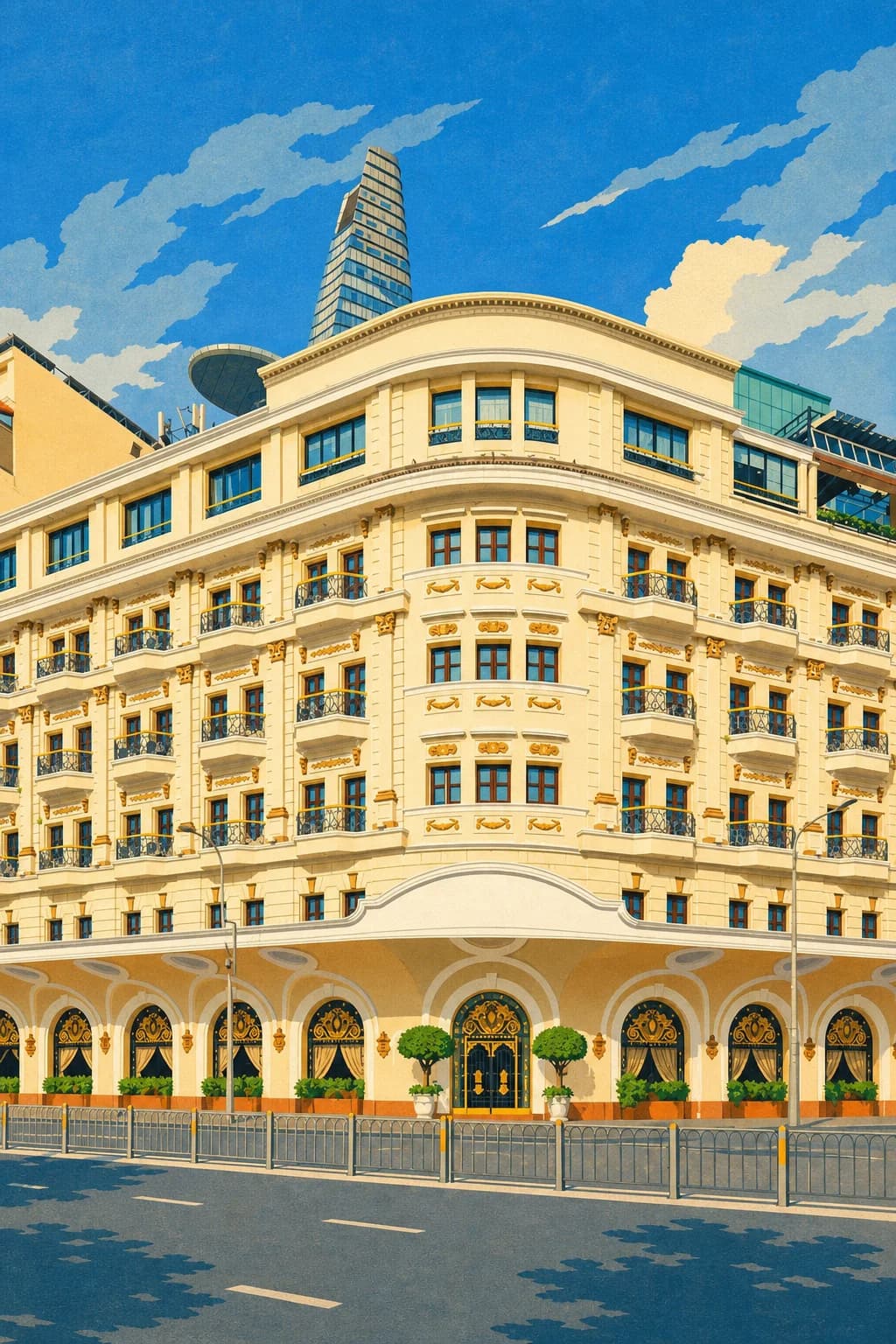
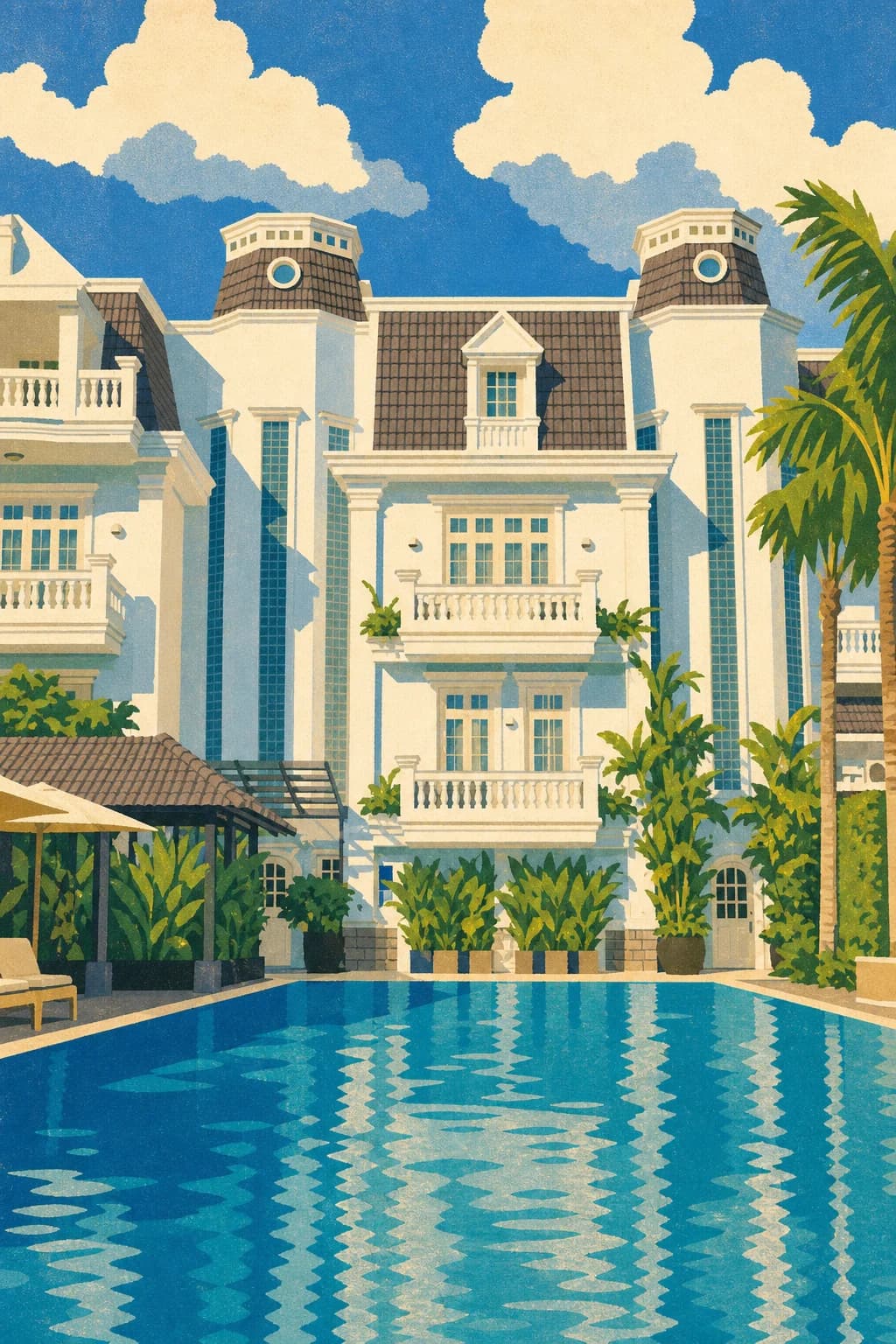
The bones are 1925 French-colonial: four original stories, 44 rooms, classical lines on the riverfront corner. Then in 1965 the Vietnamese architect Ngo Viet Thu grafted on two more floors. What you walk through today reads as one continuous heritage building, parquet underfoot, marble in the bathrooms, and balconies that treat the Saigon River as the reason the whole place exists.
The rooftop earns its reputation
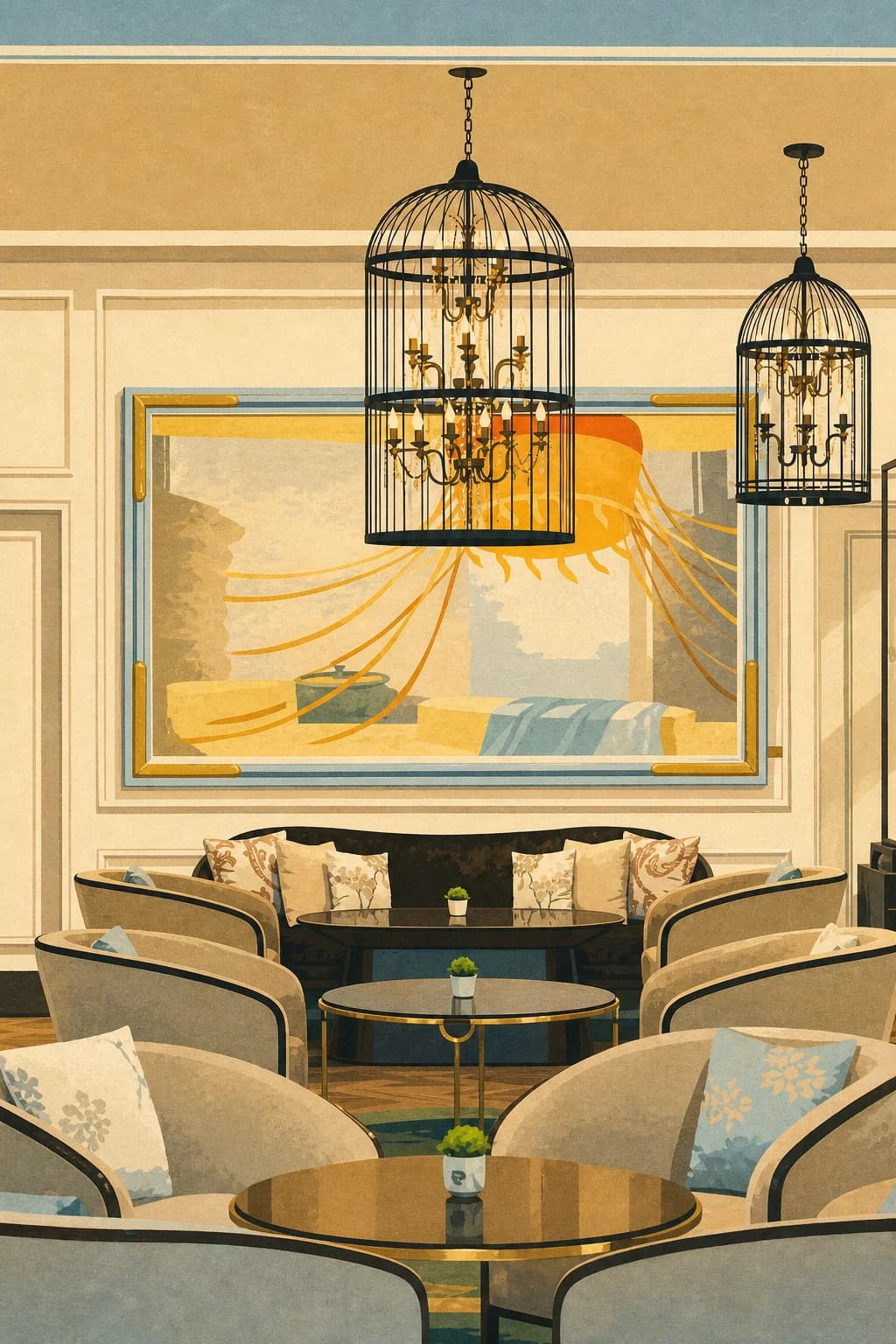
M Bar sits up on the roof with signature cocktails, live musicians most nights, and a straight shot across the Saigon River after dark. A second, partly covered spot, the Breeze Sky Bar, does the same trick with actual river wind. Come for sunset, stay for the lights on the water, and you start to understand why people book the upper floors partly just for the ride up.
Dong Khoi at your doorstep
You are on the old Rue Catinat, now Dong Khoi, the shopping and cafe spine that has pulled people in since the colonial era. Walk five minutes and you hit the Opera House, Notre Dame Cathedral, the Central Post Office, and endless coffee. The riverfront promenade starts at the door. SGN airport is about thirty minutes out, so you trade a slightly longer transfer for being dead center.
talk.
mapped.
“In prime location since 1925, the Hotel Majestic is an art deco masterpiece of columns, arches, chandeliers and stained glass domes.”
record.
Hui Bon Hoa's company built the Majestic in 1925: four stories, 44 rooms, French-style lines facing the Saigon River. In 1965 the Vietnamese architect Ngo Viet Thu added two more floors, and the building grew into the riverfront landmark it is now.
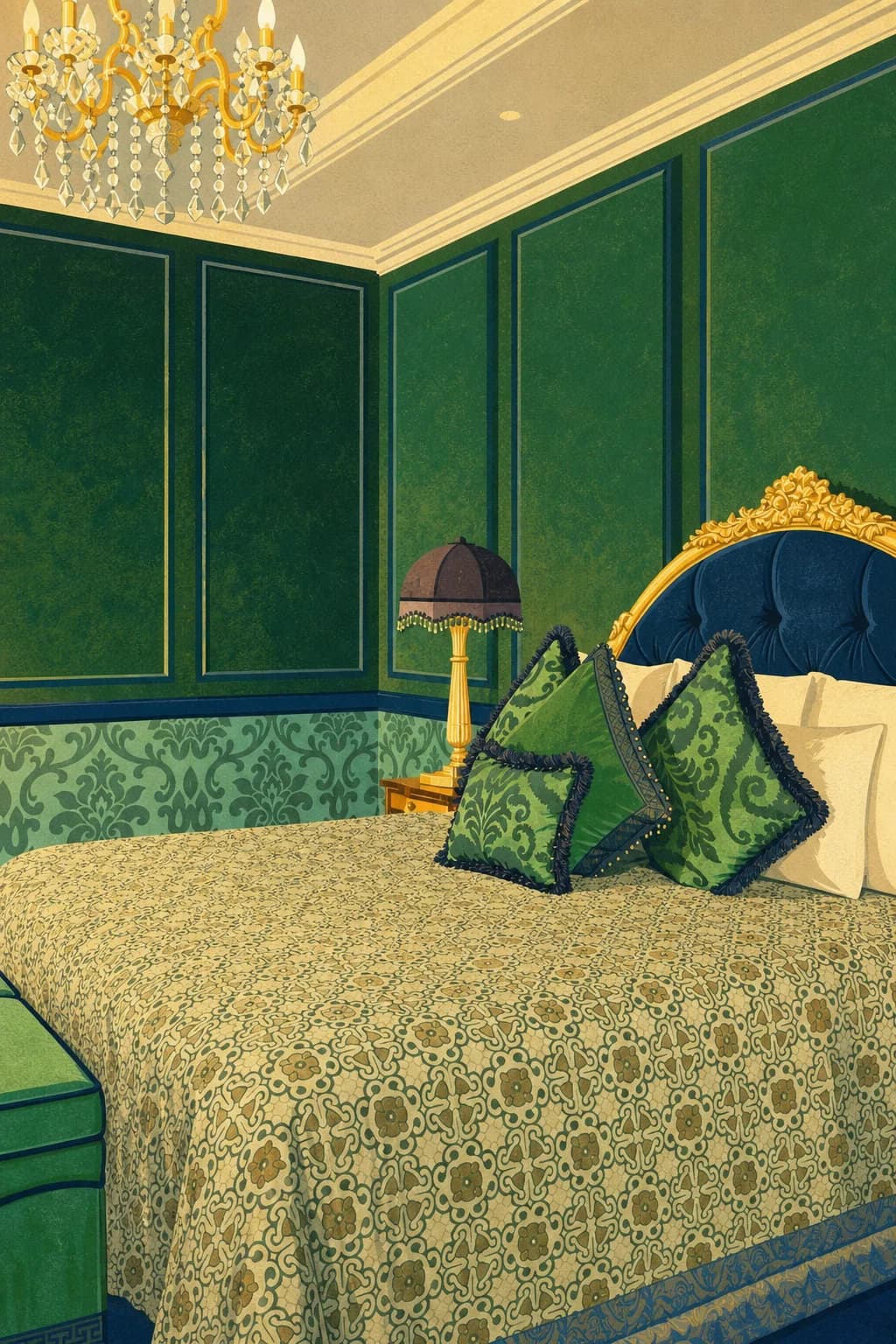
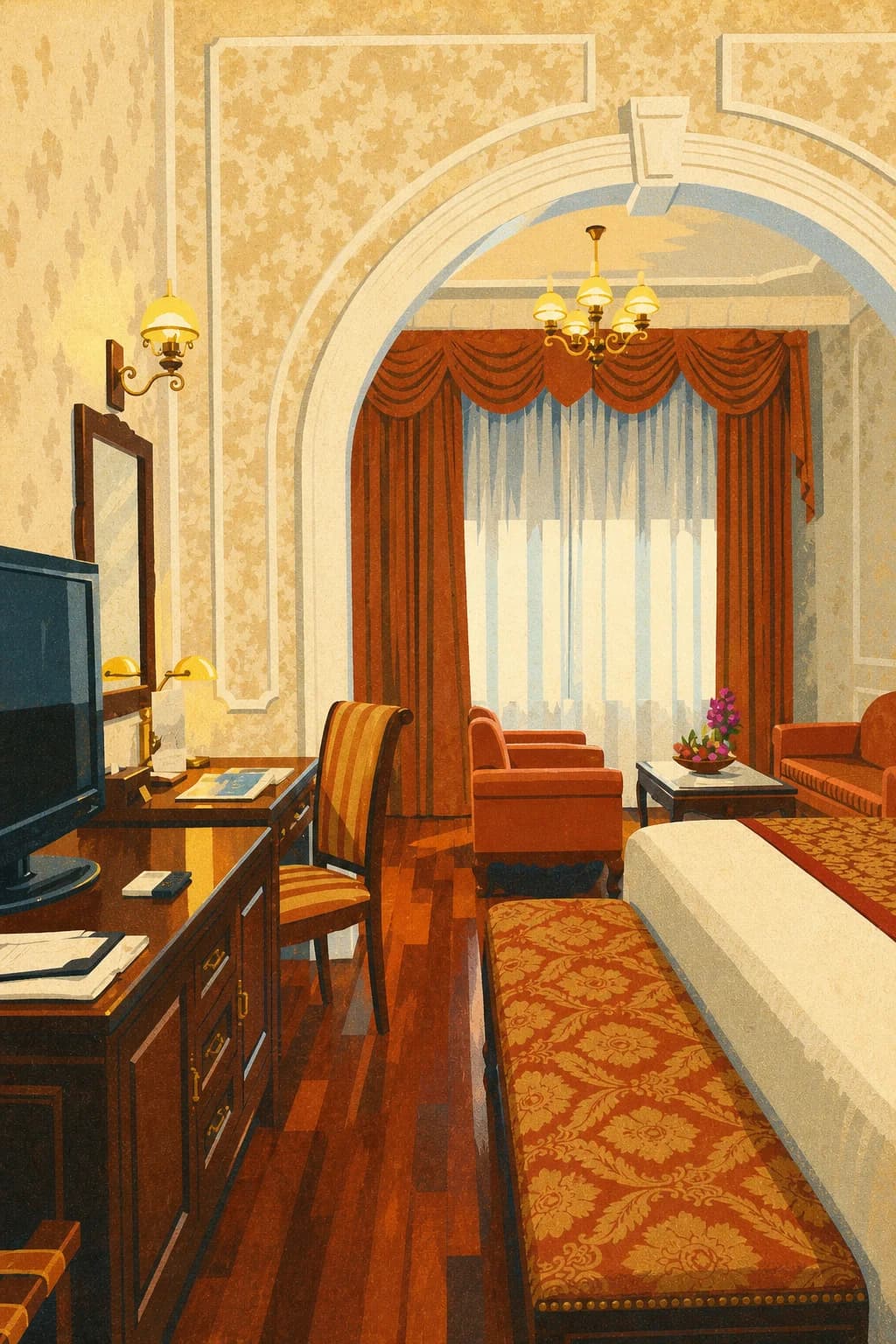
Inside, it stays faithful to that colonial vocabulary: parquet floors, marble bathrooms, balconies that treat the water as the main event. Up top, M Bar and the Breeze Sky Bar catch the river breeze and live music after dark. This is the kind of place where the location does half the work and a century of history does the rest. It stays bookable, but the good rooms and the rooftop tables go early once the weather turns and the holidays land.
changed.
Saigon's demand curve is blunt, and reading it before you book is the difference between the room you wanted and whatever's left. Four months — December through March — sit at the top for a reason: this is the only stretch when the city's heat arrives without the daily monsoon, and it overlaps with Tet, the Lunar New Year that pulls the entire country into motion at once.
December through March is peak, and it fills from the top down. The dry season delivers the conditions everyone wants, which is exactly why the good room categories close first. For the central design hotels or a small Thao Dien boutique in this window, treat four to eight weeks of lead time as your floor and book the better categories immediately.
Tet itself deserves its own strategy. Falling in late January or February, it is the single busiest booking moment of the year — and the strangest on the ground. Many family-run restaurants and shops shut for several days as locals return to their hometowns, and the normally relentless traffic thins to something almost calm. Plan around the closures and it's fascinating; ignore them and it's frustrating.
The shoulders are where the value hides. April and November carry high but not peak demand, buying you dry-season conditions without the Tet surcharge — the sweet spot repeat visitors quietly aim for. This is the window that rewards travelers who know the calendar without paying for the crowd.
September and October are the easiest months of the year to walk into the room you actually wanted: warm, green, quiet, and roughly half the demand of peak.
The long wet season, May through October, cuts demand by about half. Rates and booking friction fall with it. The rain is real but rarely a washout — it arrives as heavy afternoon downpours that clear within an hour or two, leaving mornings and evenings open. There is no closed season in Saigon and no month the city stops working; what changes is the math of getting a bed. Plan the peak months like a competition, the shoulders like a gift, and let the wet season carry the trips where flexibility matters more than sunshine.
approach.
briefing.
“one of Vietnam's truly great colonial hotels, steeped with nostalgia and old-world charm that has been accumulating since 1925.”
stands.
demand's going.
The real Instagram following over time, plus where this hotel sits for demand in Ho Chi Minh City. Pick a range, toggle the lines. Followers are reach and demand, not engagement.
assessment.
File closes at MODERATE. Still bookable, but the river-view rooms and rooftop tables thin out at peak. Book if you want a real 1925 landmark on the best corner on the water; skip it if you need modern, uniform rooms and total quiet.
The numbers behind the tiers
Hotel Majestic Saigon · SOURCE READINGS · REDACTED- Availability density · sampled
- Monthly search volume · raw
- TikTok hashtag views · raw
- YouTube total views · raw
- TikTok following · latest sweep
- Pinterest saves · latest sweep
More from Ho Chi Minh City.
Get the hotel's Unbookable Score.
Any post or reel with a hotel in it. Booking.com hotel pages work too. One free check, no account needed.