Mostly yes, if you weight your stay toward design, service, and location instead of room size. The bedding, the lotus-pond lobby, and the rooftop do real work, while the rooms themselves are the compromise. Go in knowing that and you will like it.
It keeps a low profile: a 2022 write-up from Chapters of Escapism is roughly the extent of its press footprint, and the social following stays small despite a strong central location. That is partly why it stays bookable when louder names do not. Enjoy it before the roof gets discovered.
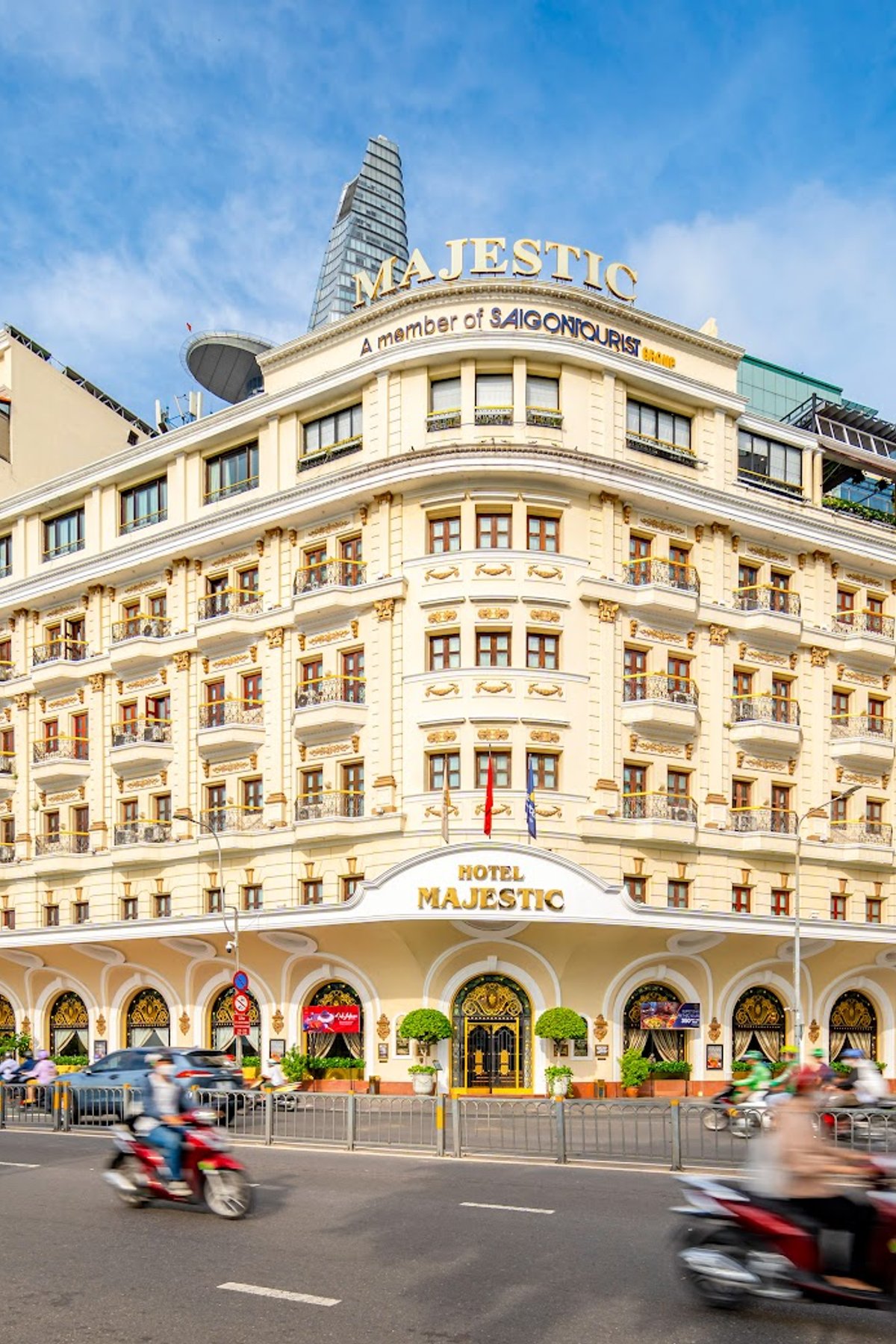
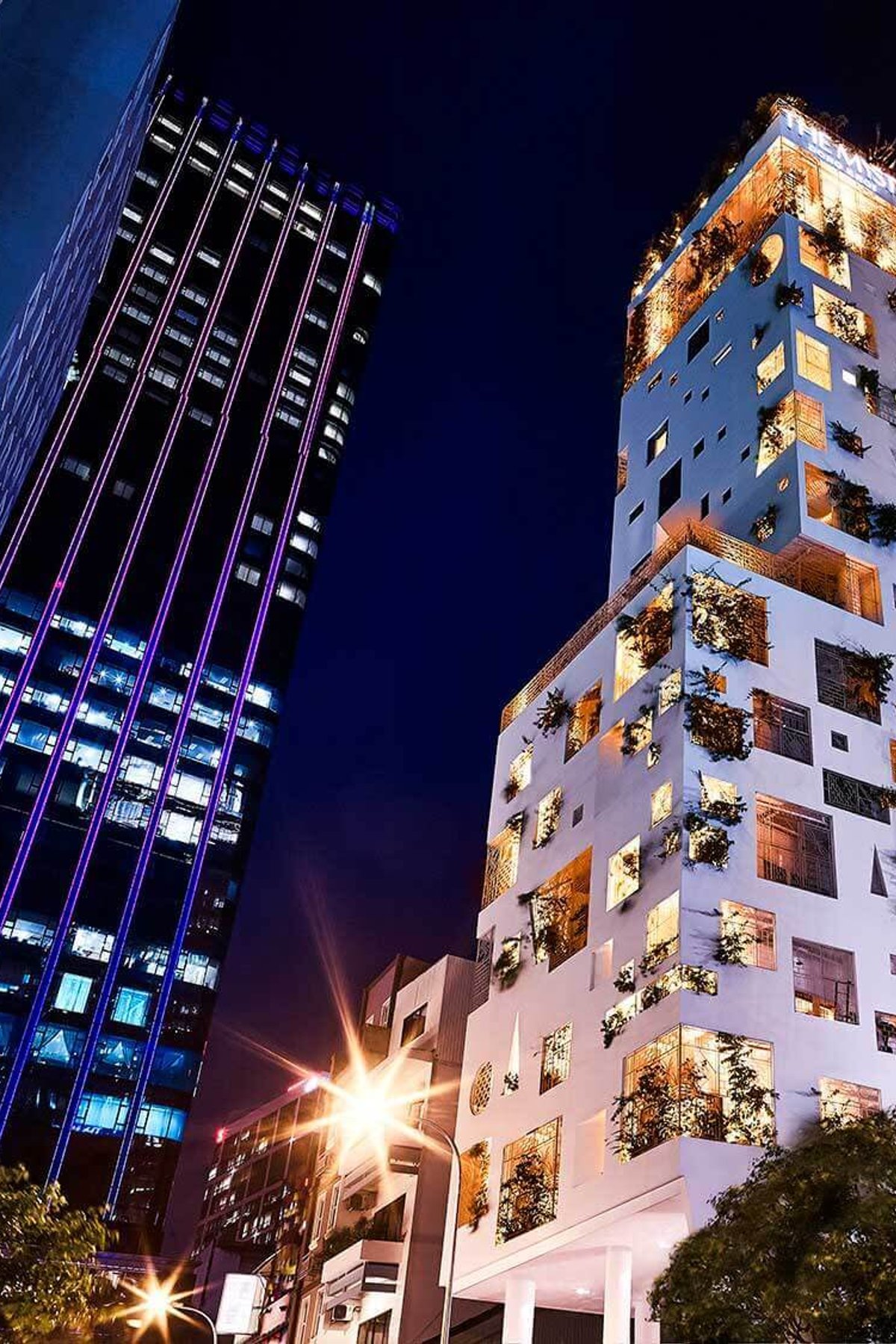
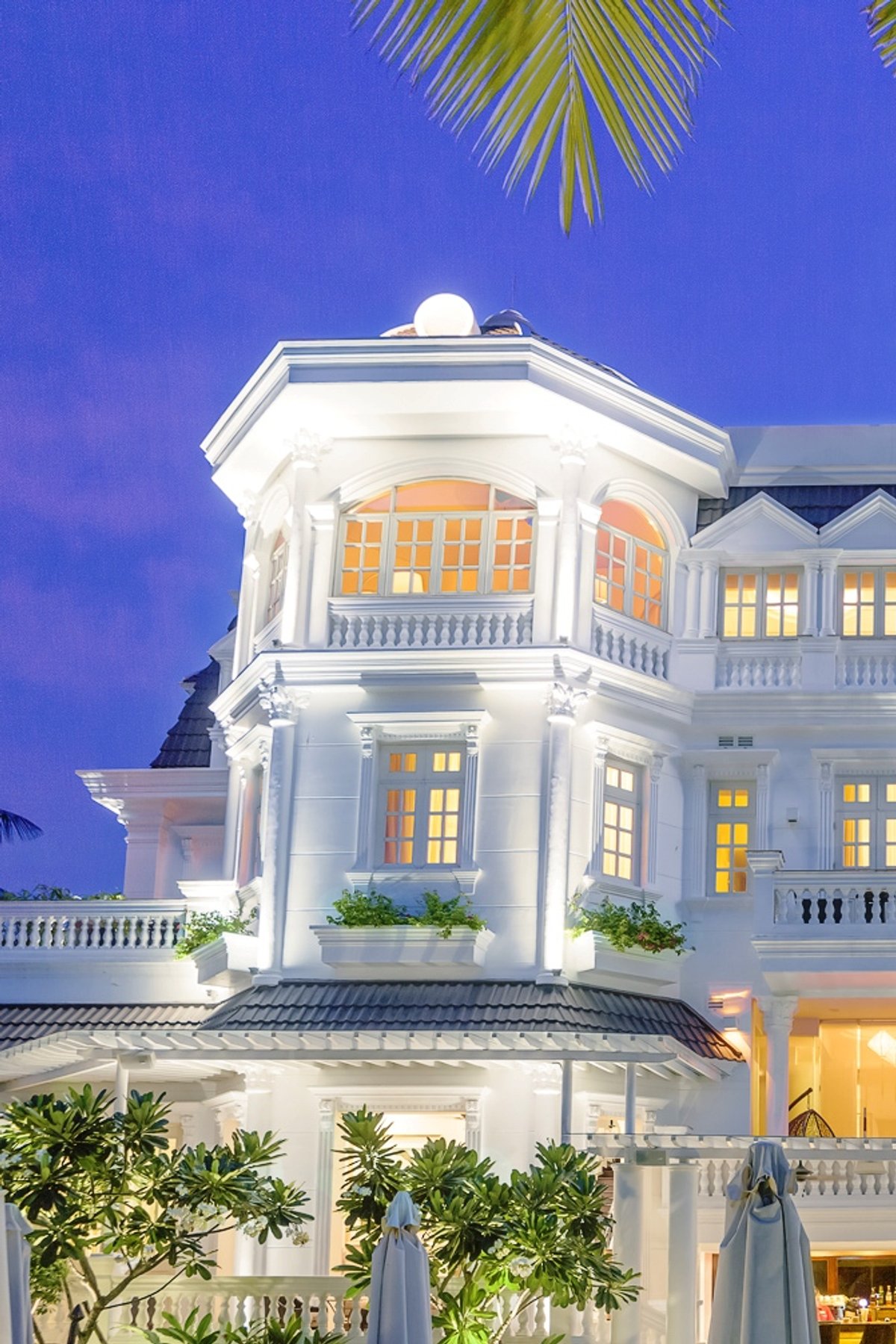
The turquoise and yellow facade is a landmark you can navigate by. Step through it and the mood flips: a lotus pond anchors the interior, French colonial patterned tiles line the walls, and beds sit behind draped curtains lifted from traditional noble households. It reads as heritage without the museum stiffness, warm and lived in rather than staged for a single photo.
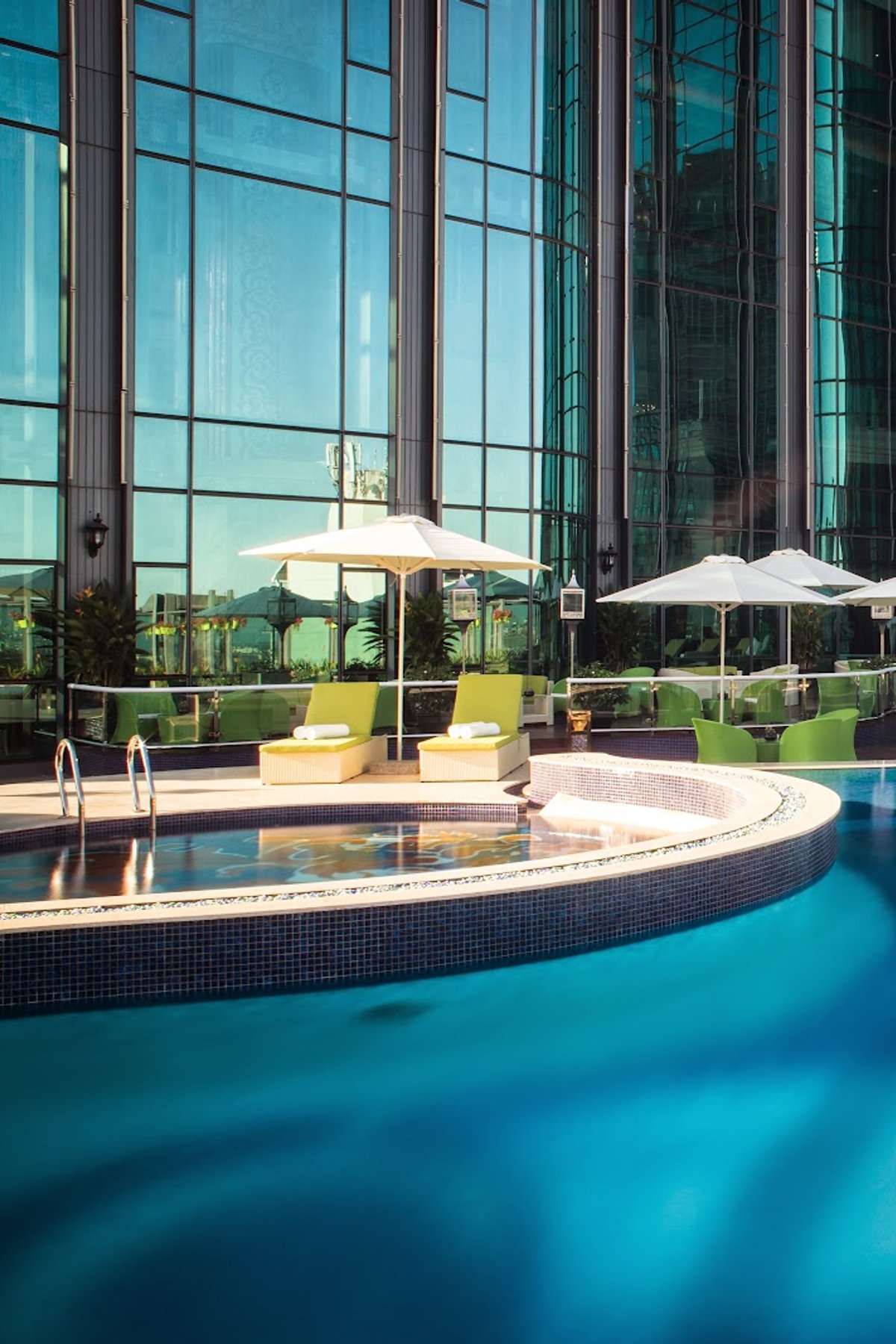
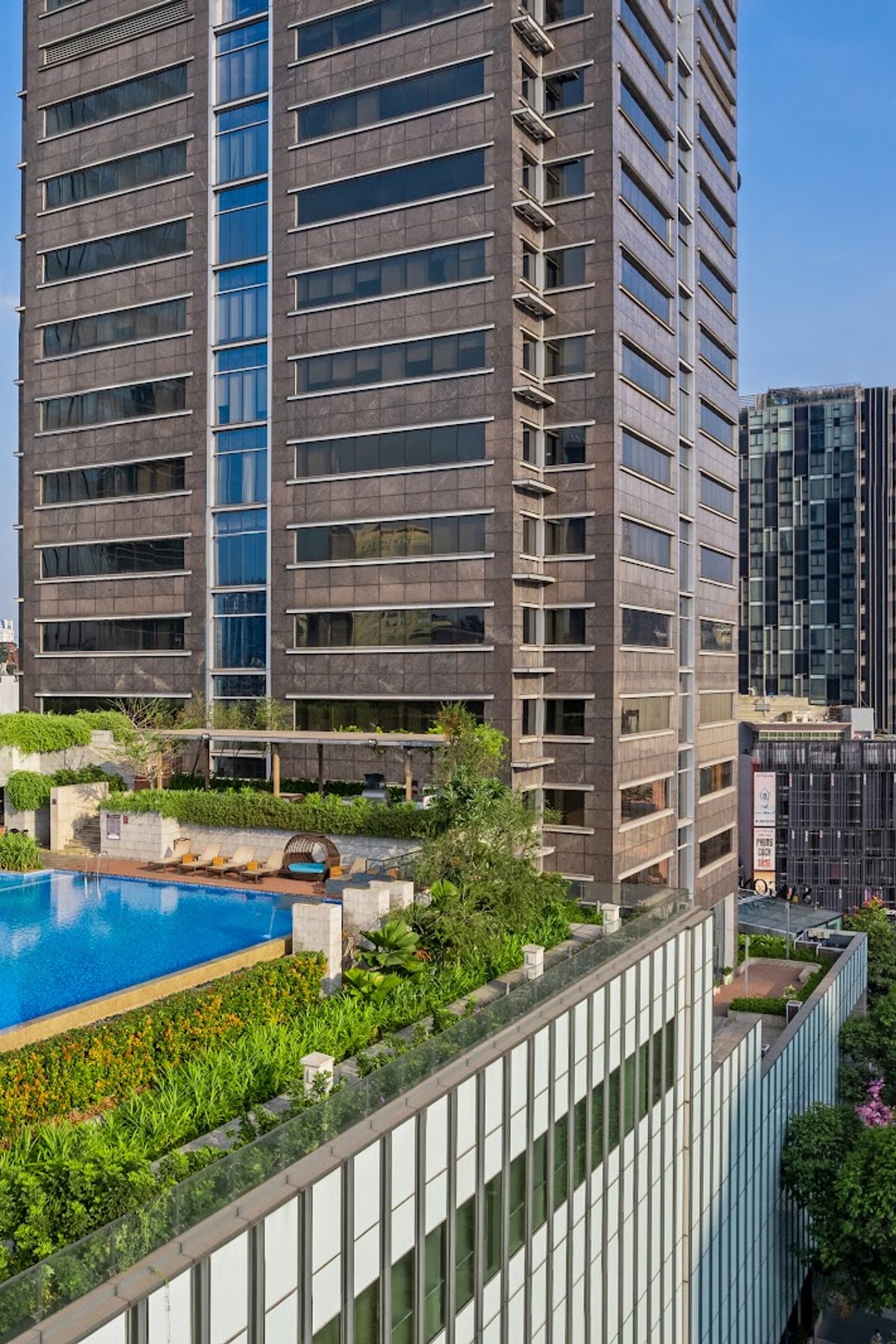
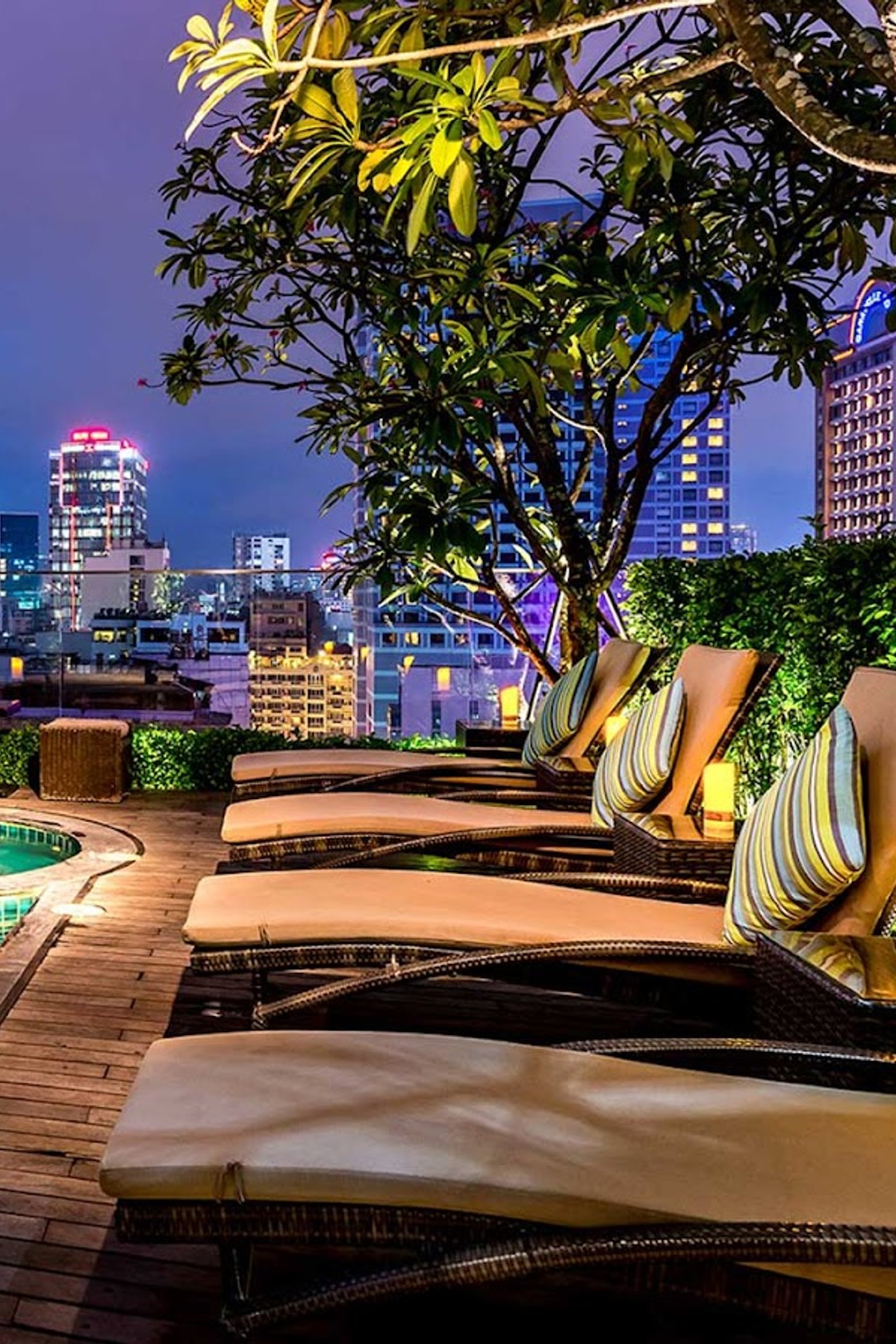
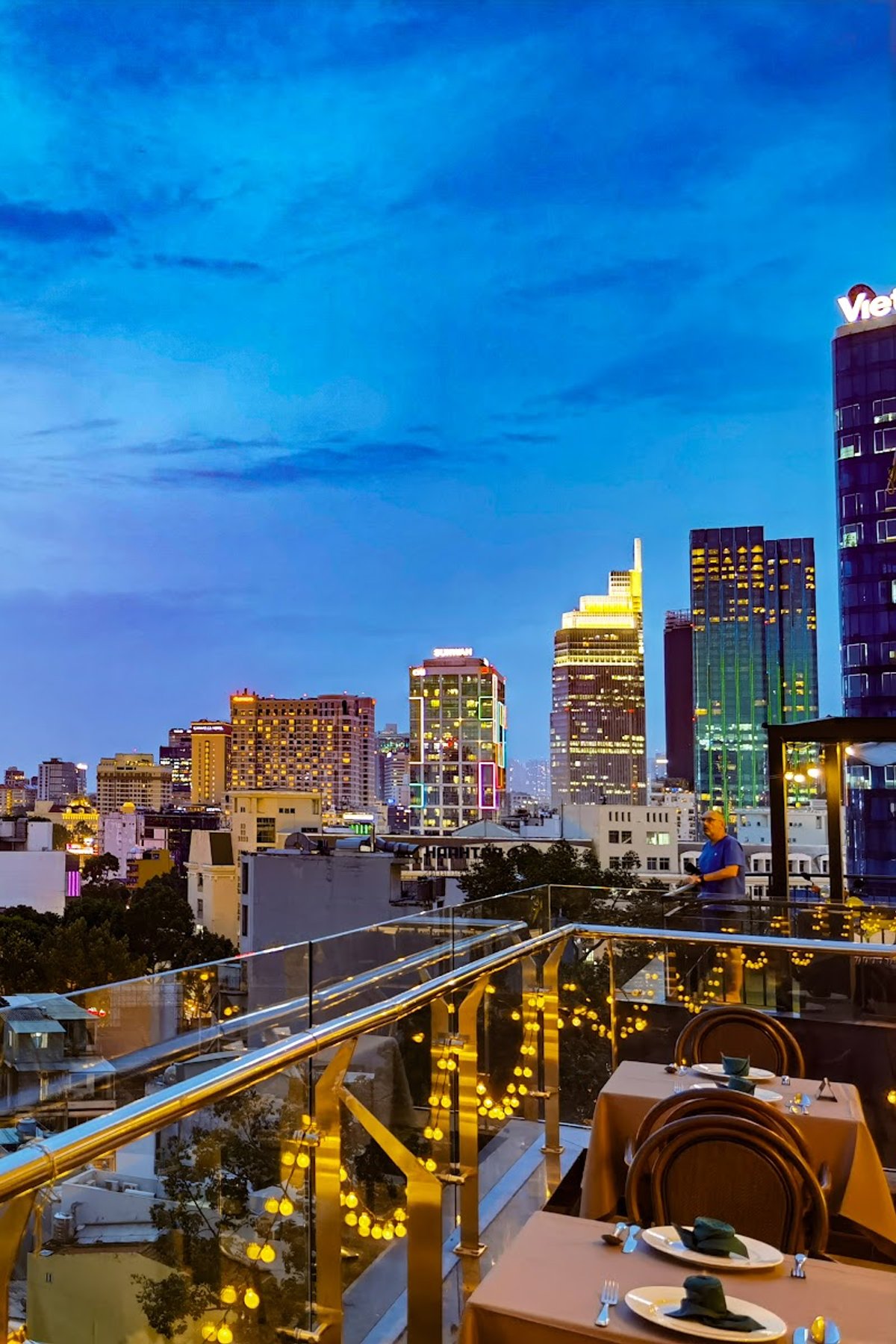
The rooftop is where The Odys earns its evenings. BÚP works an Asian fusion menu and doubles as a sky lounge, so breakfast comes with skyline and the cocktails arrive as the city switches its lights on. You do not have to leave the building for a good night, which in a dense stretch of District 3 counts for more than it sounds.
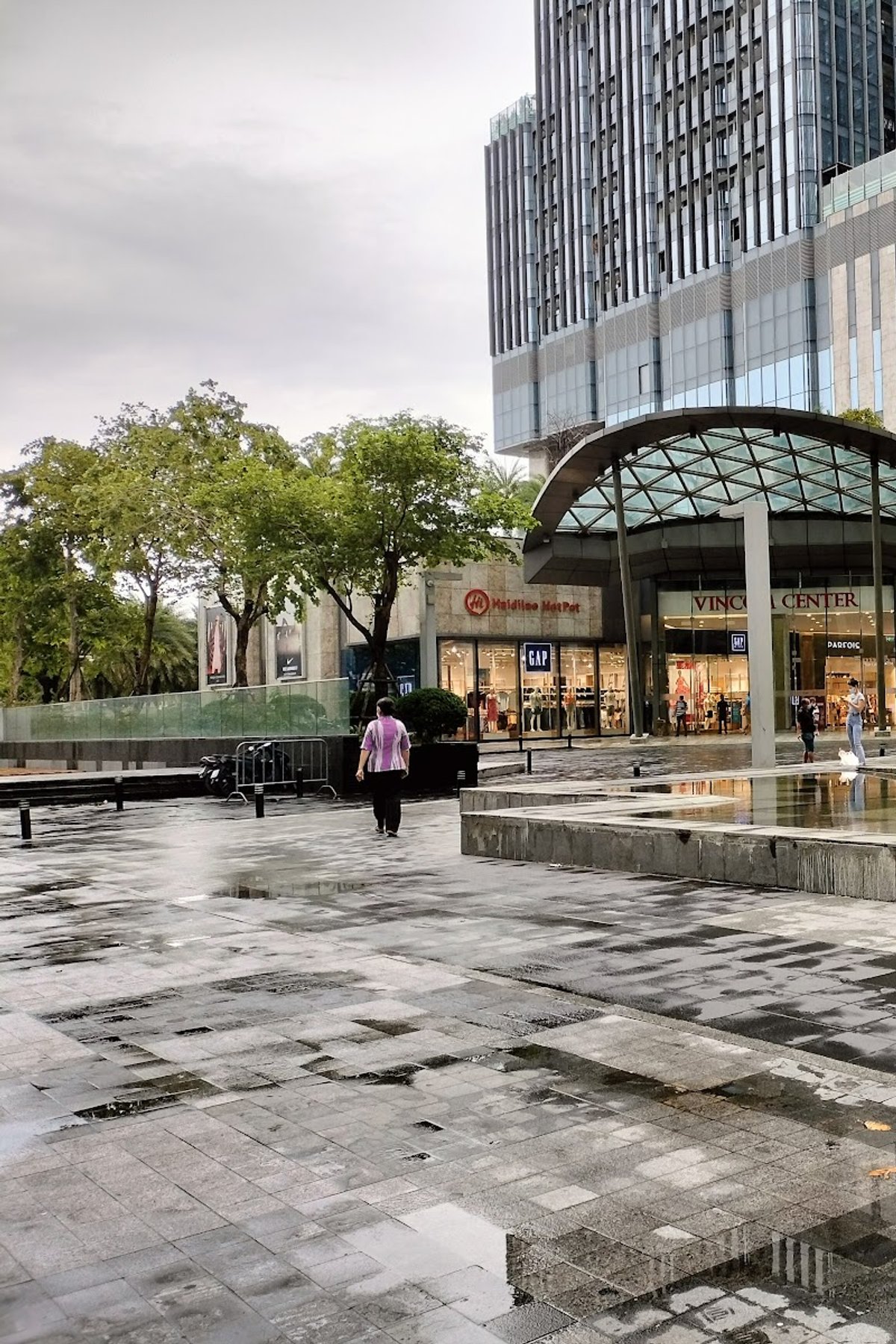
District 3 puts you within a walk of the heavy hitters: Notre Dame Cathedral, Independence Palace, the War Remnants Museum, and City Hall. The Saigon financial district sits close by. You can spend a full day on foot and only grab a ride when the heat wins. SGN airport is roughly thirty minutes out, traffic depending.
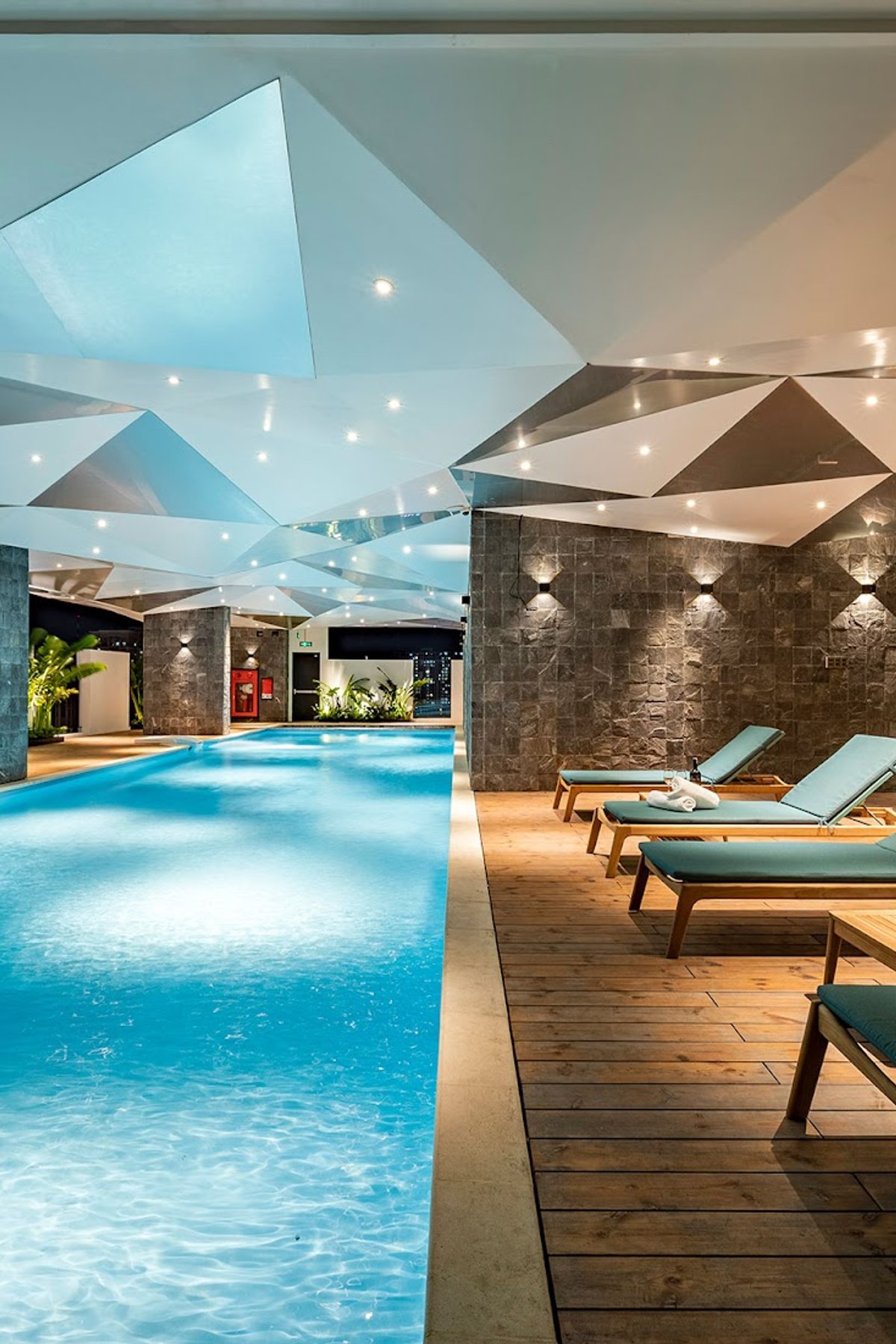
This is a compact boutique property, not a resort, so shared amenities are tight and the rooftop is the main gathering space.
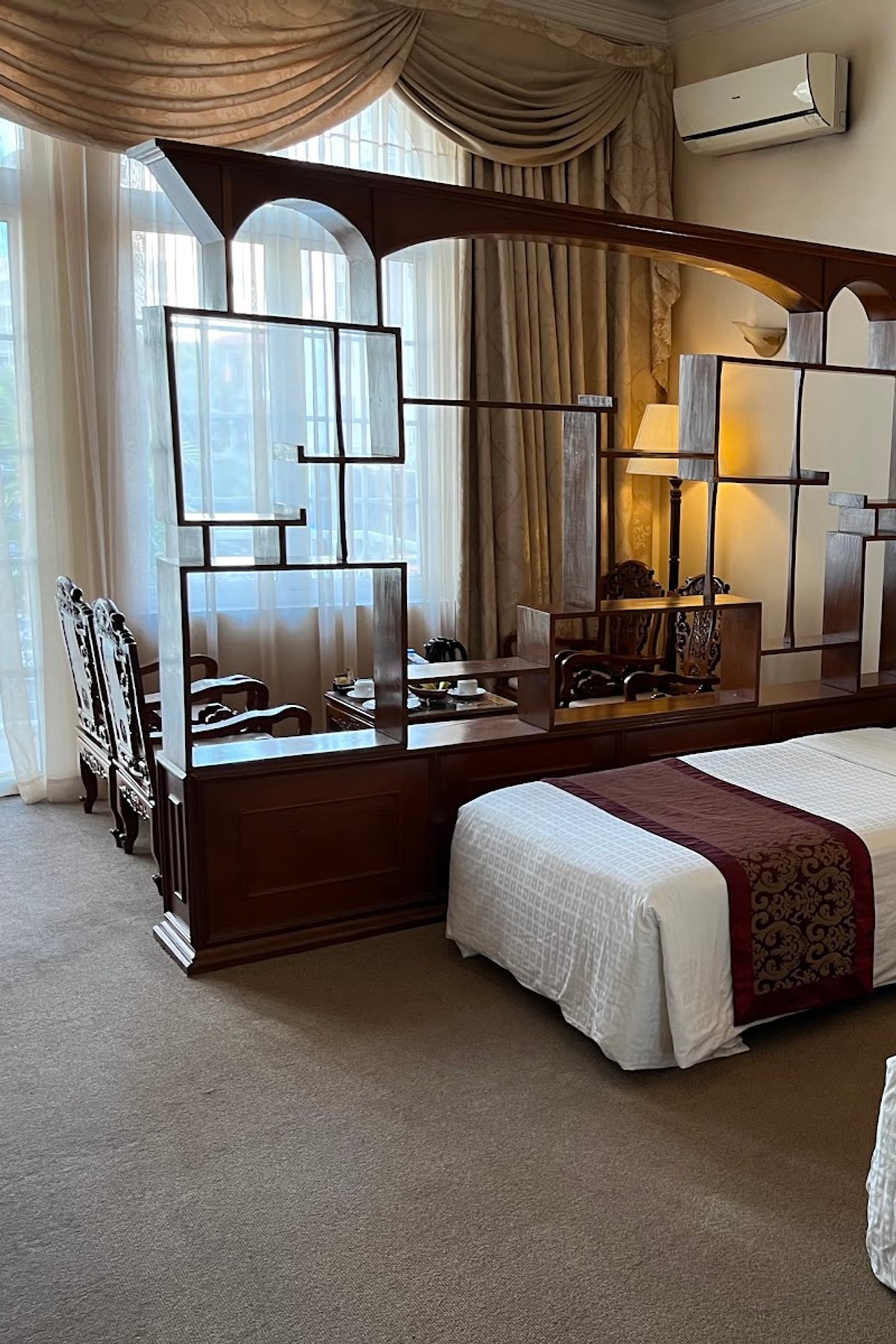
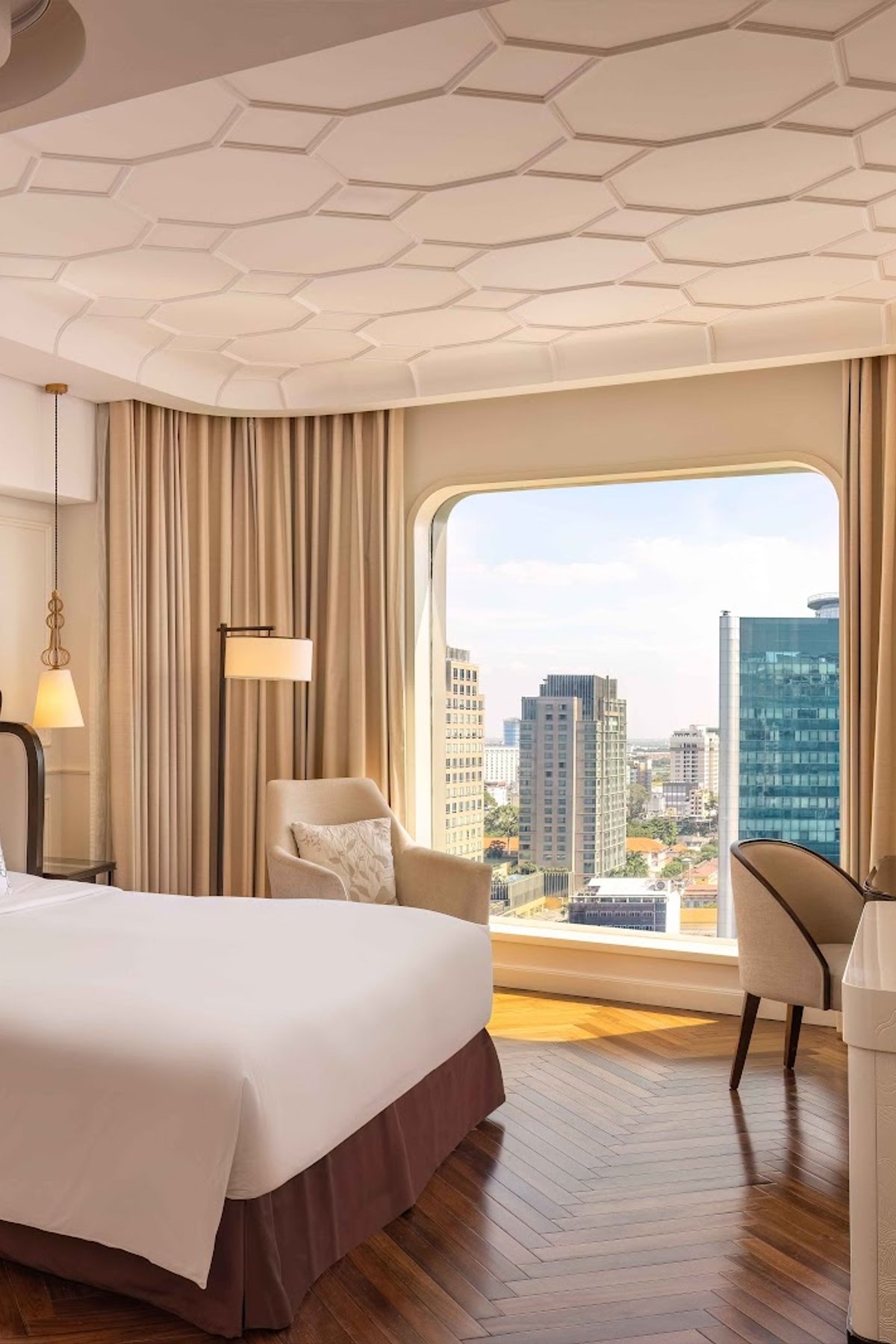
Room categories differ a lot: some are windowless cocoons, others are proper light-filled rooms, so the name alone will not tell you what you are getting.
It suits couples and solo travellers who want design and a central base over square footage; families needing space should look elsewhere.
District 3 has plenty of cheaper beds, so The Odys is asking you to pay up for the look, the service, and the rooftop rather than raw value.
Book two months out for the good months and you will get a room. Wait until you land and Saigon will make the decision for you. The Odys announces itself from the street with turquoise and yellow walls, then goes quiet and Vietnamese inside: a lotus pond at the core, French colonial patterned tiles, beds behind draped curtains that borrow from old noble households.
Rooms run compact, some without much of a window, but the bedding is the kind that ruins your morning plans. Up top, BÚP runs an Asian fusion kitchen and a sky lounge that turns the city into a light show once the sun drops. You are in District 3, walking distance to Notre Dame Cathedral, Independence Palace, and the War Remnants Museum. It is priced to punch above its neighbourhood, and at peak it fills, so plan ahead.
The demand curve here is blunt and worth reading before you book. Four months, December through March, sit at the top, and they sit there for a reason: the dry season is the only stretch when Saigon's heat comes without the daily monsoon, and it overlaps with Tet, the Lunar New Year that pulls the entire country into motion at once. If you want the central design hotels or a small Thao Dien boutique in this window, treat four to eight weeks of lead time as the floor, and book the good room categories first because they close first. Tet itself deserves a note. Falling in late January or February, it is the single busiest booking moment of the year, but it is also strange on the ground: many family-run restaurants and shops shut for several days as locals return to their hometowns, and the normally relentless traffic thins to something almost calm. It is a fascinating time to be here if you plan around the closures, and a frustrating one if you do not. The shoulders are where the value hides. April and November carry high but not peak demand, and they buy you dry-season conditions without the Tet surcharge, the sweet spot most repeat visitors aim for. The long wet season, May through October, drops demand by roughly half, and with it both rates and booking friction. The rain is real but rarely a washout; it arrives as heavy afternoon downpours that clear within an hour or two, leaving mornings and evenings open. September and October in particular are genuinely undervalued: warm, green, quiet, and the easiest months of the year to walk into the room you actually wanted. There is no closed season in Saigon and no month the city stops working. What changes is the math of getting a bed. Plan the peak months like a competition and the shoulder months like a gift, and let the wet season carry the trips where flexibility matters more than sunshine.
One reading captured so far. The trajectory draws in here as nightly readings stack up.
File closes at ACCESSIBLE. Book it if you want central Saigon with a design-forward room and a skyline roof, and you travel light on space. Skip it if you need a big, bright room. It stays bookable, but the good months and better rooms go first, so plan ahead.