Rakkojae
Seoul.
4 critic reviews
filed.
Worth it if you want the architecture itself: the restored hanok, the courtyard, the calm that TRAVELIFE and Harper's BAZAAR both noted. Less worth it if you need a conventional suite with Western proportions.
Not exactly a hidden gem given the press and the STAYFOLIO listing, but the still-reasonable availability for a five-suite, 130-year-old hanok makes it feel like one to book now.
angles.
SLEEP INSIDE THE ARCHITECTURE.
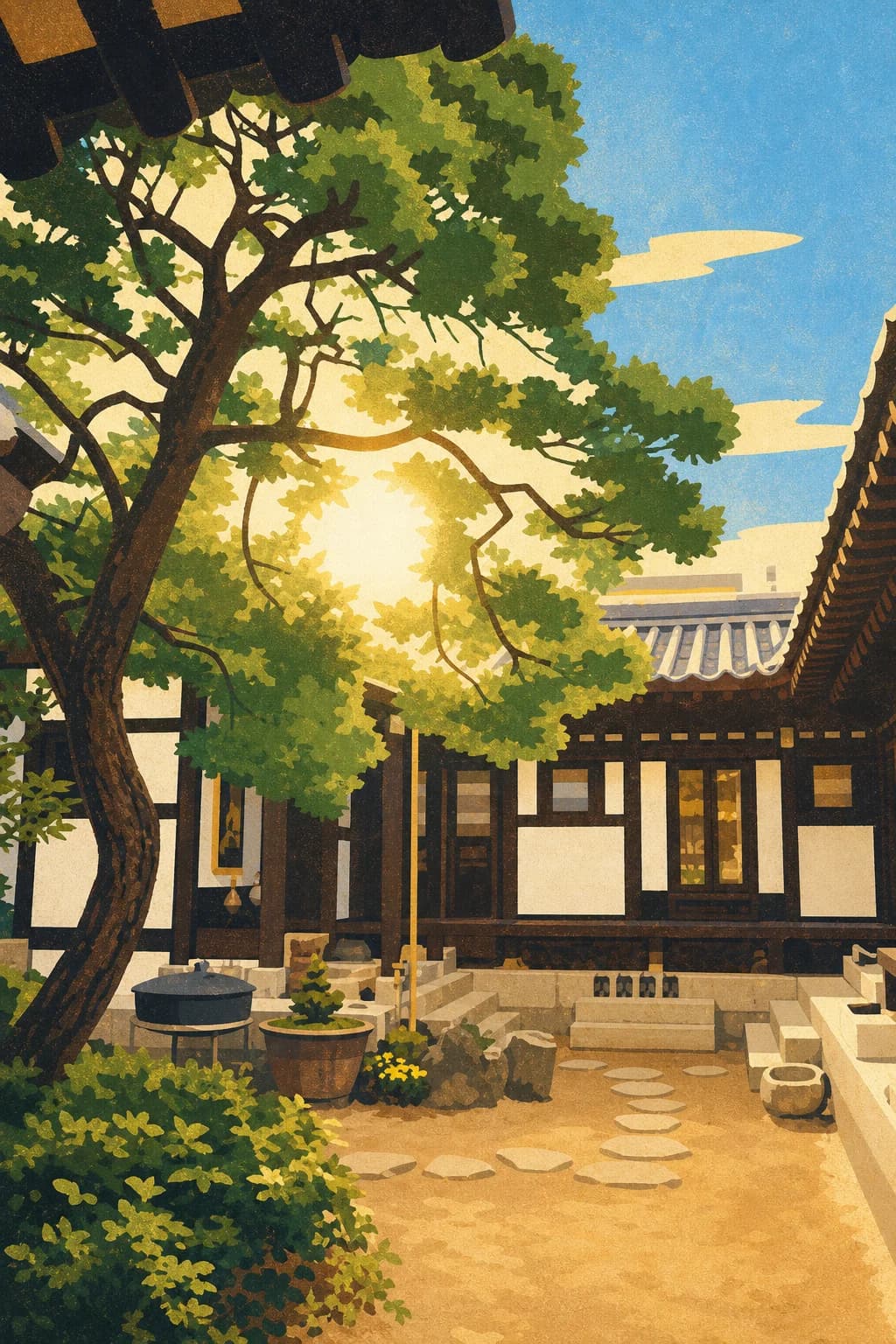
A hanok is built around a central courtyard, with timber frames, tiled eaves, and rooms that open to the air, and Rakkojae's is roughly 130 years old and carefully restored. Staying in one is the difference between photographing Bukchon's lanes and waking up inside them. Harper's BAZAAR captured the result, praising "achieving a harmonious balance between infusing contemporary comforts into the property," so the heritage does not cost you comfort.
A STAYFOLIO ADDRESS.
STAYFOLIO is Korea's Design Hotels equivalent, the shortlist serious design travelers actually browse, and Rakkojae's place on it is a meaningful endorsement rather than a logo. It signals a property held to a real aesthetic standard, not just an old building with rooms. In a city thick with hanok stays of wildly varying quality, that listing is a fast, trustworthy way to separate the considered from the touristy.
FIVE SUITES, STILL GETTABLE.
Only five suites usually spells a fight for dates, and Booking Difficulty here is real but not punishing. Across the nights we sampled, roughly four in five came back available, and the property sits across the major channels rather than one private waitlist. The 4.4 Google score, strong for somewhere this intimate, suggests the experience holds up to the scrutiny that a tiny, much-discussed property invites.
talk.
mapped.
“Sitting at main hanok built with the dark-coloured solid wood that weathered through the years and listening to the calming sounds of Bukchon Hanok Village was truly magical and therapeutic.”
record.
The flagship is a roughly 130-year-old hanok, a traditional Korean courtyard house, restored down to five suites on Gyedong-gil in Bukchon. STAYFOLIO, Korea's equivalent of Design Hotels, lists the property, which is a real credibility signal in a country with a deep design-hotel culture. The press agrees on the feeling.
TRAVELIFE Magazine wrote, "Stepping through the doors of Rakkojae Seoul Main Hanok I immediately felt a sense of calm," and Harper's BAZAAR praised "achieving a harmonious balance between infusing contemporary comforts into the property." Guests give it 4.4 on Google, high for a property this exposed. With only five suites it can fill, yet roughly four in five of the nights we sampled were open and it is properly distributed. Plan a little ahead and it is very gettable.
changed.
Seoul's demand curve tracks two things travelers chase and one they flee. They chase the cherry blossom window in April and the maple-and-ginkgo turn in October — the two visual set-pieces that drive the city to its yearly peaks, with May riding the tail of spring into Seoul's most comfortable stretch. What they flee is the summer: July and August collapse into the monsoon and a wet, heavy heat that pushes demand to its annual low, even though the city never closes and the air-conditioned interiors of Gangnam and Myeongdong barely register the season.
The shoulder months are where the real strategy lives. March and November sit just below peak, and both are genuinely undervalued. March catches the pre-blossom palace quiet before the crowds land; November delivers crisp, dry, blue-sky weather after the foliage tourists have gone home. September is the same bet on the back end of summer.
If your trip is flexible, these are the months where the scarce hanok stays and downtown boutiques are reachable without booking a full season out.
For the peaks, lead time is everything — and it's sharpest where the rooms are fewest. A five-room hanok like Rakkojae Seoul or an eight-room stay like arr.dep. can sell out its April and October dates months ahead, because the cherry-blossom and autumn windows concentrate the entire year's demand into a few weeks against a room count that never grows. The larger design hotels and Gangnam boutiques give you more runway, but even Hotel28 Myeongdong tightens noticeably around the blossom peak.
December through February is the contrarian's season. Cold and dry, but clear, cheaper, and paired with the city's best indoor life — its bathhouses, night markets, and endless barbecue. Nothing shuts down. If you can handle the temperature, this is when Seoul is most bookable and least crowded, and when even the scarce rooms open up.
Time the visit to the neighborhood you want, then book the scarce end of the roster first. The hanoks and small boutiques set the pace; everything larger follows. Get those locked, and the rest of the trip falls into place around them.
approach.
briefing.
“Rakkojae has masterfully elevated the hanok stay by achieving a harmonious balance between infusing contemporary comforts into the property”
stands.
demand's going.
The real Instagram following over time, plus where this hotel sits for demand in Seoul. Pick a range, toggle the lines. Followers are reach and demand, not engagement.
assessment.
File closes at MODERATE. Roughly four in five sampled nights were open, so book direct a few weeks out and the five-suite count rarely bites. Skip if you need Western suite proportions or step-free access; this is a night lived inside a century-old hanok.
The numbers behind the tiers
Rakkojae Seoul · SOURCE READINGS · REDACTED- Availability density · sampled
- Monthly search volume · raw
- TikTok hashtag views · raw
- YouTube total views · raw
- TikTok following · latest sweep
- Pinterest saves · latest sweep
More from Seoul.

Get the hotel's Unbookable Score.
Any post or reel with a hotel in it. Booking.com hotel pages work too. One free check, no account needed.