La Charm
Hoi An.

Worth it for what it is: a clean, friendly, genuinely central base in the Ancient Town at a fair price. It is not a design destination and the rooms are simple, so if you want atmosphere baked into the walls, look elsewhere. If you want to walk out the door into Hoi An, it delivers.
Somewhat under the radar. It gets steady traveler love for service and location but almost no social presence, so it flies below the influencer radar that swarms flashier Hoi An properties. That works in your favor: a well-run, central hotel that has not been priced up by hype.
angles.
Actually inside the old streets
The address is the whole point. Hoi An's UNESCO core is walkable, not drivable, and most hotels billing themselves as central sit across the river or out toward the beach. La Charm is genuinely a short walk from the Japanese Covered Bridge, the tailor shops, and the lantern-lit night market. You step out of the lane and you are in it, then step back and the noise drops away.
Every room gets a balcony
All 67 rooms open onto a private balcony, which in a town this photogenic matters more than the thread count. The style is deliberately plain: whitewashed walls, dark timber, minibar and safe, nothing shouting for attention. Higher categories add river or panoramic views over the tiled rooftops. It reads as a calm, uncluttered room rather than a showpiece, and most guests seem to prefer it that way.
A garden pool that earns its keep
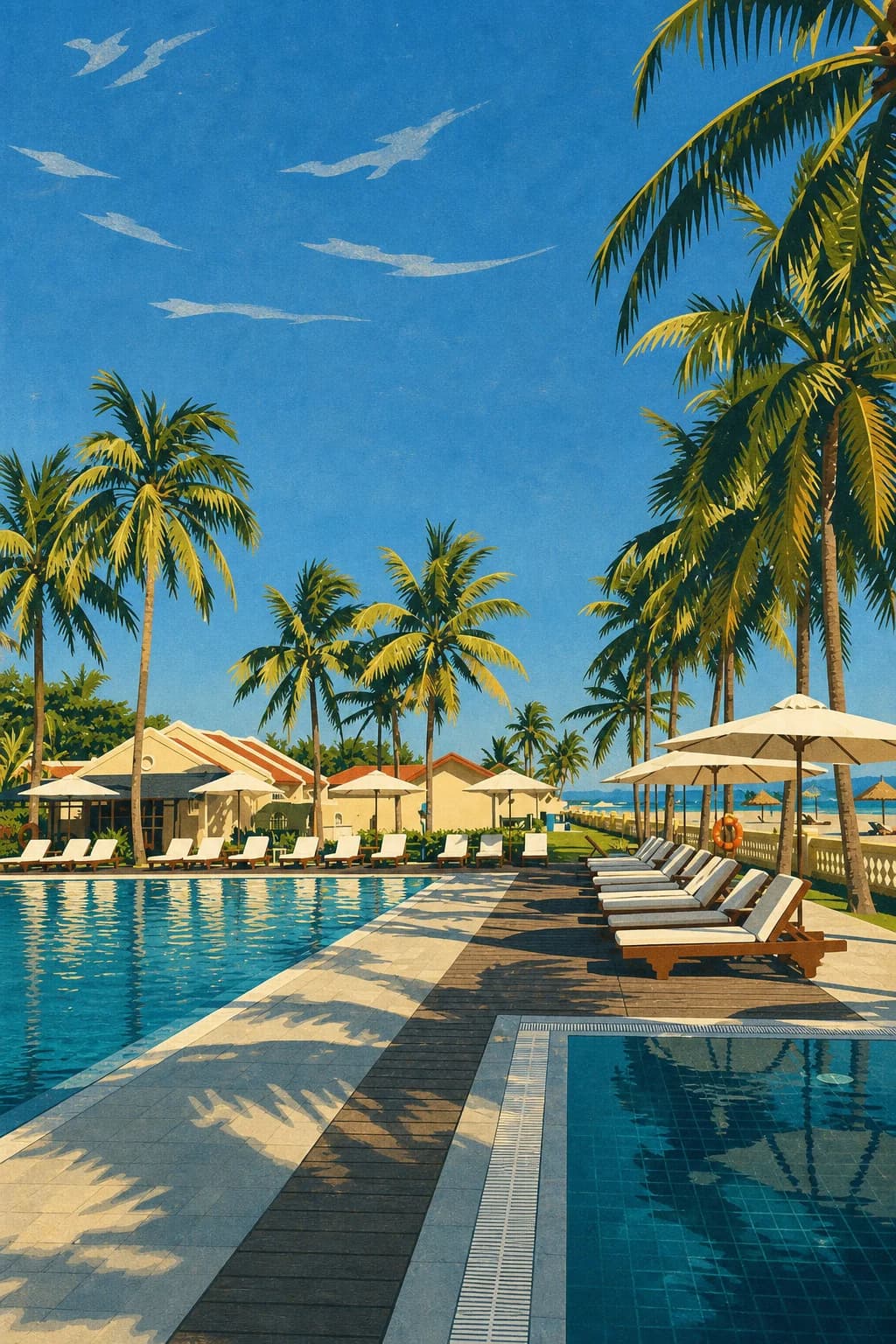
Hoi An is punishingly hot from spring into summer, and the outdoor pool set in the garden is the release valve. It runs from early morning to late evening with umbrellas and loungers, and guests consistently flag how clean and well-kept it stays. Pair it with the spa, priced sensibly by local standards, and you have a genuine midday retreat when the streets turn into a furnace.
talk.
mapped.
record.
La Charm actually is, which is why the good rooms move fast when the lanterns are worth the trip. It is a mid-size boutique place, 67 rooms wrapped around a garden and an outdoor pool, done in a plain, slightly nostalgic style: white walls, dark wood, a balcony on every room so you can watch the old streets wake up.
The heritage core is a two-minute walk, close enough to hear the night market and far enough down a side lane to sleep. There is a spa, a gym, a restaurant that leans buffet, and staff who get named in reviews more than the decor does. It is not a design landmark. It is a comfortable, well-run base in the one part of town everyone actually wants to sleep in, and that location does the heavy lifting.
changed.
Hoi An's demand curve has one sharp spike and a long, flat tail, and understanding why saves both money and disappointment. The February-to-April peak exists because it is the only stretch when central Vietnam reliably delivers dry, mild days. Everything else in the calendar trades certainty for value.
February through April is the only genuinely reliable weather window, and the entire market knows it. The winter rains have gone and the brutal summer heat has not yet arrived. That stretch also overlaps Tet, the lunar new year, which stacks a wall of domestic demand on top of the international crowd. If you want a specific room in a small Cam Thanh retreat or a heritage resort near the Covered Bridge during these months, plan on booking three to six months out. The top-tier addresses are few, and they sell their peak dates first.
May and September are the genuinely undervalued months. They sit in the shoulder band on price and availability but still deliver plenty of usable weather, and September in particular lands before the rains turn serious. The deep summer of June through August is hot and humid, which is exactly why it prices as shoulder. For beach-first travelers and families who will spend the afternoons in a pool or at An Bang, that heat is a feature, not a deterrent, and it is the easiest time to walk into a good room on short notice.
October and November are the honest gamble. This is central Vietnam's wet season, and the Thu Bon can rise enough to flood the Ancient Town's lower streets; locals paddle boats down them most years. Demand stays in the shoulder band, which means the rooms are there and the rates are soft.
You are trading certainty for value, but nothing closes, so the calculus is yours.
The lantern festival cuts across every month and ignores the seasons entirely. It falls on the fourteenth night of each lunar cycle, when the town douses its electric lights for candlelit lanterns. It is worth building a trip around, and it is not a summer-versus-winter decision. Check the lunar calendar, then pick your dates.
approach.
briefing.
stands.
demand's going.
The real Instagram following over time, plus where this hotel sits for demand in Hoi An. Pick a range, toggle the lines. Followers are reach and demand, not engagement.
assessment.
File closes at MODERATE. This is a stay inside the Ancient Town walls, with the pool doing double duty as heat relief between temple walks. Skip it if you came for design or the beach. Move earlier for peak lantern dates.
The numbers behind the tiers
La Charm Hoi An · SOURCE READINGS · REDACTED- Availability density · sampled
- Monthly search volume · raw
- TikTok hashtag views · raw
- YouTube total views · raw
- TikTok following · latest sweep
- Pinterest saves · latest sweep
More from Hoi An.






Get the hotel's Unbookable Score.
Any post or reel with a hotel in it. Booking.com hotel pages work too. One free check, no account needed.