Oryza
Villa.
2 critic reviews
filed.
If your idea of a getaway is a private glass house in the rice fields with a pool to yourselves, it delivers exactly that and little else. The design and the setting are the draw; the lack of on-site service is the price. For the right couple, that trade is an easy one.
With one room, no website, and a modest social following, it stays well under the radar of anyone scrolling the usual booking sites. It has drawn press attention in Vietnam, but it has never become a name people trade. That is precisely its appeal.
angles.
Glass box in a paddy
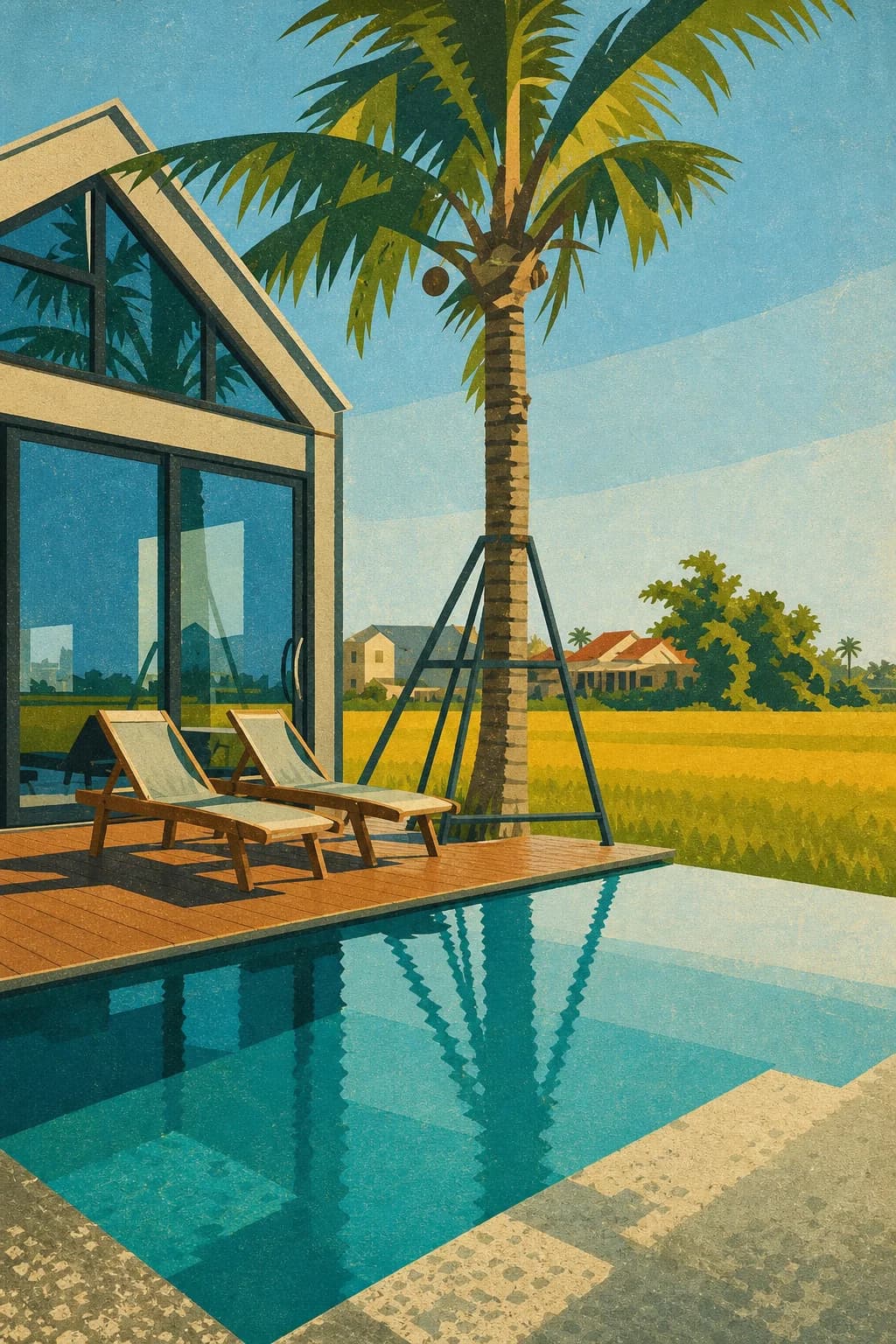
The house reads as a single clean volume: soaring ceilings, an open plan, and oversized panel windows with a solar coating that pull the rice fields straight into the living room. Double-brick walls keep it cool and quiet. A sand garden with stepping stones splits the bedroom from the rest, so you cross a small piece of landscape to go to sleep.
Cook, or let it come
This is a self-catering villa with a real kitchen, so you can shop the local markets and cook, or lean on delivery from spots like Roving Chillhouse and Tomato nearby. The solid-wood breakfast bar, salvaged from a local boat village, is the natural place to eat. Bikes are on hand for the short ride into town for banh mi and cao lau.
Rural, but not remote
Cam Thanh puts you among buffalo, conical hats, and paddy on three sides, yet the old town is roughly five minutes away and An Bang Beach about three. Da Nang airport is under an hour by car. You get the quiet of farmland and the food, tailors, and lantern-lit streets of Hoi An without committing to either full time.
talk.
mapped.
“Dubbed "the paddy field villa", it sits smack in the middle of verdant rice fields stretching as far as the eye can see.”
record.
Andrew Fraser, an Australian expat living in Vietnam, built it on the footprint of an old farmer's house and opened it to its first guests in June 2020.
The result is a clean modernist box dropped into working rice paddies in Cam Thanh, glass on every side, high ceilings, an internal sand garden with stepping stones between the living space and the single bedroom. Furniture was commissioned from local craftsmen in natural materials; the breakfast bar came from a nearby boat-building village. Outside, an L-shaped wooden deck runs to an infinity pool with one coconut palm leaning over the water. With a single room and no presence on the booking sites, availability here is as narrow as inventory gets.
changed.
Hoi An's demand curve has one sharp spike and a long, flat tail, and understanding why saves both money and disappointment. The February-to-April peak exists because it is the only stretch when central Vietnam reliably delivers dry, mild days. Everything else in the calendar trades certainty for value.
February through April is the only genuinely reliable weather window, and the entire market knows it. The winter rains have gone and the brutal summer heat has not yet arrived. That stretch also overlaps Tet, the lunar new year, which stacks a wall of domestic demand on top of the international crowd. If you want a specific room in a small Cam Thanh retreat or a heritage resort near the Covered Bridge during these months, plan on booking three to six months out. The top-tier addresses are few, and they sell their peak dates first.
May and September are the genuinely undervalued months. They sit in the shoulder band on price and availability but still deliver plenty of usable weather, and September in particular lands before the rains turn serious. The deep summer of June through August is hot and humid, which is exactly why it prices as shoulder. For beach-first travelers and families who will spend the afternoons in a pool or at An Bang, that heat is a feature, not a deterrent, and it is the easiest time to walk into a good room on short notice.
October and November are the honest gamble. This is central Vietnam's wet season, and the Thu Bon can rise enough to flood the Ancient Town's lower streets; locals paddle boats down them most years. Demand stays in the shoulder band, which means the rooms are there and the rates are soft.
You are trading certainty for value, but nothing closes, so the calculus is yours.
The lantern festival cuts across every month and ignores the seasons entirely. It falls on the fourteenth night of each lunar cycle, when the town douses its electric lights for candlelit lanterns. It is worth building a trip around, and it is not a summer-versus-winter decision. Check the lunar calendar, then pick your dates.
approach.
briefing.
“Sweeping rice fields on three sides, farmers in conical hats, buffalo wandering around.”
stands.
demand's going.
The real Instagram following over time, plus where this hotel sits for demand in Hoi An. Pick a range, toggle the lines. Followers are reach and demand, not engagement.
assessment.
File closes at HIGH. One glass house, one couple, no OTAs: a single stretch of paddy you rent for two nights or more. Book direct via Instagram once your dates firm up. Ideal for couples wanting privacy; wrong for anyone needing service on site.
The numbers behind the tiers
Oryza Villa · SOURCE READINGS · REDACTED- Availability density · sampled
- Monthly search volume · raw
- TikTok hashtag views · raw
- YouTube total views · raw
- TikTok following · latest sweep
- Pinterest saves · latest sweep
More from Hoi An.

Get the hotel's Unbookable Score.
Any post or reel with a hotel in it. Booking.com hotel pages work too. One free check, no account needed.