AIRA Boutique Hoi An
Hotel & Villa.

1 critic review
filed.
It doesn't trade on hype, and that's rather the appeal. What you get is a well-run, good-looking beach base with two pools and quick sand access, minus the scramble that follows Hoi An's trophy properties. Expect comfortable and considered rather than jaw-dropping.
With a small social following and a low profile outside Vietnam-savvy travellers, it flies under most radars. The An Bang location keeps it quieter than the old-town crowd, so it feels more like a local tip than a headline. Genuinely under-known, if not exactly a secret.
angles.
Polish over rustic beach charm
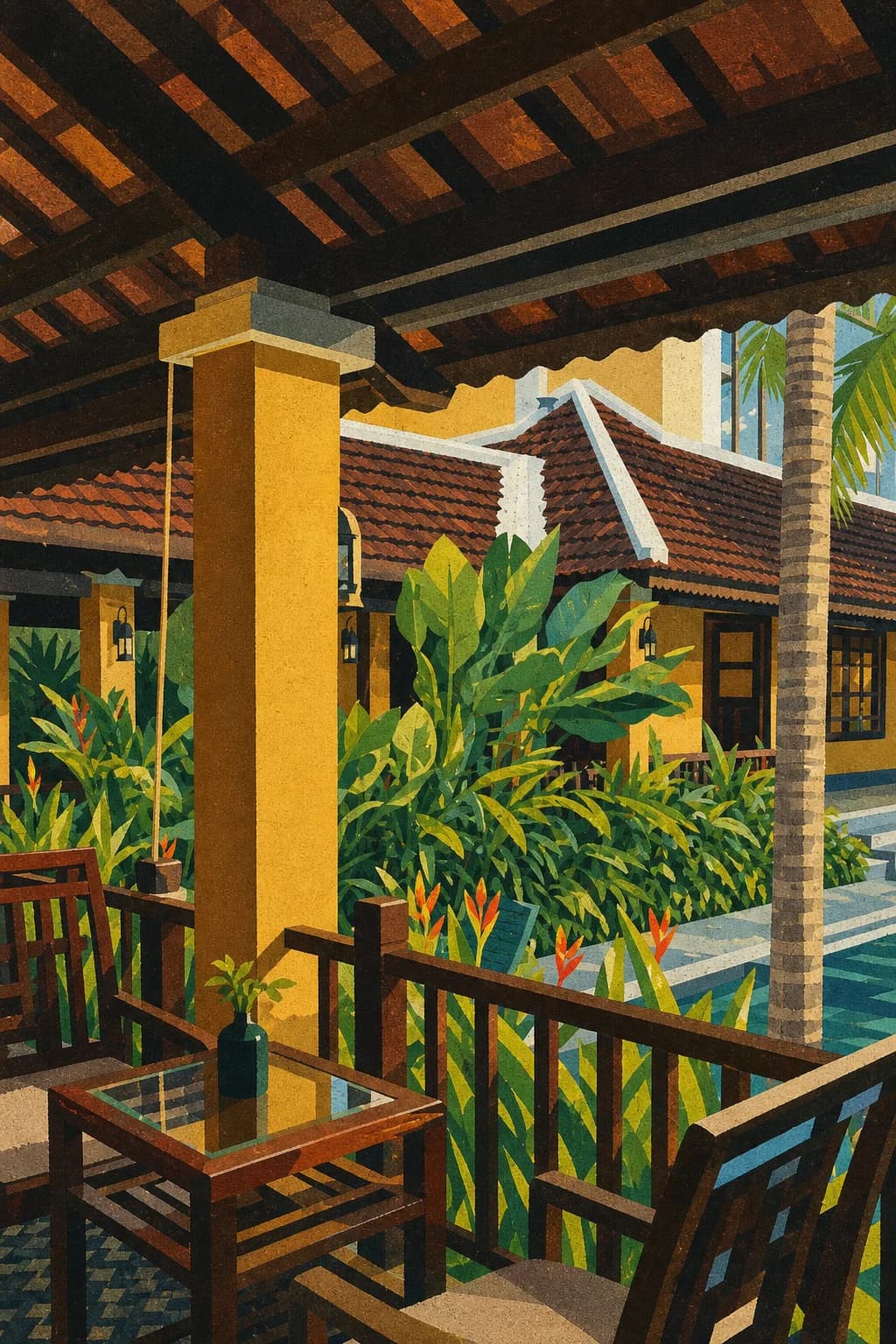
AIRA skips the driftwood-and-hammock look most of An Bang leans on. Think cleaner lines, a more contemporary sensibility, forty rooms spread over two buildings and framed by tropical garden. Categories run from 30-square-metre open-plan doubles with rain showers up to loft and attic suites with private balconies. It reads a little formal for a beach, which is exactly the point for some travellers.
Beach now, old town later
The trade here is simple: sand at breakfast, lanterns at dinner. The beach is roughly thirty metres from the door, with An Bang's cafes, seafood shacks and beach bars a short walk in either direction. Hoi An's old town sits a short ride inland, and the hotel keeps a rack of free bikes for the flat, easy pedal there. You get both without choosing.
Two pools, one swim-up bar
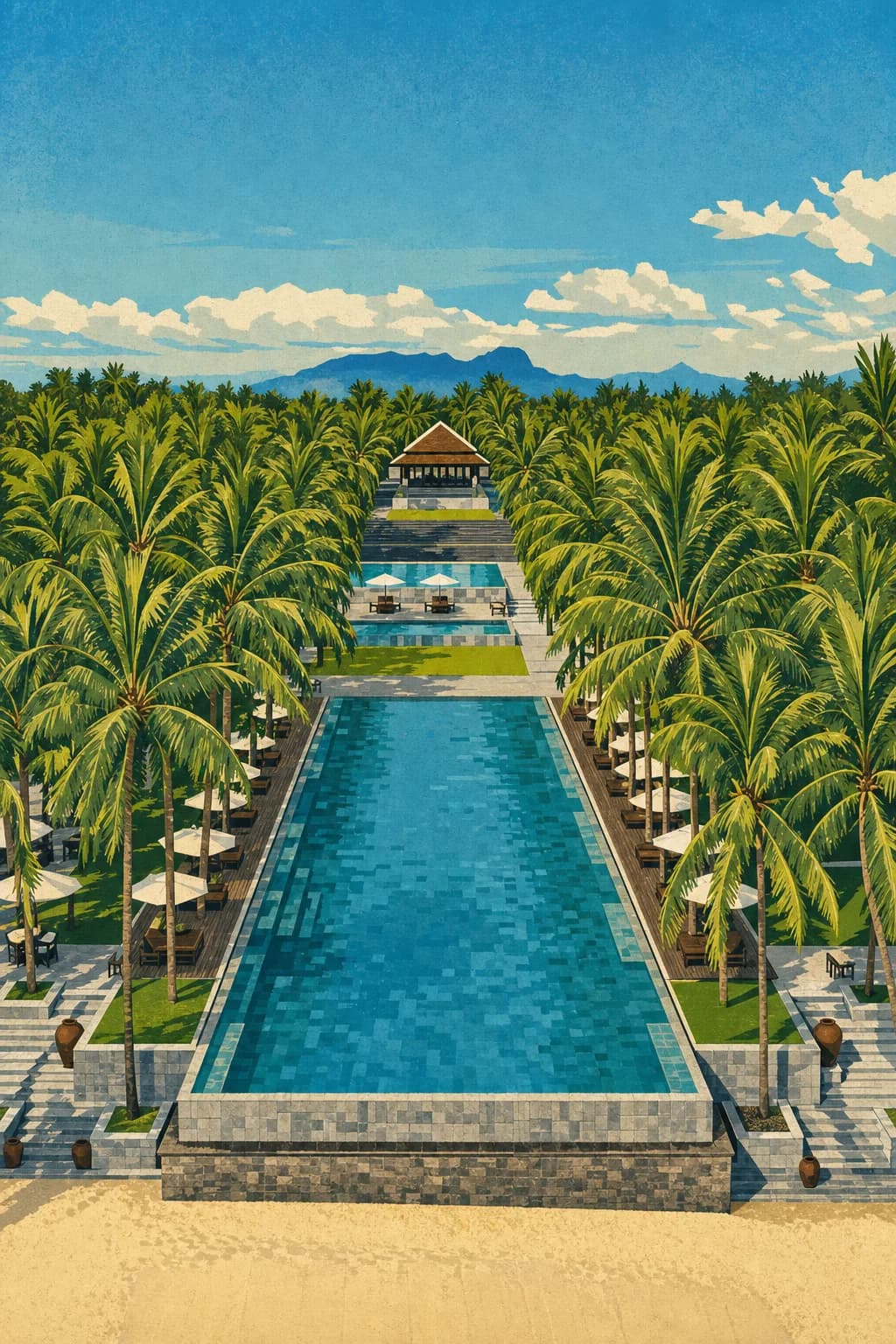
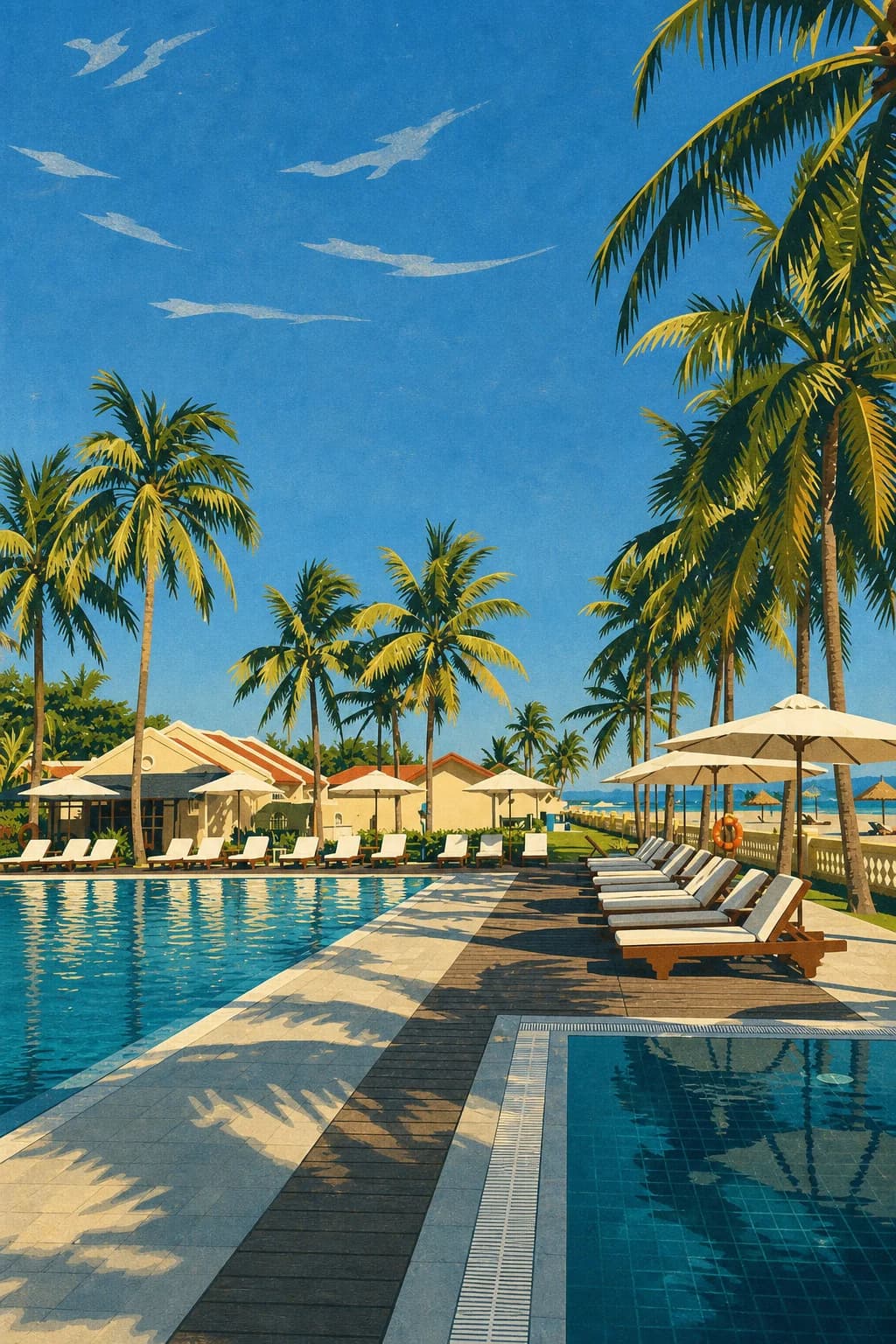
You are not short of places to cool off. Two outdoor pools, one with a swim-up bar and one shallow enough for kids, sit among the gardens. There's a small spa running Swedish massages, a Vietnamese restaurant on site, and the beach itself thirty seconds away. It's built for slow days that drift between water, shade and a cold drink.
talk.
mapped.
“Aira Boutique Resort marks a change of style on the fast-changing An Bang Beach strip.”
record.
AIRA sits on the quiet An Bang Beach strip, ten minutes by bike from the lantern streets of the old town, and it plays a different game than its rustic beach neighbours: cleaner lines, a more urban polish, forty rooms split across two buildings and framed by tropical garden. Rusty Compass covered it back in 2017, noting how its refined, contemporary look marked a change of style for the strip.
The beach is about thirty metres from the door. Two pools, one with a swim-up bar, a small spa doing Swedish massages, a Vietnamese restaurant, and a rack of free bikes for the flat ride into town. Rooms range from open-plan doubles with rain showers to loft and attic suites with private balconies over the garden and pool. It's the beach-and-town combination most people want from Hoi An.
changed.
Hoi An's demand curve has one sharp spike and a long, flat tail, and understanding why saves both money and disappointment. The February-to-April peak exists because it is the only stretch when central Vietnam reliably delivers dry, mild days. Everything else in the calendar trades certainty for value.
February through April is the only genuinely reliable weather window, and the entire market knows it. The winter rains have gone and the brutal summer heat has not yet arrived. That stretch also overlaps Tet, the lunar new year, which stacks a wall of domestic demand on top of the international crowd. If you want a specific room in a small Cam Thanh retreat or a heritage resort near the Covered Bridge during these months, plan on booking three to six months out. The top-tier addresses are few, and they sell their peak dates first.
May and September are the genuinely undervalued months. They sit in the shoulder band on price and availability but still deliver plenty of usable weather, and September in particular lands before the rains turn serious. The deep summer of June through August is hot and humid, which is exactly why it prices as shoulder. For beach-first travelers and families who will spend the afternoons in a pool or at An Bang, that heat is a feature, not a deterrent, and it is the easiest time to walk into a good room on short notice.
October and November are the honest gamble. This is central Vietnam's wet season, and the Thu Bon can rise enough to flood the Ancient Town's lower streets; locals paddle boats down them most years. Demand stays in the shoulder band, which means the rooms are there and the rates are soft.
You are trading certainty for value, but nothing closes, so the calculus is yours.
The lantern festival cuts across every month and ignores the seasons entirely. It falls on the fourteenth night of each lunar cycle, when the town douses its electric lights for candlelit lanterns. It is worth building a trip around, and it is not a summer-versus-winter decision. Check the lunar calendar, then pick your dates.
approach.
briefing.
stands.
demand's going.
The real Instagram following over time, plus where this hotel sits for demand in Hoi An. Pick a range, toggle the lines. Followers are reach and demand, not engagement.
assessment.
File closes at ACCESSIBLE. This is a relaxed beach base built around An Bang sand, with the old town a short ride away. Ideal for anyone wanting that combination; skip it if you need to walk home from dinner in the lantern quarter.
The numbers behind the tiers
AIRA Boutique Hoi An Hotel & Villa · SOURCE READINGS · REDACTED- Availability density · sampled
- Monthly search volume · raw
- TikTok hashtag views · raw
- YouTube total views · raw
- TikTok following · latest sweep
- Pinterest saves · latest sweep
More from Hoi An.






Get the hotel's Unbookable Score.
Any post or reel with a hotel in it. Booking.com hotel pages work too. One free check, no account needed.