Bambootel Sawah
View.

2 critic reviews
filed.
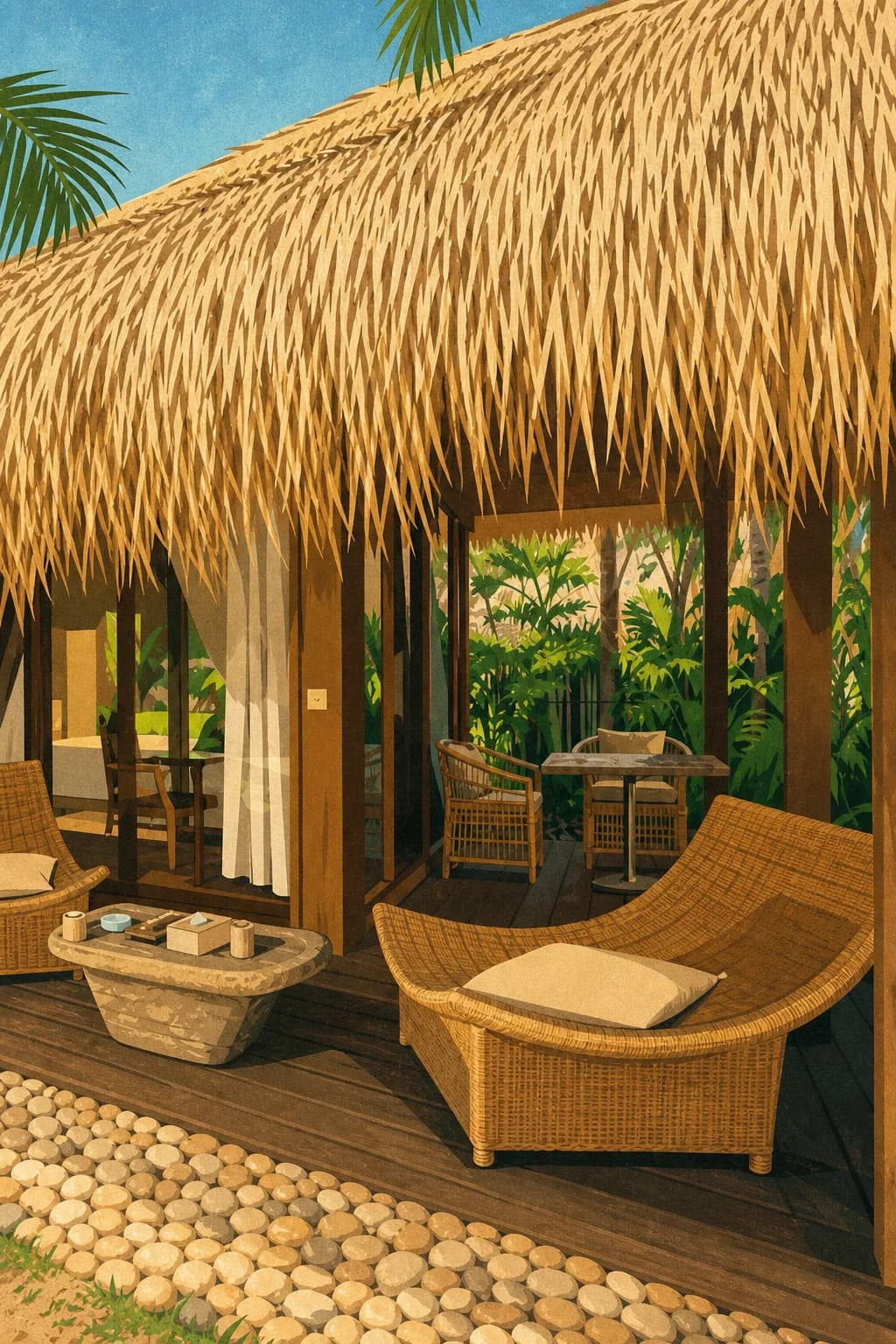
Bambootel Sawah View is eight rooms with the Ubud-bamboo-rice-field package in full effect, and it is priced below the headline-grabbing names like Bambu Indah. The hype gets the aesthetic right at a more accessible rate. It misses that the open-air bamboo build is noisier than the photos suggest, and neighbours are audible across the property.
The rice-field walk out of the property's back gate connects to a village path that runs all the way to the Sari Organik restaurant strip in Penestanan without ever touching a main road. It is a 30-minute walk, the quietest route into town, and the path ends at the cluster of cafes where the afternoon light is the best in Ubud for anyone travelling with a camera.
angles.
Chopstick Signage
The room signs are made from recycled chopsticks. The detail is small but it tells you everything about the property's approach: sustainability isn't a programme, it's a material decision applied to every surface. The all-bamboo construction, the recycled materials, and the chopstick signage create a coherent environmental statement visible in every detail.
Sawah Views
"Sawah" means rice field in Indonesian. The name is the promise: views over working rice terraces from the hillside position. The terraces are farmed using traditional subak irrigation. The view changes with the growing cycle. At eight rooms on a hillside, every room faces the landscape.
2024, All Bamboo
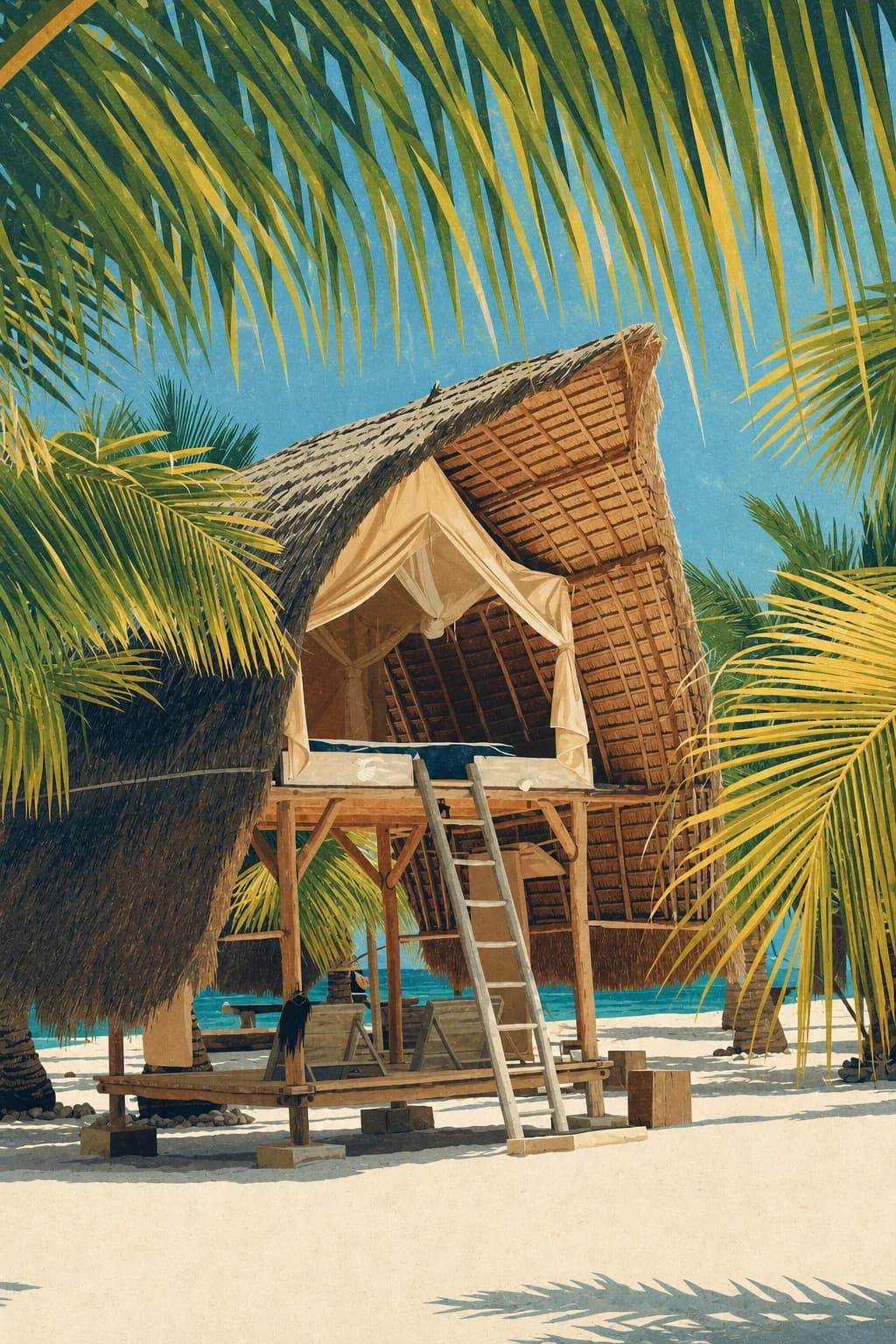
The 2024 opening means the bamboo construction is fresh, the design vision is intact, and the sustainability features are new. Bamboo in Bali is not novel, but the commitment to using it for every structural element, combined with recycled-material detailing, creates a more total environmental statement than bamboo-accent properties.
talk.
mapped.
“Hidden in the lush green hills of Tampaksiring, close to Ubud, lies one of Bali's most beautiful places to stay: Bambootel Sawah View. Built almost entirely from bamboo and surrounded by rice fields.”
record.
The sustainability details are specific: recycled chopsticks repurposed as room signage, recycled materials throughout, and all-bamboo construction.
Asia Dreams Magazine described it as "a refined luxury retreat that beautifully integrates its bamboo architecture with the breathtaking landscape." Exceptional breakfast included. At $$$$ pricing, the bamboo construction and rice-terrace views justify the tier. Ninety minutes from DPS airport. The Tampaksiring location is a short drive from Ubud but far enough for quiet.
changed.
Book April–June or September–October for the value sweet spot. Plan July–August four to six months out. Confirm Nyepi (March) before booking.
Bali runs on two overlapping clocks: its equatorial wet-dry cycle and the school holiday calendars of Australia and Europe, its two largest visitor markets. Where those systems collide, demand spikes hard. The rest of the year, the island is far more negotiable than its reputation suggests.
The dry season runs April through October, and July and August are its unforgiving peak. European summer holidays flood the island in July; Australian school holidays layer on top in August, pushing demand to its annual maximum. Skies clear, humidity drops, and the island's outdoor infrastructure runs at full capacity. If your dates are fixed in those two months, book early. Ultra and Very High tier properties fill months in advance. Uluwatu Surf Villas currently shows as sold out, and Veluvana Bali runs at scarce availability through peak periods.
The shoulder windows, April through May and September through October, deliver the best value equation on the island. Weather is reliably dry, crowds thin considerably once the school-holiday cohorts leave, and Room Demand Scores fall to roughly half the August peak. These months are especially strong for Ubud and the highland properties, where clear mornings reveal volcanic panoramas that vanish during the wet season.
Book the April-to-May shoulder for dry weather, moderate demand, and the full range of the island's 75 tracked properties available without peak-season competition.
The wet season spans November through March, and it is more manageable than the name implies. Rain arrives in intense afternoon bursts rather than all-day gray, and mornings are often clear. Temperatures stay warm. The trade-offs are real: some outdoor activities turn unreliable, rural roads can flood, and boat crossings to the Nusa and Gili Islands get rougher. But hotel pricing drops significantly, and the rice terraces turn an almost electric green.
One date demands specific attention: Nyepi, the Balinese Day of Silence, falls in March on a date that shifts annually with the Saka lunar calendar. The entire island shuts down for 24 hours. No flights land or depart, no cars move, no lights are permitted after dark, and hotels ask guests to remain on property. It is a genuinely singular cultural experience, but it requires planning. If your trip overlaps with Nyepi, confirm your hotel's policy in advance and treat the day as part of the itinerary rather than an inconvenience.
approach.
briefing.
stands.
demand's going.
The real Instagram following over time, plus where this hotel sits for demand in Bali. Pick a range, toggle the lines. Followers are reach and demand, not engagement.
assessment.
File closes at HIGH. Book direct one to two months out while the 2024 opening is still in awareness-building mode. Skip if you want city centre access; central Ubud is twenty minutes by car.
The numbers behind the tiers
Bambootel Sawah View · SOURCE READINGS · REDACTED- Availability density · sampled
- Monthly search volume · raw
- TikTok hashtag views · raw
- YouTube total views · raw
- TikTok following · latest sweep
- Pinterest saves · latest sweep
More from Bali.








Get the hotel's Unbookable Score.
Any post or reel with a hotel in it. Booking.com hotel pages work too. One free check, no account needed.