Le Bamboo
Bali.
1 critic review
filed.
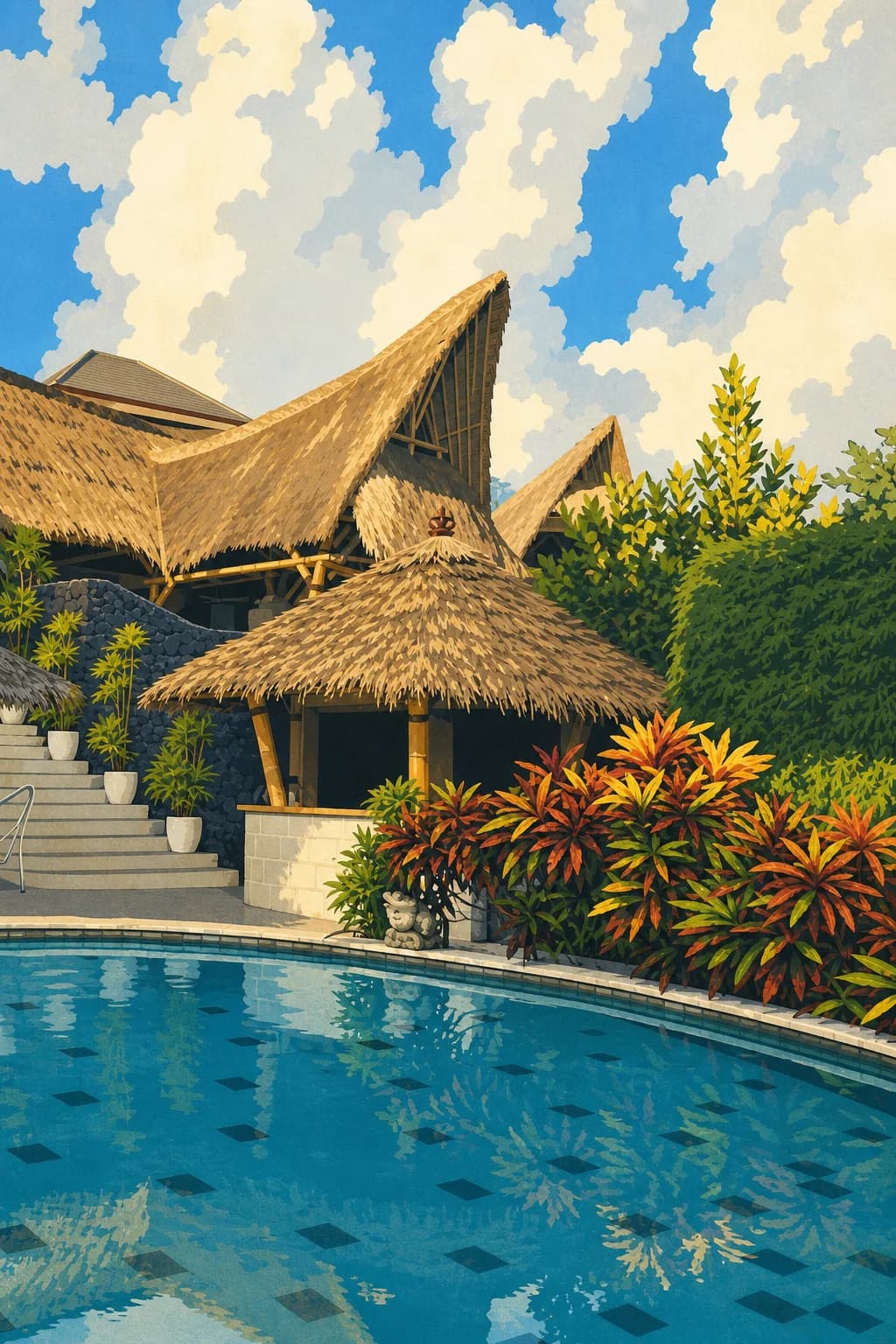
Le Bamboo Bali is a nine-room Uluwatu property that delivers the bamboo-villa format at a lower price point than the cliff-front names. The pool and the garden are the draw. The hype is low and the rate reflects that. For travellers who want the Bukit aesthetic without the Ulu Cliffhouse scene, it is a sensible mid-tier call.
The property is a ten-minute scooter ride from Green Bowl Beach, which is the Bukit beach with the longest staircase and the fewest visitors per square metre of sand. Go at mid-morning on an outgoing tide, bring your own water, and the caves at the southern end of the sand are swimmable only for about 90 minutes around low tide.
angles.
ViroThatch and Nazava
ViroThatch recyclable roofing replaces traditional thatch, which degrades and needs frequent replacement. Nazava water filters eliminate single-use plastic bottles at the source. RefillMyBottle stations let guests refill throughout the property. Each technology is specific and named. The sustainability isn't aspirational; it's technical.
Plant-Based Restaurant
The restaurant serves entirely plant-based food. No meat, no dairy. The commitment is total, not a menu section. At $$ pricing, the plant-based kitchen is both an ethical and economic decision: plant ingredients cost less, which helps keep the rate accessible. The food quality needs to justify the restriction, and at this price point, the value is strong.
$$ on the Bukit
The Bukit Peninsula is home to some of Bali's most expensive properties. Le Bamboo operates at $$ pricing in the same area. The bamboo construction and plant-based kitchen keep costs down without compromising the location. The result is Uluwatu proximity at a fraction of the surrounding rates.
talk.
mapped.
record.
Nazava water filters replace bottled water. RefillMyBottle stations are available. The restaurant is entirely plant-based. At $$ pricing, the environmental commitment doesn't come with a luxury markup.
Forty-five minutes from DPS airport. The property proves that sustainability and accessibility aren't mutually exclusive. The bamboo construction, the recyclable roofing, and the plant-based kitchen create a coherent environmental statement at a price point that most travellers can reach.
changed.
Book April–June or September–October for the value sweet spot. Plan July–August four to six months out. Confirm Nyepi (March) before booking.
Bali runs on two overlapping clocks: its equatorial wet-dry cycle and the school holiday calendars of Australia and Europe, its two largest visitor markets. Where those systems collide, demand spikes hard. The rest of the year, the island is far more negotiable than its reputation suggests.
The dry season runs April through October, and July and August are its unforgiving peak. European summer holidays flood the island in July; Australian school holidays layer on top in August, pushing demand to its annual maximum. Skies clear, humidity drops, and the island's outdoor infrastructure runs at full capacity. If your dates are fixed in those two months, book early. Ultra and Very High tier properties fill months in advance. Uluwatu Surf Villas currently shows as sold out, and Veluvana Bali runs at scarce availability through peak periods.
The shoulder windows, April through May and September through October, deliver the best value equation on the island. Weather is reliably dry, crowds thin considerably once the school-holiday cohorts leave, and Room Demand Scores fall to roughly half the August peak. These months are especially strong for Ubud and the highland properties, where clear mornings reveal volcanic panoramas that vanish during the wet season.
Book the April-to-May shoulder for dry weather, moderate demand, and the full range of the island's 75 tracked properties available without peak-season competition.
The wet season spans November through March, and it is more manageable than the name implies. Rain arrives in intense afternoon bursts rather than all-day gray, and mornings are often clear. Temperatures stay warm. The trade-offs are real: some outdoor activities turn unreliable, rural roads can flood, and boat crossings to the Nusa and Gili Islands get rougher. But hotel pricing drops significantly, and the rice terraces turn an almost electric green.
One date demands specific attention: Nyepi, the Balinese Day of Silence, falls in March on a date that shifts annually with the Saka lunar calendar. The entire island shuts down for 24 hours. No flights land or depart, no cars move, no lights are permitted after dark, and hotels ask guests to remain on property. It is a genuinely singular cultural experience, but it requires planning. If your trip overlaps with Nyepi, confirm your hotel's policy in advance and treat the day as part of the itinerary rather than an inconvenience.
approach.
briefing.
stands.
demand's going.
The real Instagram following over time, plus where this hotel sits for demand in Bali. Pick a range, toggle the lines. Followers are reach and demand, not engagement.
assessment.
File closes at MODERATE. Book direct one to two weeks out and bring a refillable bottle. Skip if you want meat at every meal; the on-site restaurant is fully plant-based.
The numbers behind the tiers
Le Bamboo Bali · SOURCE READINGS · REDACTED- Availability density · sampled
- Monthly search volume · raw
- TikTok hashtag views · raw
- YouTube total views · raw
- TikTok following · latest sweep
- Pinterest saves · latest sweep
More from Bali.









Get the hotel's Unbookable Score.
Any post or reel with a hotel in it. Booking.com hotel pages work too. One free check, no account needed.