Umah
Lusa.

1 critic review
filed.
Umah Lusa is a six-room North Bali property in the Munduk highlands pocket and the hype is genuinely minimal, which is the entire case for booking it. Small scale, real mountain quiet, and rates that have not moved with the broader Bali curve. The miss is that North Bali dining is thin and the property has to be self-contained for most meals.
The Munduk twin lakes walk between Tamblingan and Buyan is one of the most underrated day hikes in Bali because the Bedugul side draws all the traffic. Start from the Munduk entrance at 7am, walk the ridge path counter-clockwise, and the half-submerged temple at the Tamblingan edge is clearest before 9am.
angles.
Bali Aga Traditions
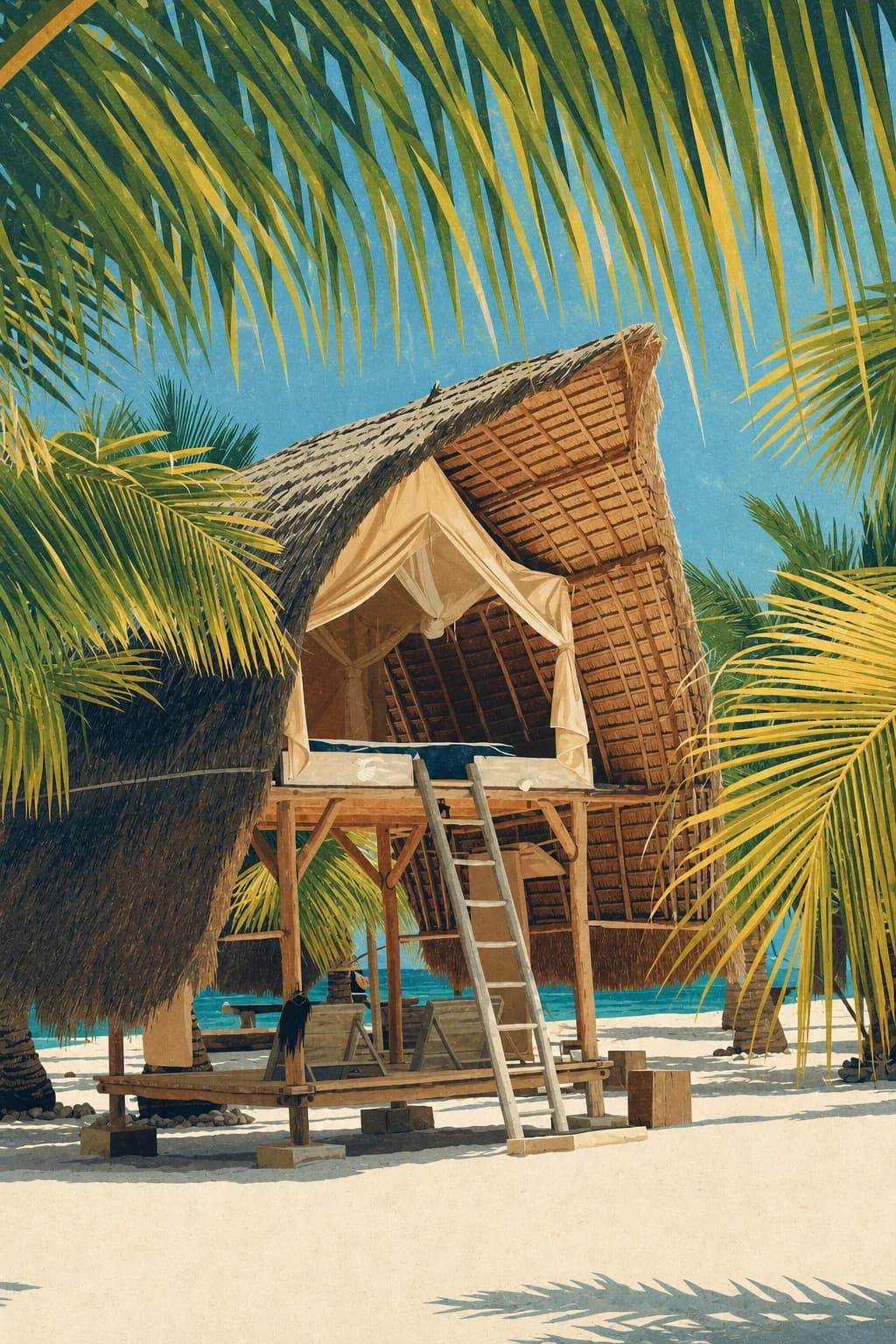
Bali Aga refers to the original Balinese culture predating the Hindu-Javanese influence. The architectural traditions are distinct: spatial organisation, material use, and relationship to landscape follow patterns that are centuries older than the Balinese style most visitors recognise. Stockley and Kusuma drew from these traditions, creating rooms that reference an architectural lineage most Bali hotels ignore.
80% Farm-to-Table
The organic farm on the property supplies over 80% of the kitchen's ingredients. The remaining 20% comes from local suppliers. The farm-to-table percentage is specific and high. At six rooms, the kitchen operates at a scale where the farm can genuinely supply the demand. The food changes with the growing season because the farm changes with the growing season.
Reclaimed Teak Throughout
Reclaimed teak from old Javanese and Balinese buildings forms the structural material. The wood carries the patina and grain of its previous life. Reclaimed teak in Bali is not unusual, but using it as the primary material in a property designed around Bali Aga traditions creates an architectural coherence: ancient building style, ancient building material.
talk.
mapped.
record.
Six rooms built with reclaimed teak. An organic farm supplies over 80% of the kitchen's ingredients. A reviewer wrote: "Waking up at Umah Lusa is blissful.
I imagine those who fell in love with Bali in her golden age." Exceptional breakfast included. Family suites available. 2.5 hours from DPS airport. At $$$$ pricing, the Bali Aga reference, the reclaimed teak, and the farm-to-table commitment create a proposition rooted in indigenous Balinese culture rather than imported design trends.
changed.
Book April–June or September–October for the value sweet spot. Plan July–August four to six months out. Confirm Nyepi (March) before booking.
Bali runs on two overlapping clocks: its equatorial wet-dry cycle and the school holiday calendars of Australia and Europe, its two largest visitor markets. Where those systems collide, demand spikes hard. The rest of the year, the island is far more negotiable than its reputation suggests.
The dry season runs April through October, and July and August are its unforgiving peak. European summer holidays flood the island in July; Australian school holidays layer on top in August, pushing demand to its annual maximum. Skies clear, humidity drops, and the island's outdoor infrastructure runs at full capacity. If your dates are fixed in those two months, book early. Ultra and Very High tier properties fill months in advance. Uluwatu Surf Villas currently shows as sold out, and Veluvana Bali runs at scarce availability through peak periods.
The shoulder windows, April through May and September through October, deliver the best value equation on the island. Weather is reliably dry, crowds thin considerably once the school-holiday cohorts leave, and Room Demand Scores fall to roughly half the August peak. These months are especially strong for Ubud and the highland properties, where clear mornings reveal volcanic panoramas that vanish during the wet season.
Book the April-to-May shoulder for dry weather, moderate demand, and the full range of the island's 75 tracked properties available without peak-season competition.
The wet season spans November through March, and it is more manageable than the name implies. Rain arrives in intense afternoon bursts rather than all-day gray, and mornings are often clear. Temperatures stay warm. The trade-offs are real: some outdoor activities turn unreliable, rural roads can flood, and boat crossings to the Nusa and Gili Islands get rougher. But hotel pricing drops significantly, and the rice terraces turn an almost electric green.
One date demands specific attention: Nyepi, the Balinese Day of Silence, falls in March on a date that shifts annually with the Saka lunar calendar. The entire island shuts down for 24 hours. No flights land or depart, no cars move, no lights are permitted after dark, and hotels ask guests to remain on property. It is a genuinely singular cultural experience, but it requires planning. If your trip overlaps with Nyepi, confirm your hotel's policy in advance and treat the day as part of the itinerary rather than an inconvenience.
approach.
briefing.
stands.
demand's going.
The real Instagram following over time, plus where this hotel sits for demand in Bali. Pick a range, toggle the lines. Followers are reach and demand, not engagement.
assessment.
File closes at HIGH. Book direct one to two months out and combine with Munduk or Lovina. Skip if South Bali energy is the trip; this one anchors a slow North Bali circuit.
The numbers behind the tiers
Umah Lusa · SOURCE READINGS · REDACTED- Availability density · sampled
- Monthly search volume · raw
- TikTok hashtag views · raw
- YouTube total views · raw
- TikTok following · latest sweep
- Pinterest saves · latest sweep
More from Bali.









Get the hotel's Unbookable Score.
Any post or reel with a hotel in it. Booking.com hotel pages work too. One free check, no account needed.