Majo Private
Villas.
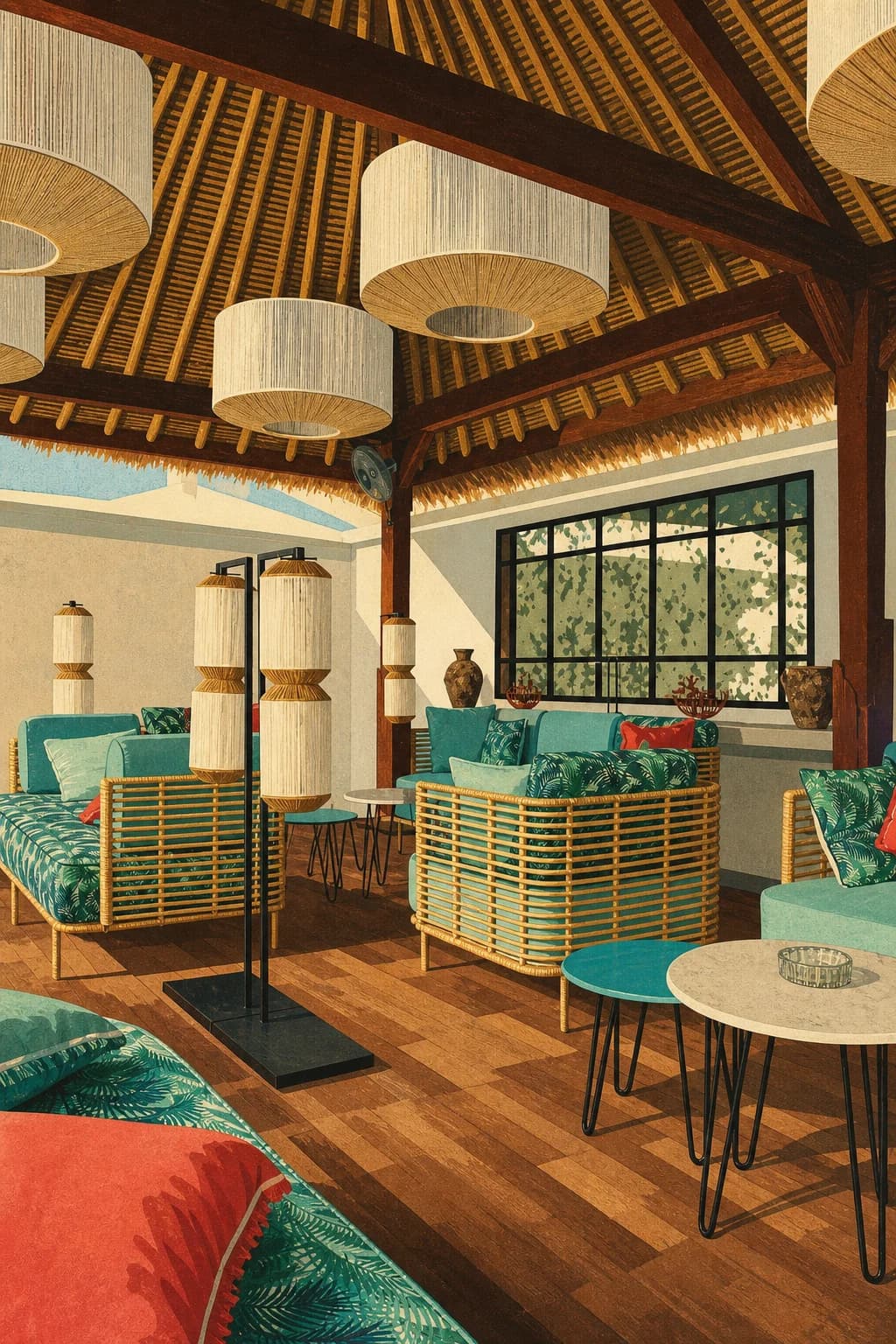
Majo on Gili Air is a simple nine-villa compound that trades Trawangan's noise for the slower island and gets the barefoot format right without the newer builds' price creep. The hype is low and that is the whole point. For travellers looking for the Gilis of ten years ago, this is the closer match than the polished properties on the north shore.
The Gili Air reef directly in front of the property is shallow enough to snorkel from the beach at low tide and the turtles feed through the seagrass about thirty metres out. Borrow the mask and fin set from reception rather than renting in town, check the tide chart at check-in, and go on an outgoing tide for the clearest water.
angles.
Gili Meno's Privacy
Gili Meno is the quietest Gili island: no party scene, no beach clubs, no motorised vehicles. The island's population is small and the tourist infrastructure is minimal. Majo's private villas offer a level of space and seclusion that the island's hostel and bungalow options don't match. On an island where quiet is the product, private villas are the delivery mechanism.
Turtle Water
Gili Meno's waters are one of the best places in Indonesia to snorkel with sea turtles. The island's turtle sanctuary raises and releases hatchlings. The underwater statue installation (separate from BASK's NEST) draws snorkellers to a coral-growing art piece on the seabed. The marine life is Gili Meno's strongest draw and Majo's proximity to the water makes it accessible daily.
Since 2017, Still Standing
Operating on Gili Meno since 2017 means Majo has survived the island's limited infrastructure, seasonal fluctuations, and the 2018 Lombok earthquake that damaged much of the Gili chain. Longevity on a small island is its own credential. The property has adapted and maintained quality through conditions that closed other Gili operations.
talk.
mapped.
record.
The car-free, motorbike-free island is reached by boat from Bali or Lombok. The villas offer privacy and space on an island where most accommodation is basic bungalows or hostels.
Exceptional breakfast included. Family-friendly. Gili Meno's turquoise water, white sand, and turtle encounters define the experience. The $$$ pricing places Majo at the upper end of Gili Meno accommodation, where the limited supply of quality properties creates natural demand. 2.5 hours from DPS airport including the boat crossing.
changed.
Book April–June or September–October for the value sweet spot. Plan July–August four to six months out. Confirm Nyepi (March) before booking.
Bali runs on two overlapping clocks: its equatorial wet-dry cycle and the school holiday calendars of Australia and Europe, its two largest visitor markets. Where those systems collide, demand spikes hard. The rest of the year, the island is far more negotiable than its reputation suggests.
The dry season runs April through October, and July and August are its unforgiving peak. European summer holidays flood the island in July; Australian school holidays layer on top in August, pushing demand to its annual maximum. Skies clear, humidity drops, and the island's outdoor infrastructure runs at full capacity. If your dates are fixed in those two months, book early. Ultra and Very High tier properties fill months in advance. Uluwatu Surf Villas currently shows as sold out, and Veluvana Bali runs at scarce availability through peak periods.
The shoulder windows, April through May and September through October, deliver the best value equation on the island. Weather is reliably dry, crowds thin considerably once the school-holiday cohorts leave, and Room Demand Scores fall to roughly half the August peak. These months are especially strong for Ubud and the highland properties, where clear mornings reveal volcanic panoramas that vanish during the wet season.
Book the April-to-May shoulder for dry weather, moderate demand, and the full range of the island's 75 tracked properties available without peak-season competition.
The wet season spans November through March, and it is more manageable than the name implies. Rain arrives in intense afternoon bursts rather than all-day gray, and mornings are often clear. Temperatures stay warm. The trade-offs are real: some outdoor activities turn unreliable, rural roads can flood, and boat crossings to the Nusa and Gili Islands get rougher. But hotel pricing drops significantly, and the rice terraces turn an almost electric green.
One date demands specific attention: Nyepi, the Balinese Day of Silence, falls in March on a date that shifts annually with the Saka lunar calendar. The entire island shuts down for 24 hours. No flights land or depart, no cars move, no lights are permitted after dark, and hotels ask guests to remain on property. It is a genuinely singular cultural experience, but it requires planning. If your trip overlaps with Nyepi, confirm your hotel's policy in advance and treat the day as part of the itinerary rather than an inconvenience.
approach.
briefing.
stands.
demand's going.
The real Instagram following over time, plus where this hotel sits for demand in Bali. Pick a range, toggle the lines. Followers are reach and demand, not engagement.
assessment.
File closes at MODERATE. Book direct one to two months out and reserve the morning fast boat. Skip if you need ATMs and bars; Gili Meno is the quietest of the three Gilis.
The numbers behind the tiers
Majo Private Villas · SOURCE READINGS · REDACTED- Availability density · sampled
- Monthly search volume · raw
- TikTok hashtag views · raw
- YouTube total views · raw
- TikTok following · latest sweep
- Pinterest saves · latest sweep
More from Bali.







Get the hotel's Unbookable Score.
Any post or reel with a hotel in it. Booking.com hotel pages work too. One free check, no account needed.