Samanvaya
2 critic reviews
filed.
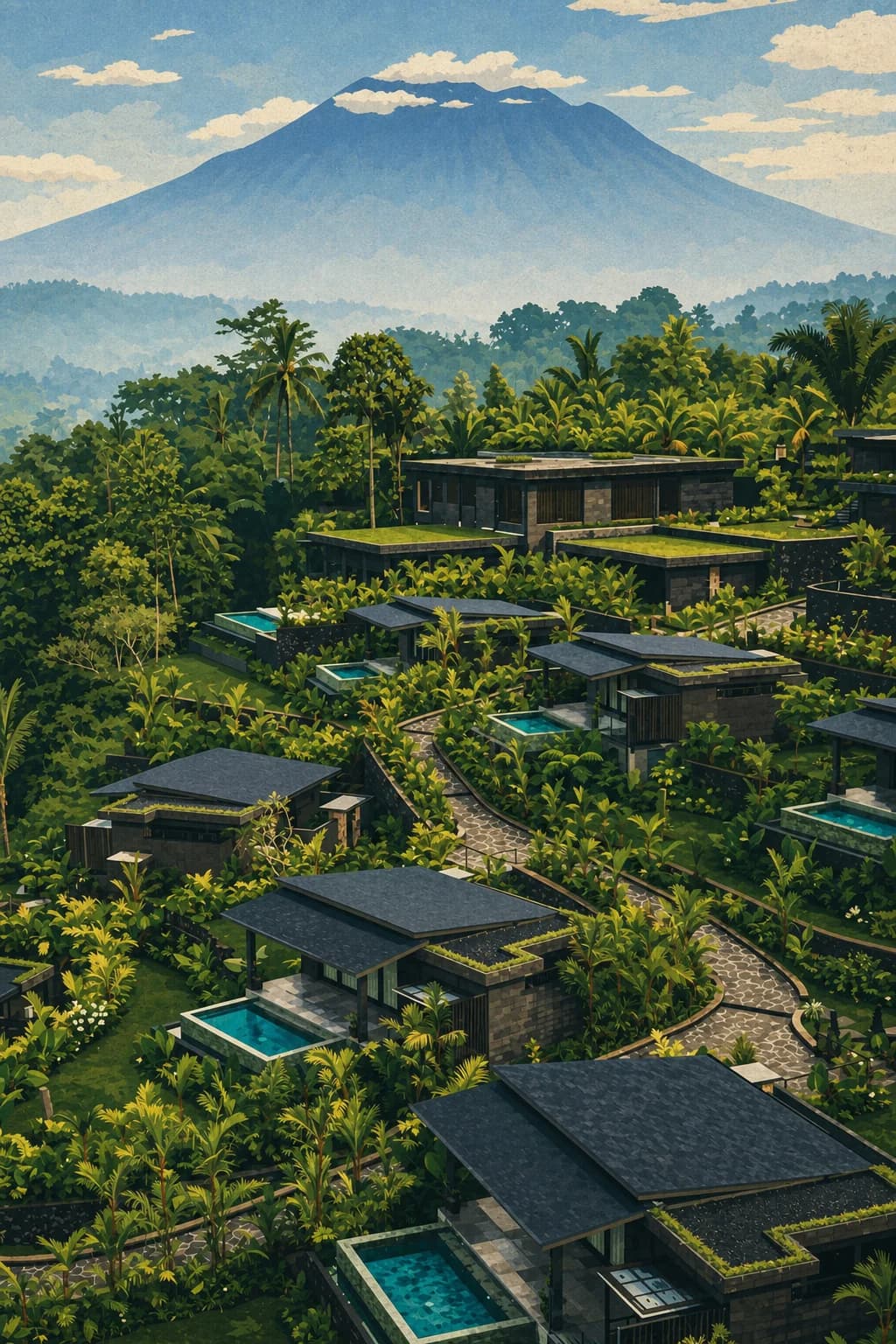
Samanvaya is an eight-room Sidemen property with a genuine Mount Agung pool angle and a rate that sits below the newer bamboo-house builds that dominate the Sidemen feed. The hype gets the view right, and the property has been running long enough that the gardens have matured rather than the raw-landscape feel of the newer places. The miss is that the rooms are dated compared to the 2023-and-later Sidemen crop.
The Pura Besakih mother temple is 45 minutes from the property and the late-afternoon window avoids the morning tour bus wave. Samanvaya can arrange a local guide who also takes you to the adjacent smaller temples that the official tours skip, and the ceremony dress rental is included at no markup if you book through the property.
angles.
Support Sidemen Initiative
The Support Sidemen initiative channels revenue directly to the surrounding community. The programme is built into the business model, not a side project. At eight rooms, the economic impact per booking is proportionally significant for a small Balinese village. The initiative gives the property a social purpose beyond accommodation.
Reclaimed Timber, Local Textiles
Reclaimed timber forms the structural framework. Local artisan textiles are sourced from Sidemen's weaving tradition, one of Bali's most respected. The herb gardens supply the kitchen. No single-use plastic. Each material choice connects the property to the surrounding landscape and community. The sourcing is local at every level.
Sidemen's Rice Terraces
The Sidemen valley offers the same rice-terrace views as Ubud without the traffic or development. The terraces are working agricultural land managed by traditional subak cooperatives. Samanvaya sits in this landscape with eight rooms, which is small enough to feel integrated rather than imposed. The view is agricultural and genuine.
talk.
mapped.
“Sidemen's original boutique choice, the Samanvaya commands sweeping views over rice fields to the ocean and has a textbook Bali chic decor.”
record.
The Support Sidemen initiative directs revenue to the local community. Reclaimed timber construction. No single-use plastic. Local artisan textiles dress every surface. Herb gardens supply the kitchen. Over 45,000 Instagram followers.
At $$$$ pricing, the community-support model and material commitments justify the tier. Exceptional breakfast included. Two hours from DPS airport. The Sidemen location places the property in the same rice-terrace landscape as Veluvana, Camaya, and Numa, but with a community-benefit model that distinguishes its purpose.
changed.
Book April–June or September–October for the value sweet spot. Plan July–August four to six months out. Confirm Nyepi (March) before booking.
Bali runs on two overlapping clocks: its equatorial wet-dry cycle and the school holiday calendars of Australia and Europe, its two largest visitor markets. Where those systems collide, demand spikes hard. The rest of the year, the island is far more negotiable than its reputation suggests.
The dry season runs April through October, and July and August are its unforgiving peak. European summer holidays flood the island in July; Australian school holidays layer on top in August, pushing demand to its annual maximum. Skies clear, humidity drops, and the island's outdoor infrastructure runs at full capacity. If your dates are fixed in those two months, book early. Ultra and Very High tier properties fill months in advance. Uluwatu Surf Villas currently shows as sold out, and Veluvana Bali runs at scarce availability through peak periods.
The shoulder windows, April through May and September through October, deliver the best value equation on the island. Weather is reliably dry, crowds thin considerably once the school-holiday cohorts leave, and Room Demand Scores fall to roughly half the August peak. These months are especially strong for Ubud and the highland properties, where clear mornings reveal volcanic panoramas that vanish during the wet season.
Book the April-to-May shoulder for dry weather, moderate demand, and the full range of the island's 75 tracked properties available without peak-season competition.
The wet season spans November through March, and it is more manageable than the name implies. Rain arrives in intense afternoon bursts rather than all-day gray, and mornings are often clear. Temperatures stay warm. The trade-offs are real: some outdoor activities turn unreliable, rural roads can flood, and boat crossings to the Nusa and Gili Islands get rougher. But hotel pricing drops significantly, and the rice terraces turn an almost electric green.
One date demands specific attention: Nyepi, the Balinese Day of Silence, falls in March on a date that shifts annually with the Saka lunar calendar. The entire island shuts down for 24 hours. No flights land or depart, no cars move, no lights are permitted after dark, and hotels ask guests to remain on property. It is a genuinely singular cultural experience, but it requires planning. If your trip overlaps with Nyepi, confirm your hotel's policy in advance and treat the day as part of the itinerary rather than an inconvenience.
approach.
briefing.
“Our destination was the adults-only Samanvaya Luxury Resort and Spa, a sanctuary cradled in the blue mountains valley, where the imposing Mt Agung stands guard over endless stretches of rice paddies.”
stands.
demand's going.
The real Instagram following over time, plus where this hotel sits for demand in Bali. Pick a range, toggle the lines. Followers are reach and demand, not engagement.
assessment.
File closes at HIGH. Book direct one to two months out and combine with a Tirta Gangga or Amed circuit. Skip if airport-close convenience matters; the East Bali drive is two hours each way.
The numbers behind the tiers
Samanvaya · SOURCE READINGS · REDACTED- Availability density · sampled
- Monthly search volume · raw
- TikTok hashtag views · raw
- YouTube total views · raw
- TikTok following · latest sweep
- Pinterest saves · latest sweep
More from Bali.









Get the hotel's Unbookable Score.
Any post or reel with a hotel in it. Booking.com hotel pages work too. One free check, no account needed.