The
Slow.
6 critic reviews
filed.
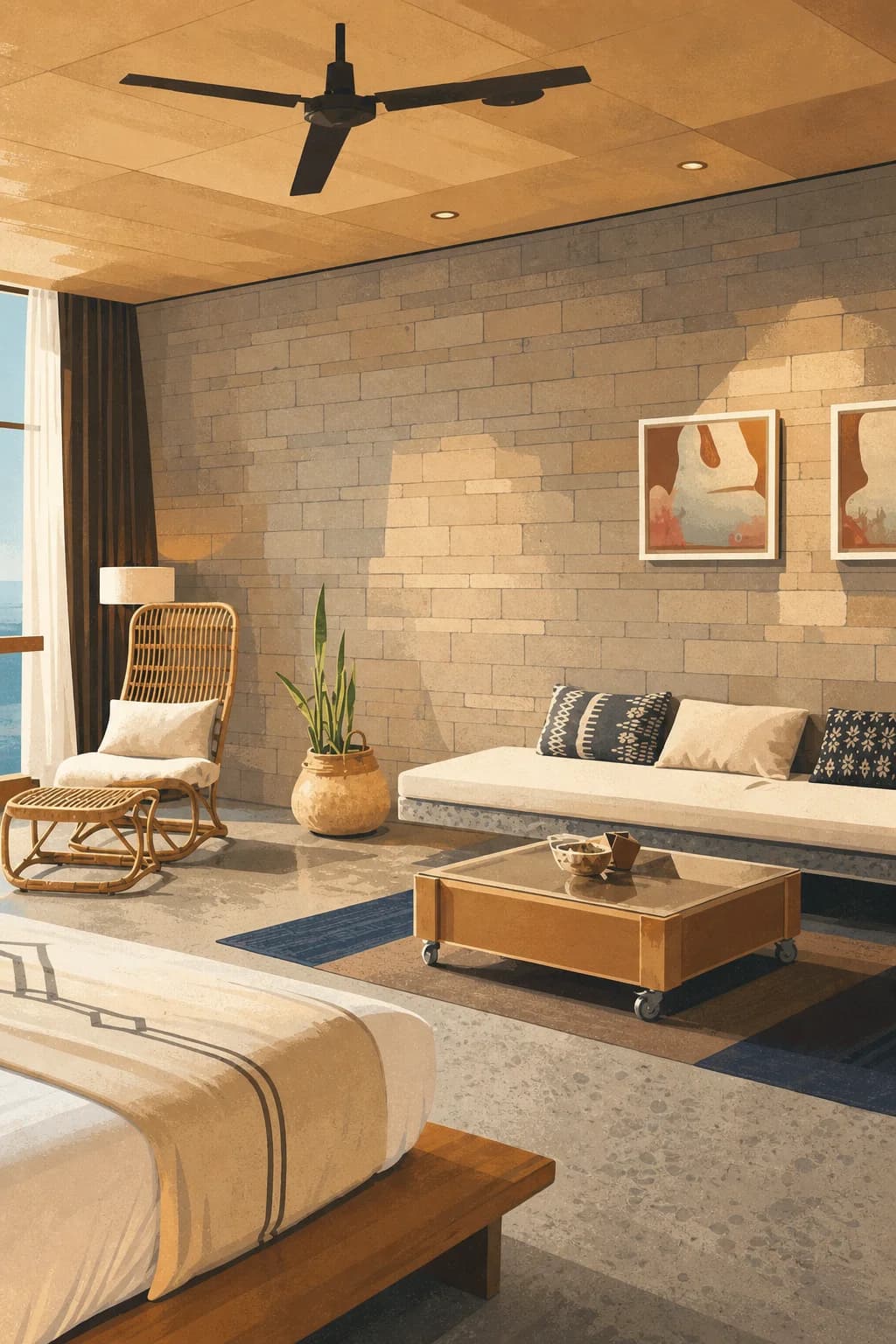
The Slow is the twelve-room Canggu property that more or less defined the Canggu design-hotel look when it opened and it still does the format well, with the on-site kitchen and bar doing a lot of the work. The hype gets the aesthetic and the scene right. It misses that the property is now one of several running the same playbook, so the original-cool factor has been diluted.
The ground-floor bar is open to non-guests and the Canggu crowd fills it at sunset, but the early dinner seating before 6.30pm is effectively guests-only and the kitchen is at its sharpest at that hour. Book the 6pm slot on the night of arrival, sit at the counter rather than a table, and have the bar do the cocktail pairing rather than order off the list.
angles.
Gorrow Before BASK
George Gorrow co-founded Ksubi denim, then built The Slow in Canggu before going to Gili Meno for BASK. The Slow is the earlier, smaller expression of his hospitality vision. The design language (natural materials, artisan collaboration, sustainable sourcing) carries through both properties. The Slow is the proof of concept that BASK scaled up.
GFAB's Twelve Rooms
GFAB Architects (Rieky Sunur) designed twelve rooms using local materials and artisan techniques. Rafael Miranti Architects handled the kitchen interior separately. The dual-architect approach gives different spaces their own design voice while maintaining Gorrow's overall direction. At twelve rooms, the architectural investment per room is proportionally high.
Since 2016, Pre-Boom
The Slow opened in 2016, before Canggu's most intense development phase. The property was built when the surrounding area was quieter and less built-up. Eight years of operation has given it maturity and neighbourhood relationships that post-boom properties don't have. The slow philosophy wasn't just a name; it was a bet on Canggu's future that the area's development has since validated.
talk.
mapped.
“High fashion meets laid-back surf culture at The Slow, from the photography that decorates the walls to the meticulous design that has gone into every touch point.”
record.
Opened in 2016 with twelve rooms designed alongside GFAB Architects (Rieky Sunur). Kitchen interior by Rafael Miranti Architects. The design philosophy is in the name: slow travel, local materials, artisan craft. Plastic-free amenities. Seasonal sustainable cuisine. Local artisans throughout.
At $$$ pricing in Canggu, The Slow offers Gorrow's design vision at a more accessible rate than BASK. Thirty minutes from DPS airport. The property predates Canggu's development boom, which means it was built when the area still had space to breathe. Eight years later, that breathing room is the Slow's competitive advantage.
changed.
Book April–June or September–October for the value sweet spot. Plan July–August four to six months out. Confirm Nyepi (March) before booking.
Bali runs on two overlapping clocks: its equatorial wet-dry cycle and the school holiday calendars of Australia and Europe, its two largest visitor markets. Where those systems collide, demand spikes hard. The rest of the year, the island is far more negotiable than its reputation suggests.
The dry season runs April through October, and July and August are its unforgiving peak. European summer holidays flood the island in July; Australian school holidays layer on top in August, pushing demand to its annual maximum. Skies clear, humidity drops, and the island's outdoor infrastructure runs at full capacity. If your dates are fixed in those two months, book early. Ultra and Very High tier properties fill months in advance. Uluwatu Surf Villas currently shows as sold out, and Veluvana Bali runs at scarce availability through peak periods.
The shoulder windows, April through May and September through October, deliver the best value equation on the island. Weather is reliably dry, crowds thin considerably once the school-holiday cohorts leave, and Room Demand Scores fall to roughly half the August peak. These months are especially strong for Ubud and the highland properties, where clear mornings reveal volcanic panoramas that vanish during the wet season.
Book the April-to-May shoulder for dry weather, moderate demand, and the full range of the island's 75 tracked properties available without peak-season competition.
The wet season spans November through March, and it is more manageable than the name implies. Rain arrives in intense afternoon bursts rather than all-day gray, and mornings are often clear. Temperatures stay warm. The trade-offs are real: some outdoor activities turn unreliable, rural roads can flood, and boat crossings to the Nusa and Gili Islands get rougher. But hotel pricing drops significantly, and the rice terraces turn an almost electric green.
One date demands specific attention: Nyepi, the Balinese Day of Silence, falls in March on a date that shifts annually with the Saka lunar calendar. The entire island shuts down for 24 hours. No flights land or depart, no cars move, no lights are permitted after dark, and hotels ask guests to remain on property. It is a genuinely singular cultural experience, but it requires planning. If your trip overlaps with Nyepi, confirm your hotel's policy in advance and treat the day as part of the itinerary rather than an inconvenience.
approach.
briefing.
“At this laid-back hotel, the brainchild of a fashion duo, switched-on stylings and comfortable suites do the basics well.”
stands.
demand's going.
The real Instagram following over time, plus where this hotel sits for demand in Bali. Pick a range, toggle the lines. Followers are reach and demand, not engagement.
assessment.
File closes at HIGH. Book direct one to two weeks out and pair with BASK Gili Meno if the Gorrow design language interests you. Skip if you want quiet seclusion; central Canggu is the address.
The numbers behind the tiers
The Slow · SOURCE READINGS · REDACTED- Availability density · sampled
- Monthly search volume · raw
- TikTok hashtag views · raw
- YouTube total views · raw
- TikTok following · latest sweep
- Pinterest saves · latest sweep
More from Bali.








Get the hotel's Unbookable Score.
Any post or reel with a hotel in it. Booking.com hotel pages work too. One free check, no account needed.