Alti Santorini
Suites.
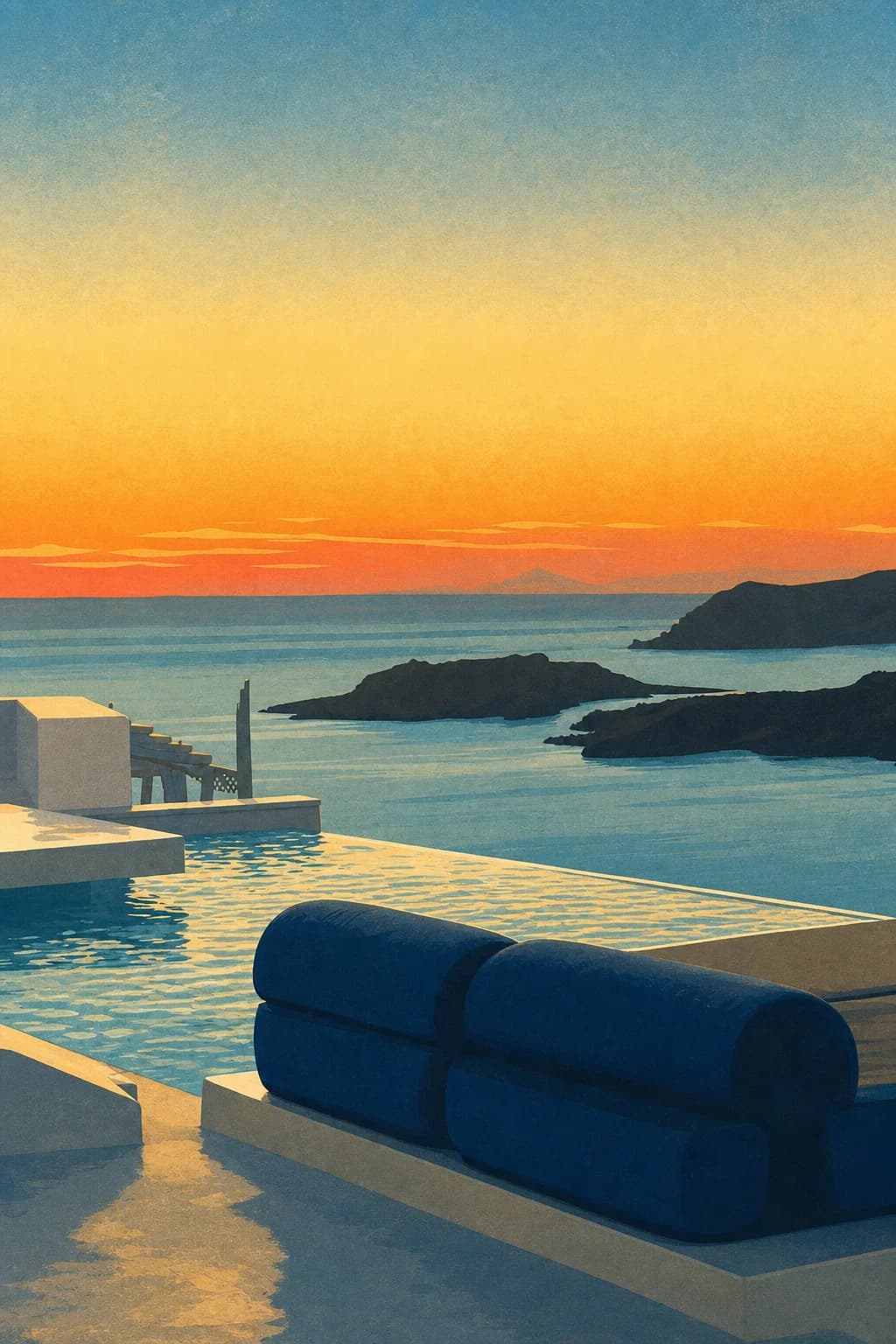
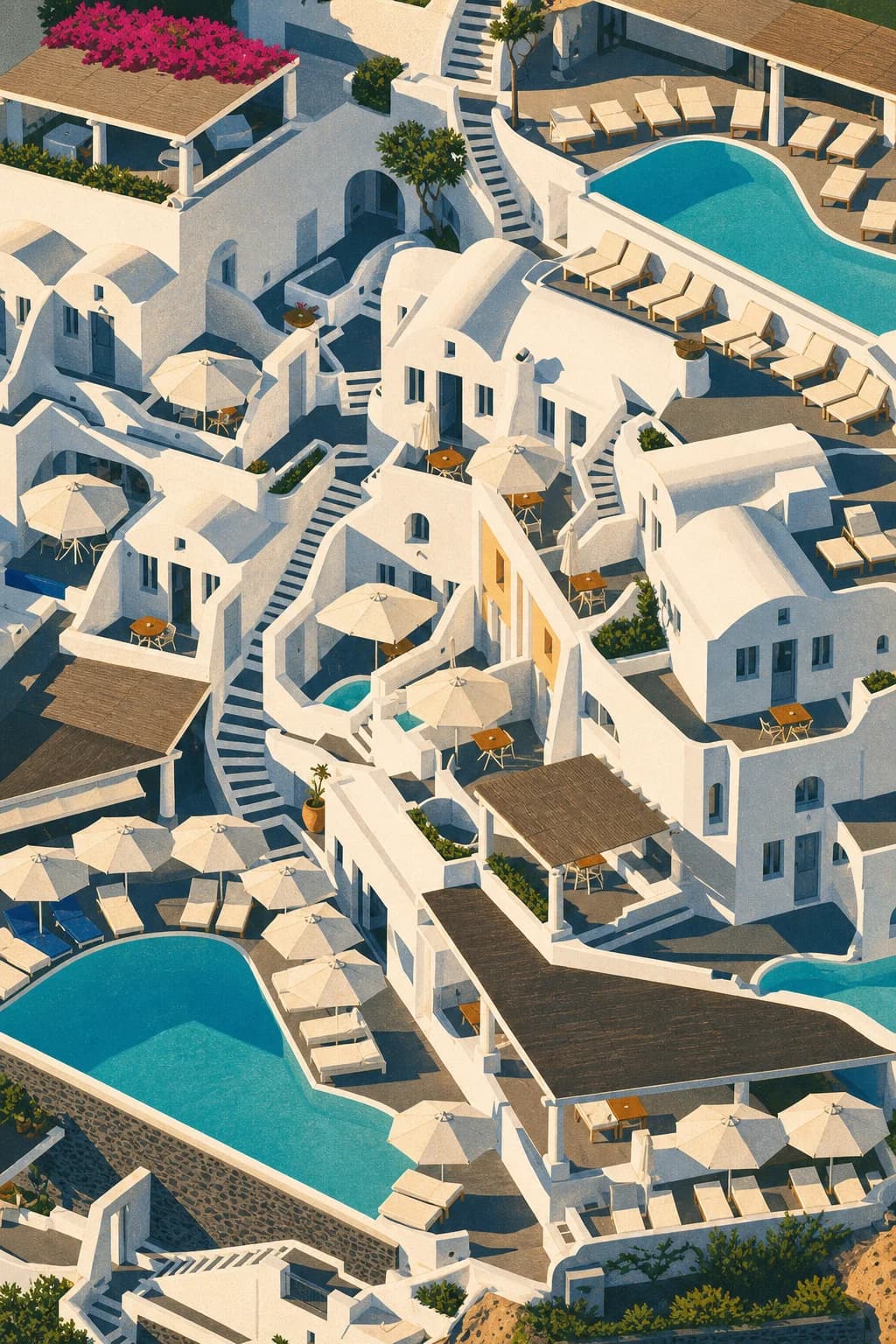
Alti is a 6-suite Megalochori property and the hype is quiet because Megalochori is off the caldera-sunset tourist circuit. What it gets right is authentic village life. Megalochori is one of the prettiest inland villages on the island, all bougainvillea and tiny squares, and staying here means you're in actual Santorini rather than the hotel-circuit version. What it misses is sunset access on foot. You need a car for Oia.
Megalochori is walking distance from Gavalas Winery, a small family producer making Assyrtiko and Vinsanto in the traditional sunken kouloures vineyards that are unique to Santorini. The tasting room is open in the afternoons and is about a tenth of what the big tourist wineries charge for a better flight. Walk there, don't drive, because the wine is serious.
angles.
Megalochori, Not Oia
Megalochori sits at the quieter southwestern end of the caldera, a traditional village of wine cellars, narrow lanes, and a central square with a church. Most tourists never make it here. The caldera views are the same dramatic sweep of volcano and Aegean, but the foot traffic is a fraction of what Oia or Fira sees. The village has its own tavernas, a winery, and genuine local life.
Six Pools, Six Terraces
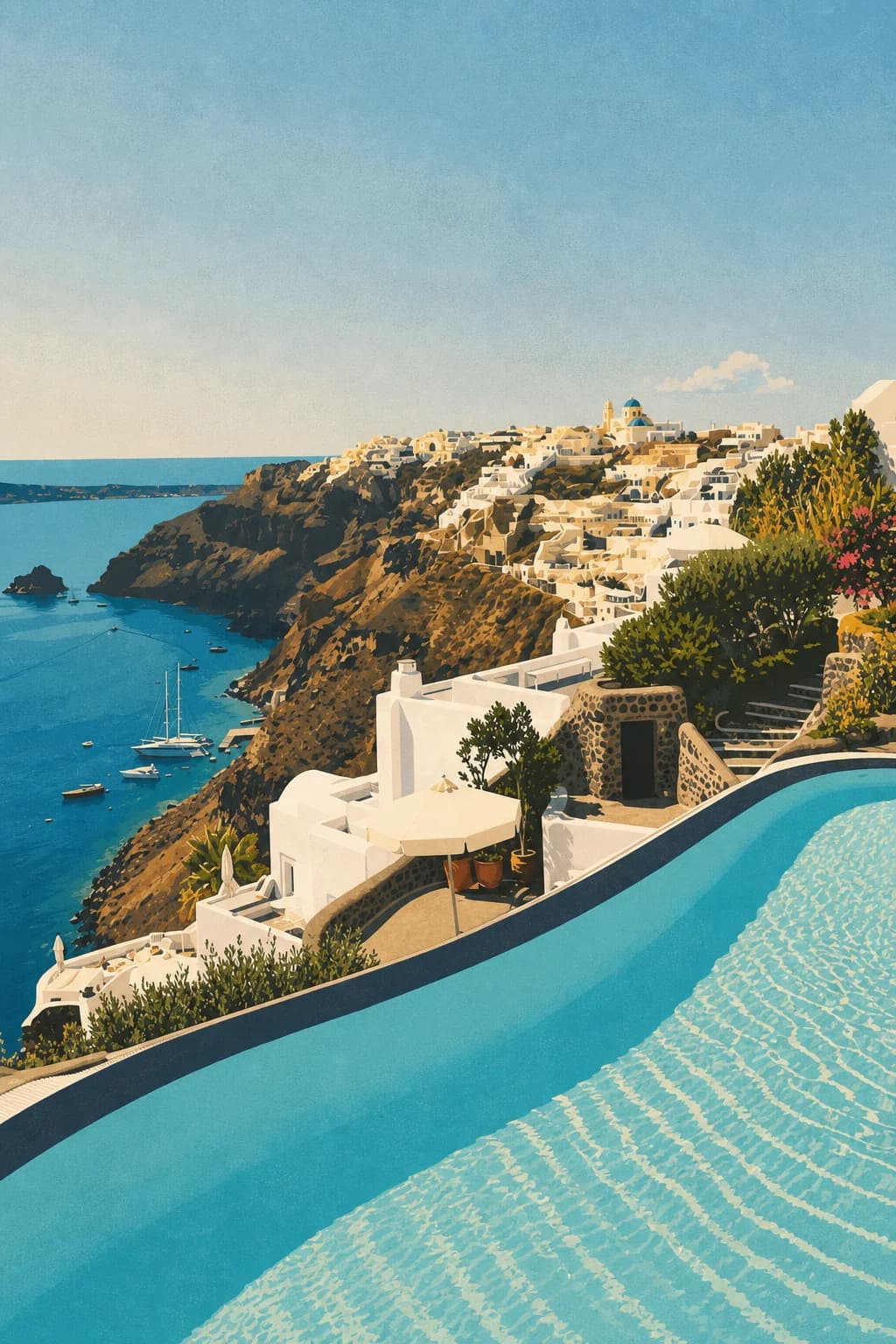
Each of the six suites has a private plunge pool on its terrace overlooking the caldera. The Infinity Suite is positioned for the widest panoramic view. The Yellow Suite and Red Suite are named for their interior palettes. At six rooms, the property feels closer to a private residence than a hotel. The adults-only policy reinforces the quiet.
The Sister Property Next Door
Alti Sugar Suites operates from an adjacent building with five additional units, including the Panoramic View Suite with Full Privacy and the Sugarmoon Suite. Guests at either property share the Alti brand and booking system. If the main six suites are full, the Sugar expansion catches overflow. Booking both together gives a group exclusive use of eleven suites on the cliff.
talk.
mapped.
record.
Alti opened in 2014 before the Instagram surge that turned Oia and Imerovigli into content corridors. The result is a property that delivers the caldera experience without the crowd. Every suite has its own terrace overlooking the volcano: the Infinity Suite, the Yellow Suite, the Red Suite, each named for a colour or design detail.
An adjacent sister property, Alti Sugar Suites, adds five more units for guests who want the same style with a different angle. Adults only. Breakfast is included and served on the terrace. Megalochori sits on the southwestern edge of the caldera, a fifteen-minute drive from the airport and nothing like the Fira promenade in temperament. The village itself is traditional: wine cellars, narrow lanes, a central square.
changed.
Target September for warm sea without crowds. Book July–August five to six months ahead. Skip November–March: the island is closed.
Santorini runs a steep, narrow demand curve. Interest climbs sharply from April through June, peaks in July, holds through August, then falls nearly as fast through September and October. By November most hotels close entirely, and the island stays largely shut until late March.
July and August sit at the absolute top of the curve. School holidays across Europe, guaranteed heat, and the longest daylight hours for caldera sunsets converge to make these the hardest months to book and the most expensive. The 8,000-per-day cruise passenger cap, enforced since 2025, has blunted the worst day-tripper surges, but the caldera villages still run at full capacity. Book at least five to six months ahead. Ultra-tier properties like Cavo Tagoo and The Saint need even longer lead times, since their small room counts, 13 and 16 respectively, sell out early.
The smarter play for most travelers is the shoulder months. Late May and June deliver warm weather, open pools, and a demand level roughly 15 to 30 points below peak on the Unbookable scale. October still works, though some smaller properties start closing for the season and evenings cool enough to want a jacket.
September is arguably the best single month on the calendar. The sea is at its warmest, cruise traffic has begun to thin, and hotel pricing starts to soften just as the light turns golden. You get near-peak conditions without near-peak scarcity.
September is arguably the best single month: the sea is at its warmest, the cruise traffic has thinned, and hotel pricing begins to soften.
April is a gamble. Demand sits at roughly a third of peak, and many hotels are just reopening with reduced staff and limited food-and-beverage programs. The upside is emptier caldera paths, lower rates, and wildflowers in bloom. The downside is cold pool water and restaurants that haven't yet opened.
Skip November through March entirely unless you specifically want an empty island. Most hotels are closed, ferry schedules drop to a fraction of summer service, and the wind can make the caldera ridge genuinely unpleasant. This is not a year-round destination. Plan accordingly, and plan early.
approach.
briefing.
stands.
demand's going.
The real Instagram following over time, plus where this hotel sits for demand in Santorini. Pick a range, toggle the lines. Followers are reach and demand, not engagement.
assessment.
File closes at HIGH. Book direct two to three months out; the website carries a 15% F&B discount the OTAs do not. Skip if Oia or Fira foot traffic is the appeal; Megalochori is the quieter wine-village position.
The numbers behind the tiers
Alti Santorini Suites · SOURCE READINGS · REDACTED- Availability density · sampled
- Monthly search volume · raw
- TikTok hashtag views · raw
- YouTube total views · raw
- TikTok following · latest sweep
- Pinterest saves · latest sweep
More from Santorini.


Get the hotel's Unbookable Score.
Any post or reel with a hotel in it. Booking.com hotel pages work too. One free check, no account needed.